





How is ESG evolving as a strategic priority across the renewable energy sector today?
ESG has moved from a compliance-driven function to a core business strategy in the renewable energy sector. Companies are now integrating ESG into capital allocation, risk management, and long-term value creation processes. It is no longer about “being green” but about building resilient, transparent, and future-ready business that aligns with global climate goals and stakeholder expectations.
What are the key ESG trends currently shaping the solar and broader energy industry in India?
Key ESG trends shaping the solar and energy industry in India include decarbonisation beyond generation – focus shifting to manufacturing emissions (Scope 1, 2 & increasingly Scope 3), water stewardship in solar manufacturing, domestic supply chain development under policy push (PLI schemes), digitalisation and traceability for ESG data, and just transition and workforce skilling.
How do you see regulatory frameworks and investor expectations influencing ESG adoption across the sector?
Frameworks like BRSR (Business Responsibility and Sustainability Reporting) and SEBI mandates are standardising ESG disclosures, improving comparability and accountability. Simultaneously, investors are pushing for measurable outcomes, not just disclosures—including science-based targets, lifecycle emissions, and governance transparency. This dual push is accelerating ESG maturity across the sector.
Climate action is central to ESG—what are the biggest opportunities and challenges for the industry in accelerating decarbonisation?
The sector is uniquely positioned to lead decarbonisation while enabling other industries to transition.
Significant opportunities are emerging, through the rapid scale-up of solar and wind capacity, advances in green hydrogen and energy storage technologies, and India’s strong policy alignment with net-zero ambitions.
Key challenges include land use constraints, biodiversity concerns, and the high upfront capital costs for green technologies.
Supply chains remain a critical concern globally—how is the renewable sector addressing sustainability and transparency across its value chain?
The industry is increasingly focusing on traceability of raw materials, supplier audits and codes of conduct, and localization to reduce carbon footprint. However, achieving full transparency across global supply chains remains a work in progress.
Premier Energies is working towards establishing a comprehensive, integrated manufacturing ecosystem spanning the entire solar photovoltaic value chain from ingots to wafers to cells and modules. Our facilities are designed for end-to-end production, ensuring efficiency and quality at every stage. As one of the first Indian companies to manufacture solar cells, we have consistently led through technological advancement and product reliability. Our backward integration into wafer production, enabled through a joint venture with a global semiconductor wafer manufacturer, further enhances our control over quality, scale, and supply chain efficiency.
From an industry standpoint, how can companies better integrate circularity and resource efficiency into their operations while also driving positive social impact?
Key focus areas include reducing material intensity and water recycling. Circularity will become a key differentiator as the industry matures.
On the social front, renewable energy can significantly contribute to rural electrification and energy access, local employment generation, and community development around project sites. The sector has an opportunity to lead a “just and inclusive energy transition.”
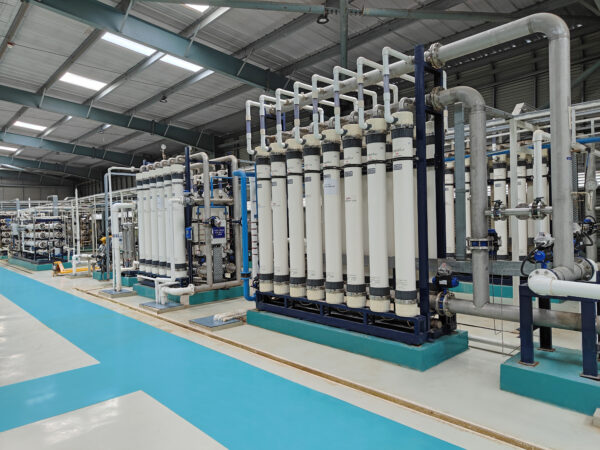
Premier Energies
What are the common ESG gaps you observe in the industry today, and how can they be addressed?
Common ESG gaps in the industry include limited Scope 3 emissions tracking, inconsistent ESG data quality and assurance, gaps in supply chain transparency, and social impact often under-measured. Addressing these requires robust data systems, governance frameworks, and third-party validation.
Stronger ESG outcomes will depend on collaboration between industry, government, institutions and investors. Public-private partnerships and platforms like industry alliances will be critical.
What will define ESG leadership in the next decade?
ESG leaders will be those who move from targets to measurable impact, achieve end-to-end decarbonisation (including supply chain), embed circular economy principles, ensure transparent, assured ESG disclosures, and balance growth with social responsibility.
Ultimately, ESG leadership will be defined by the ability to scale sustainably while creating long-term stakeholder value.
This content is protected by copyright and may not be reused. If you want to cooperate with us and would like to reuse some of our content, please contact: editors@pv-magazine.com.





By submitting this form you agree to pv magazine using your data for the purposes of publishing your comment.
Your personal data will only be disclosed or otherwise transmitted to third parties for the purposes of spam filtering or if this is necessary for technical maintenance of the website. Any other transfer to third parties will not take place unless this is justified on the basis of applicable data protection regulations or if pv magazine is legally obliged to do so.
You may revoke this consent at any time with effect for the future, in which case your personal data will be deleted immediately. Otherwise, your data will be deleted if pv magazine has processed your request or the purpose of data storage is fulfilled.
Further information on data privacy can be found in our Data Protection Policy.