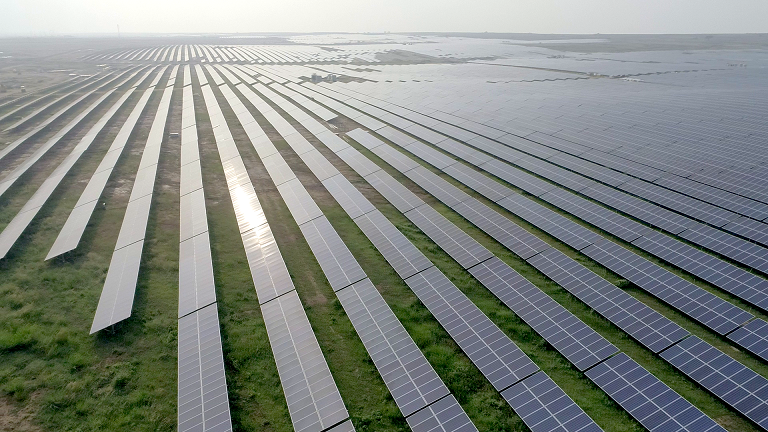





India’s peak energy demand reached a new all-time high of 256 GW on April 26, 2026, surpassing previous peaks of 245 GW on Jan. 9, 2026 and 250 GW on May 30, 2024. Against this backdrop of rising electricity demand, the country generated 464 billion units (BU) of electricity in Q4 2025-26, up 3% year-on-year (YoY), driven by strong growth in non-fossil power generation, particularly solar, which rose by 24%. However, rising instances of renewable curtailment events highlight growing challenges in integrating clean energy into India’s grid.
Generation trends
India’s total electricity generation reached 464 billion units (BU) in Q4 2025-26, up 3%. While coal and lignite generation declined by 1%, generation from solar, wind, nuclear, and large hydro increased by 24%, 11%, 10%, and 7%, respectively. Solar generation reached 48.9 BU, with the highest daily output recorded on 27 March 2026 (658 MU).
Renewable curtailment remains high
Despite higher renewable generation, a significant amount of clean energy was not utilised during Q4 2025-26, with around 27 GW (72 MU) of solar and 4 GW (6 MU) of wind being curtailed. An additional 83 GW (103 MU) of solar and 11 GW (17.5 MU) of wind were curtailed under India’s Tertiary Reserve Ancillary Service (TRAS), a manually activated power system balancing service used to resolve grid congestion. Gujarat in Western India recorded the highest curtailment, highlighting grid integration challenges in high-renewables regions.
Peak demand hits a new high
After recording an all-time peak demand of 250 GW on 30 May 2024, India’s peak electricity demand reached a new Q4 high of 245 GW on 9 January 2026, with overall demand growing by nearly 3% YoY. However, this is the slowest YoY growth in Q4 since 2020-21.
Notably, 88 out of 90 days recorded peak demand during solar generation hours. During the Q4 2025-26 peak demand period of 245 GW, thermal generation accounted for 67% (165 GW) of the total, followed by solar at 20% (48 GW). Maharashtra in Western India recorded the highest state-level peak demand (32 GW) in Q4 2025-26, followed by Gujarat (25 GW) and Uttar Pradesh (23 GW).
Coal power capacity utilisation declines
Coal power capacity plant load factor (PLF) fell from 72% to 69% in Q4 2025-26, despite rising demand. Gas PLF increased from 10% to 12%, while nuclear rose marginally from 78% to 79%. Solar capacity utilisation factor (CUF) declined slightly from 23% to 22%.
Renewables lead capacity additions while no thermal is retired
Capacity additions in Q4 2025-26 were led by renewables, with 16.2 GW added, compared with 2.3 GW of thermal and 0.5 GW of large hydro. India commissioned 2.3 GW of new thermal capacity which was entirely coal-based in Q4 2025-26, down 18% YoY, while no thermal capacity was retired. Meanwhile, 39.4 GW of coal capacity remains under construction, with most projects still in the early stages.
The views and opinions expressed in this article are the author’s own, and do not necessarily reflect those held by pv magazine.
This content is protected by copyright and may not be reused. If you want to cooperate with us and would like to reuse some of our content, please contact: editors@pv-magazine.com.




By submitting this form you agree to pv magazine using your data for the purposes of publishing your comment.
Your personal data will only be disclosed or otherwise transmitted to third parties for the purposes of spam filtering or if this is necessary for technical maintenance of the website. Any other transfer to third parties will not take place unless this is justified on the basis of applicable data protection regulations or if pv magazine is legally obliged to do so.
You may revoke this consent at any time with effect for the future, in which case your personal data will be deleted immediately. Otherwise, your data will be deleted if pv magazine has processed your request or the purpose of data storage is fulfilled.
Further information on data privacy can be found in our Data Protection Policy.