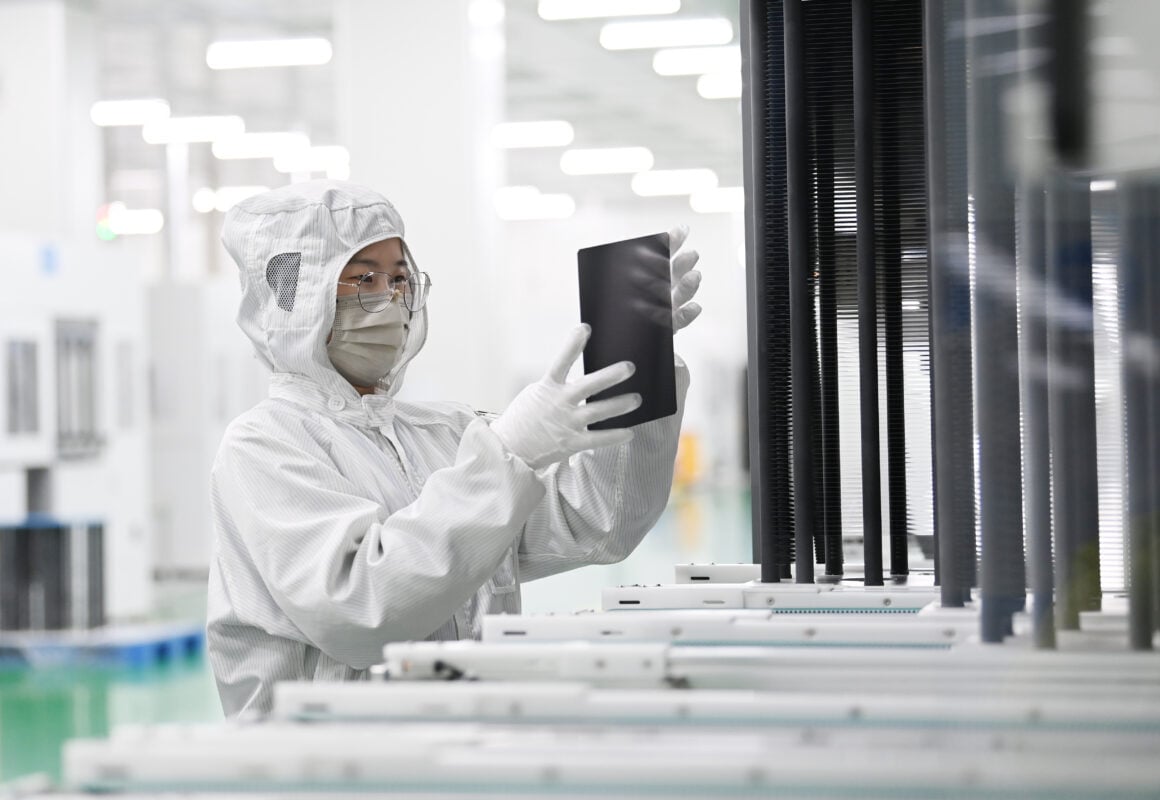





Chinese solar module manufacturer Trina Solar has announced yesterday it achieved a 28.00% power conversion efficiency for its new TOPCon-compatible hybrid back-contact solar cell (THBC), with the result being certified by Germany’s Institute for Solar Energy Research Hamelin (ISFH).
The company said the achievement marks the first time a large-area 210R crystalline silicon cell has crossed the 28% threshold, setting a new benchmark for this class of device.
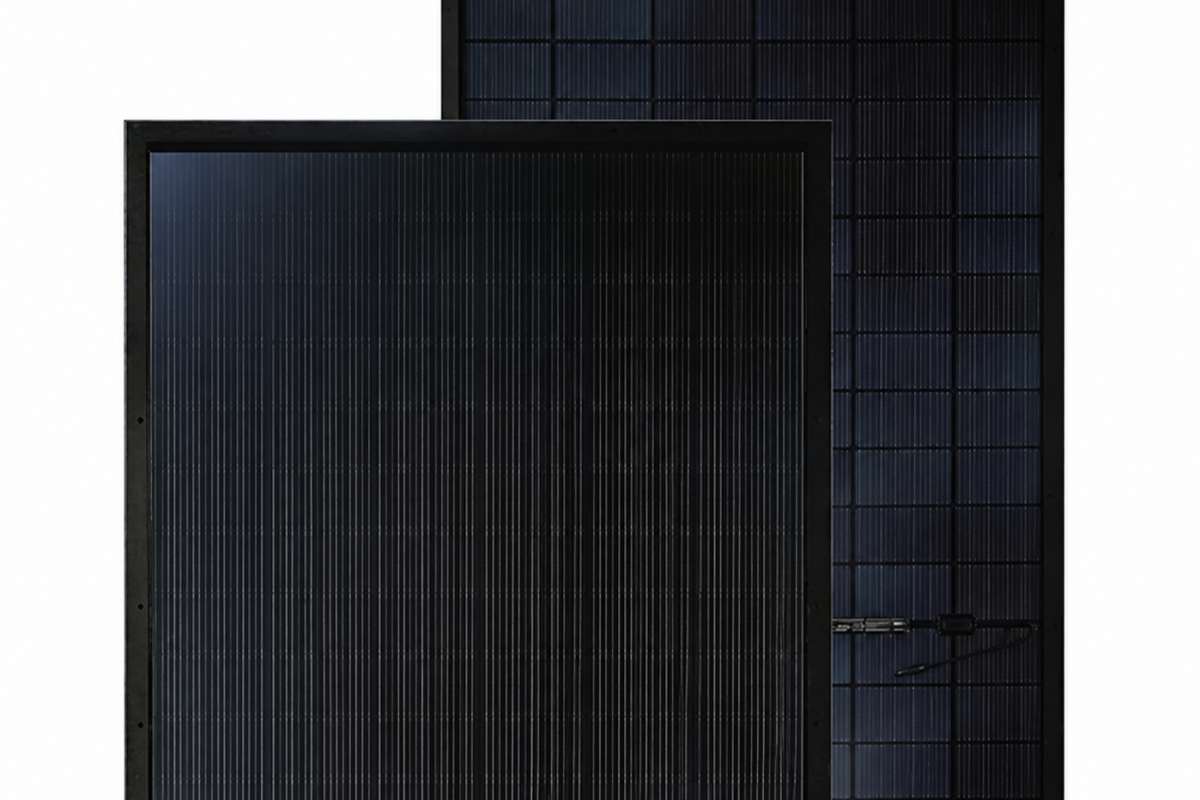
According to Trina, the THBC technology combines several mainstream high-efficiency concepts in a single architecture. It is described as a hybrid design that merges TOPCon passivated-contact capability, heterojunction (HJT)-style passivation advantages, and a back-contact (BC) electrode structure. That means both electrodes are moved to the rear side of the cell, eliminating front-side metal shading and helping raise front-side light utilization.
Trina says the approach is intended not only to lift efficiency, but also to improve appearance and product differentiation in premium distributed-generation applications.
For TOPCon, the result is significant because it suggests the technology may still have an upgrade path beyond conventional front-contact designs. Rather than replacing TOPCon outright, THBC is being positioned as a TOPCon-compatible extension that can reuse much of today’s manufacturing base while moving toward higher single-junction efficiency.
Trina says the cell is compatible with 110 μm to 130 μm thin wafers and is highly compatible with current mainstream TOPCon production lines, potentially lowering the cost and complexity of commercialization compared with building an entirely new platform from scratch.
The company has also outlined a product pathway. Based on its existing THBC pilot line, Trina said a standard-format module measuring 2,382 mm × 1,134 mm could exceed 700 W, and it added that a new generation of THBC-based products will be released soon.
A source close to Trina also told pv magazine that the company has already mass-production plans for the THBC cell.
The new result overtakes the previous BC-cell benchmark set by Longi, whose hybrid interdigitated back contact (HIBC) cell reached 27.81% efficiency in April 2025, also with ISFH certification. Longi described that as a world record for monocrystalline silicon solar cells at the time. Trina’s latest announcement therefore raises the certified ceiling again for back-contact crystalline silicon cell designs, while reinforcing the broader industry push to combine higher efficiency with greater manufacturability.
This content is protected by copyright and may not be reused. If you want to cooperate with us and would like to reuse some of our content, please contact: editors@pv-magazine.com.



By submitting this form you agree to pv magazine using your data for the purposes of publishing your comment.
Your personal data will only be disclosed or otherwise transmitted to third parties for the purposes of spam filtering or if this is necessary for technical maintenance of the website. Any other transfer to third parties will not take place unless this is justified on the basis of applicable data protection regulations or if pv magazine is legally obliged to do so.
You may revoke this consent at any time with effect for the future, in which case your personal data will be deleted immediately. Otherwise, your data will be deleted if pv magazine has processed your request or the purpose of data storage is fulfilled.
Further information on data privacy can be found in our Data Protection Policy.