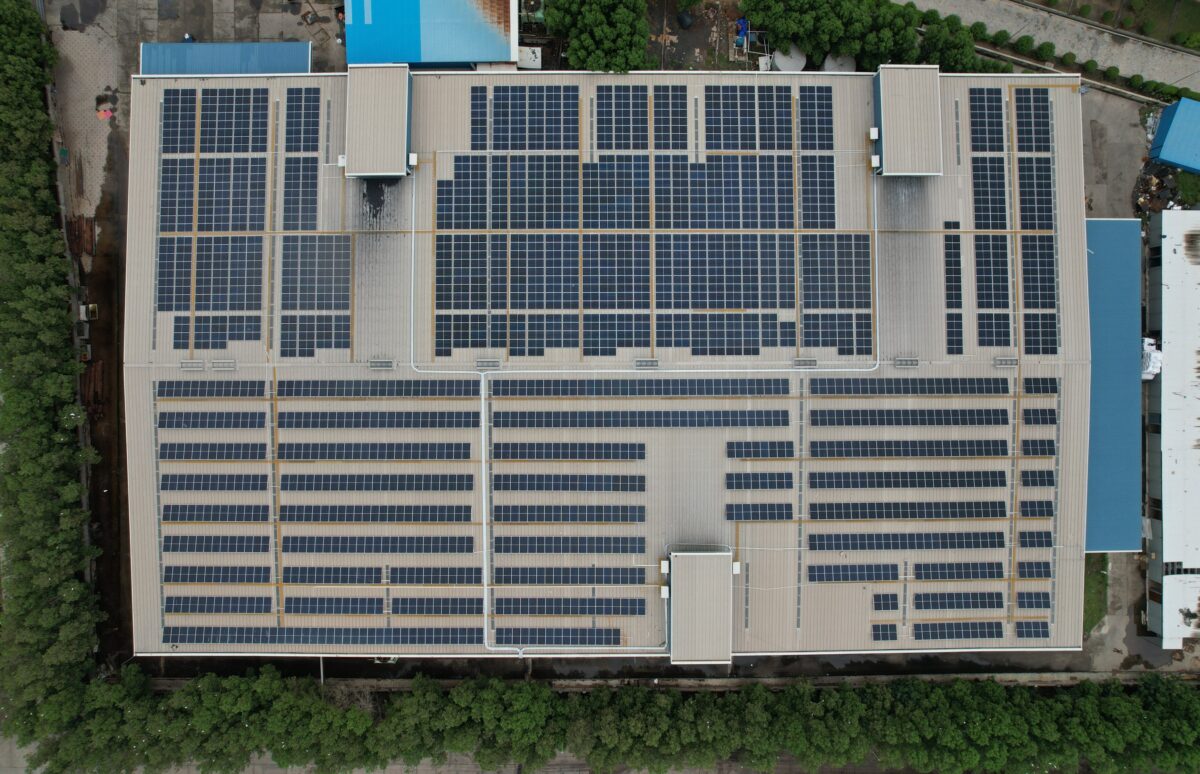





A new report from ICRA ESG Ratings highlights a steady rise in renewable energy adoption across Indian textile companies. The average share of renewable energy in the sector’s total energy consumption increased from about 14% in FY2023 to nearly 18% in FY2025.
RE share in apparel companies rose from 26% to 28% over FY 2023 to FY 2025, supported by the feasibility of rooftop solar for electricity-driven processes such as cutting and stitching.
The yarn and fabric segment recorded the sharpest relative improvement, climbing from 3% to 8%, driven by industry leaders scaling up solar and biomass-based solutions to offset the high thermal energy demand in dyeing and finishing operations. The integrated segment also advanced, moving from 17% to 21%, aided by bulk green-power contracts and captive solar investments by large composite units.
The report draws on data from ICRA ESG’s sample set of 19 entities.
The study also shows that energy intensity in the sample set increased from FY2023 to FY2024 and moderated in FY2025, ultimately remaining about 6–8% above FY2023 levels.
In the apparel segment, energy intensity rose by 28%, despite it being the least process-intensive part of the value chain—a trend attributed to production scale-up and a greater share of value-added garments that involve energy-intensive finishing and digital printing.
The yarn and fabric segment—the most energy-intensive—recorded an overall rise of 8.5% in energy intensity between FY2023 and FY2025, with a pronounced spike in FY2024 before easing in FY2025.
The integrated segment saw relatively stable energy intensity over the same period (+6%), supported by investments in captive renewable energy, waste-heat recovery systems, and process automation in dyeing and finishing operations.

According to the report, energy-heavy upstream processes such as spinning, weaving, and wet processing continue to drive the sector’s overall energy and emissions footprint. It calls for more captive renewable energy projects, enhanced efficiency measures, and improved Scope 3 emissions reporting to help the industry align with global sustainability standards.
This content is protected by copyright and may not be reused. If you want to cooperate with us and would like to reuse some of our content, please contact: editors@pv-magazine.com.







By submitting this form you agree to pv magazine using your data for the purposes of publishing your comment.
Your personal data will only be disclosed or otherwise transmitted to third parties for the purposes of spam filtering or if this is necessary for technical maintenance of the website. Any other transfer to third parties will not take place unless this is justified on the basis of applicable data protection regulations or if pv magazine is legally obliged to do so.
You may revoke this consent at any time with effect for the future, in which case your personal data will be deleted immediately. Otherwise, your data will be deleted if pv magazine has processed your request or the purpose of data storage is fulfilled.
Further information on data privacy can be found in our Data Protection Policy.