





pv magazine: India has set ambitious renewable energy targets for 2030. In your view, what are the biggest bottlenecks today in scaling renewable energy project deployment?
Ratul Puri: We are seeing India’s renewable sector shift from rapid capacity addition to more coordinated, system-level optimization. While the country has already crossed 50% non-fossil installed capacity, the next phase of growth will depend on execution at scale, including progress on land acquisition, tenancy frameworks and forest clearances.
Transmission readiness needs to keep pace with generation expansion. Delays in network build-out have begun to impact parts of the renewable pipeline, even as capacity continues to grow. The financial health of DISCOMs and timely procurement decisions also remain important for sustaining momentum.
The next phase of renewable expansion will require closer alignment between generation capacity, transmission infrastructure and long-term demand planning.
With the rollout of the Carbon Credit Trading Scheme (CCTS), how do you see carbon markets influencing investment decisions in the renewable energy sector?
The rollout of the Carbon Credit Trading Scheme is an important development in India’s clean energy transition. It creates an additional economic value stream for projects that contribute towards emissions reduction and energy efficiency, beyond conventional power revenues.
The scheme is expected to be particularly relevant for hard-to-abate sectors such as steel and cement, where clean energy adoption can support compliance requirements and decarbonization goals. This can also strengthen investor interest in renewable energy, storage-led assets and round-the-clock green power solutions. The long-term effectiveness of the market will depend on transparent frameworks, credible verification mechanisms and stable price discovery.
Energy storage is increasingly being seen as critical to renewable integration. How do you assess the pace of battery storage adoption in India? What policy or market changes are still needed?
India’s battery energy storage system (BESS) market is transitioning from aggressive tendering to execution-led scale. In 2025 alone, around 102 GWh of tenders were issued, while operational capacity remains at an early stage, reflecting the sector’s movement from bidding momentum to project delivery.
Policy support through viability gap funding, waivers of ISTS charges and state-level mandates have helped establish storage as an accepted asset class. As projects move towards commissioning, the sector focus is shifting from tariff discovery to execution capability.
The sector’s cost environment is also becoming more sensitive to global geopolitical shifts. Disruptions in supply chains, volatility in raw material prices, and logistics challenges may lead to higher input costs, which could translate into increased battery prices. The next phase of growth will require expanding revenue streams to include ancillary services, peak load management and grid balancing. Financing models are also expected to evolve further, supported by greater regulatory clarity and improved commercial visibility.
Given recent volatility in global supply chains and module pricing, how should Indian developers balance cost competitiveness with domestic manufacturing goals?
The strategy to balance cost competitiveness with domestic manufacturing goals is becoming increasingly important for Indian developers. The focus is not only on short-term pricing, but also on long-term supply security and resilience.
Policy measures such as ALMM and PLI have significantly strengthened domestic manufacturing capacity. Module manufacturing capacity increased from 2.3 GW in 2014 to around 171 GW in 2025, while cell manufacturing capacity has expanded to 31 GW. As domestic manufacturing scales further, the cost differential is expected to narrow down. This can help make localization both commercially viable and strategically beneficial for developers.
What are Hindustan Power’s key priorities for the next phase of growth, and how do you see the company positioning itself within India’s rapidly evolving renewable energy and storage-led market?
At Hindustan Power, we are focused on balancing reliability with future readiness. With storage being a key enabler of grid stability and renewable energy integration, the sector is likely to witness a strong investment momentum through 2030.
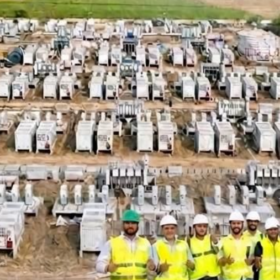
In line with this, we are scaling our BESS portfolio, with over 750 MWh of capacity added across projects in 2025. This includes our project with Solar Energy Corp. of India (360 MWh), an ISTS-linked project with SJVN Limited (>250 MWh), and a 120 MWh standalone BESS project with Bihar State Power Generation Co. Ltd. Together, these enable firm, dispatchable renewable power while supporting grid stability and peak demand.
Our approach spans renewable and high-efficiency transitional energy generation, helping build a diversified, resilient and future-ready energy portfolio with a gradually reducing reliance on coal. Further, we continue to play an active role in public-private partnerships and policy discussions, contributing to the regulatory evolution needed to help India achieve its 500 GW non-fossil capacity target by 2030.
Recent standalone battery storage project auctions have seen heavy participation by bidders (including from new players) and discovered record low tariffs. What’s your take on this?
The strong participation in recent BESS auctions reflects growing confidence in the sector, driven by falling battery costs, supportive policy frameworks and increased competition. This marks a meaningful step toward scaling storage capacity and strengthening grid reliability.
However, with current geopolitical dynamics, the industry may now witness sudden uptick in input costs impacting battery pricing due to supply chain disruptions. This evolving environment introduces a layer of complexity while reinforcing the need for disciplined bidding, resilient sourcing strategies and a sharper focus on execution.
How do you see the energy storage landscape evolving in India?
With the country targeting 500 GW of non-fossil fuel capacity by 2030, energy storage is no longer seen as an optional addition but as a critical requirement for grid stability and round-the-clock renewable power.
One of the most significant shifts is the sharp increase in BESS capacity, which is expected to rise substantially from current levels as projects move from bid stages to execution. The focus across the sector is now shifting from tender announcements to actual project delivery, with large utility-scale installations and hybrid renewable projects gaining momentum. Solar-plus-storage projects and Firm and Dispatchable Renewable Energy (FDRE) tenders are becoming more common, reflecting the need for reliable 24×7 clean power.
Government support remains a strong growth driver. Measures such as viability gap funding (VGF), energy storage obligations (ESO), and production-linked incentive (PLI) schemes for advanced chemistry cells are improving project economics and encouraging domestic manufacturing.
With strong momentum, current geopolitical developments and dependence on imported battery components can also impact pricing and timelines. Going forward, the sector’s success will depend on resilient supply chains, stronger execution capabilities and the ability to build high-quality assets that support a reliable and always-on renewable energy system.
This content is protected by copyright and may not be reused. If you want to cooperate with us and would like to reuse some of our content, please contact: editors@pv-magazine.com.



By submitting this form you agree to pv magazine using your data for the purposes of publishing your comment.
Your personal data will only be disclosed or otherwise transmitted to third parties for the purposes of spam filtering or if this is necessary for technical maintenance of the website. Any other transfer to third parties will not take place unless this is justified on the basis of applicable data protection regulations or if pv magazine is legally obliged to do so.
You may revoke this consent at any time with effect for the future, in which case your personal data will be deleted immediately. Otherwise, your data will be deleted if pv magazine has processed your request or the purpose of data storage is fulfilled.
Further information on data privacy can be found in our Data Protection Policy.