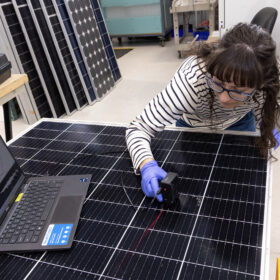
Rajasthan could save INR 5,500 crore annually by replacing new coal with solar-plus-battery storage, says new report
Rajasthan could save about INR 5,500 crore annually and up to INR 57,000 crore over a decade by avoiding new coal-based power generation and adopting solar power + battery storage, resulting in lower power costs, according to a new report by Climate Risk Horizons.
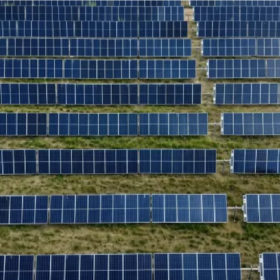
SAEL’s 600 MW Kadapa solar plant to be inaugurated tomorrow
The 600 MW solar power project in Andhra Pradesh, commissioned in a record 11 months, will supply electricity to the national grid under a 25-year power purchase agreement with Solar Energy Corp. of India.

Bluetti launches new storage systems for balcony PV
Bluetti has launched the Balco 260 and Balco 500, two integrated balcony PV storage systems combining MPPT, inverter, battery storage and smart control in a plug-and-play architecture for urban households.
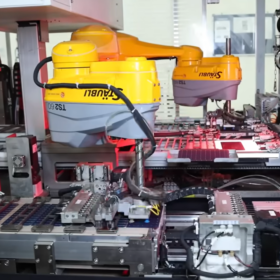
Saatvik Green Energy Ltd crosses INR 45.48 billion in FY26 revenue
Saatvik Green Energy Ltd reported FY26 revenue from operations of INR 45.48 billion, up 111% year on year (YoY), marking the company’s highest-ever annual revenue performance.
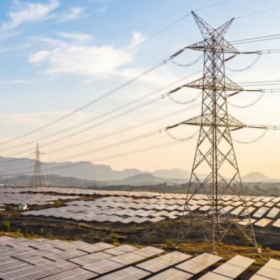
Vikran Engineering strengthens solar portfolio with 969 MW PM-KUSUM project acquisition
Vikran Engineering, a diversified EPC player, has acquired the remaining 51% equity stake in NOPL Solar Projects Pvt Ltd, which is developing a 969 MW (AC) grid-connected solar power project under Component C of the PM-KUSUM Scheme in Maharashtra.
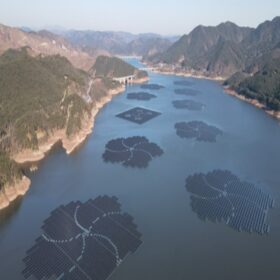
DNV publishes new floating PV safety standards
Norwegian classification society DNV has published two new guidelines covering the structural design of floats for floating solar systems and their mooring and station keeping systems.
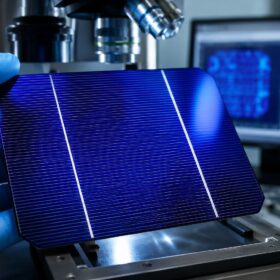
U.S. PV manufacturing capex could reach $7 billion in 2027 in breakout year for domestic supply-chain
Driven by multi-billion-dollar investments from the likes of Tesla and Corning, U.S. solar manufacturing capital expenditure is forecast to skyrocket 150% year-on-year to $7 billion in 2027, marking a massive breakout year as silicon-based technology eclipses thin-film spending and cements a domestic supply chain.
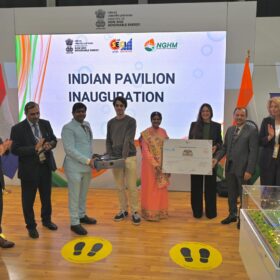
Vision Mechatronics, HyCooker sign agreement to launch zero-emission hydrogen cookstoves globally
Indian deep-tech company Vision Mechatronics and Netherlands-based HyCooker BV have signed a strategic cooperation agreement for the global rollout, localized manufacturing in India, and international commercial sales of advanced hydrogen-burning cookstoves.
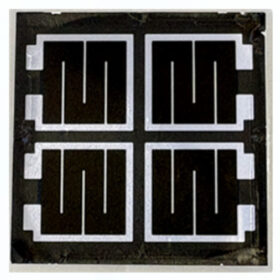
Japanese scientists achieve world record 25.14% efficiency for perovskite-CIGS tandem solar cell
The result was certified by Japan’s National Institute of Advanced Industrial Science and Technology (AIST).
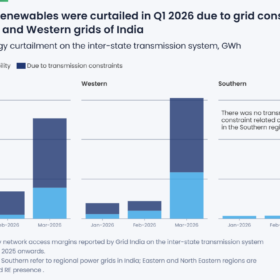
India curtailed 300 GWh of renewable energy in Q1 2026 due to transmission constraints, says Ember
With the right regulatory changes, battery energy storage systems offer a credible near-term solution to the country’s rising grid gaps.