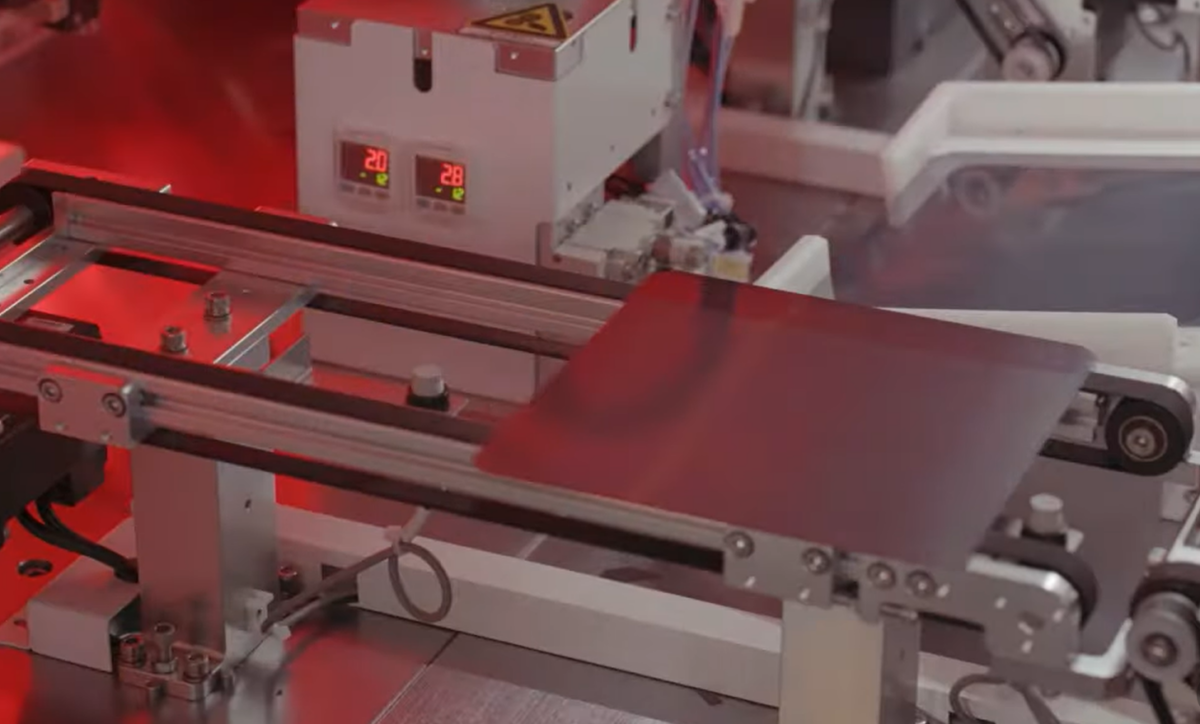





The Rajasthan Solar Association (RSA) has urged the Government and policymakers to adopt a calibrated and implementation-focused transition strategy for the upcoming ALCM/ALMM List-II framework for solar cells, scheduled to come into effect from June 1, 2026.
While strongly supporting the Government of India’s vision of Atmanirbhar Bharat (self-reliant India), domestic manufacturing expansion and energy security, RSA cautioned that the current ecosystem may not yet be fully prepared for a sudden transition to mandatory domestic solar cells.
According to industry assessments and ongoing stakeholder consultations conducted by RSA, the Indian solar sector is entering a highly sensitive transition phase where policy ambition and ecosystem readiness are moving at different speeds.
India has crossed approximately 33.78 GW of approved domestic solar cell manufacturing capacity, but this remains significantly lower than the rapidly expanding 220+ GW module manufacturing ecosystem, creating a structural mismatch between module demand and compliant domestic cell availability.
RSA highlighted that the transition could lead to short-term market disruptions across the renewable energy value chain, including:
- Limited availability of compliant domestic solar cells
- Supply-chain uncertainty and procurement disruptions
- Significant increase in DCR module prices
- Delays in rooftop, C&I and open-access projects
- Working capital pressure on EPC companies and MSMEs
- Production stress across ancillary manufacturing industries
Industry estimates indicate that DCR module prices have already increased sharply due to limited domestic cell availability, with further upward pressure expected after implementation.
The Association also noted that nearly 60% of ancillary industries — including EVA sheet manufacturers, solar glass companies, junction box manufacturers, ribbon suppliers and other component industries — may face temporary demand contraction and operational disruptions during the transition phase.
RSA further pointed out that India’s current manufacturing base continues to rely heavily on mono PERC technology, while project developers and investors are increasingly aligned toward TOPCon technology, creating additional technology transition challenges.
Additionally, solar cell manufacturing remains highly time-intensive, typically requiring around six months for plant installation and another six months for stabilization and efficiency optimization before reaching commercial-scale maturity.
RSA’s recommendations for a smooth transition
To avoid disruptions while still achieving the long-term national objective of domestic manufacturing growth, Rajasthan Solar Association has recommended the following measures to the Ministry of New & Renewable Energy (MNRE):
- A phased and calibrated implementation approach for ALCM / ALMM-II
- Transitional support for projects already in advanced stages of execution
- Reassessment of implementation timelines based on actual manufacturing readiness
- Alignment of policy execution with technology scalability and supply-chain realities
- Consideration of state-specific infrastructure challenges in solar-intensive regions such as Rajasthan
Nitin Agrawal, CEO, Rajasthan Solar Association (RSA), said: “RSA fully supports India’s long-term vision for strengthening domestic manufacturing and building a self-reliant clean energy ecosystem. However, successful implementation requires practical timelines, ecosystem preparedness and policy stability. A balanced transition is essential not only for strengthening domestic manufacturing, but also for preserving India’s renewable growth momentum, investor confidence and long-term clean energy leadership.”
This content is protected by copyright and may not be reused. If you want to cooperate with us and would like to reuse some of our content, please contact: editors@pv-magazine.com.




By submitting this form you agree to pv magazine using your data for the purposes of publishing your comment.
Your personal data will only be disclosed or otherwise transmitted to third parties for the purposes of spam filtering or if this is necessary for technical maintenance of the website. Any other transfer to third parties will not take place unless this is justified on the basis of applicable data protection regulations or if pv magazine is legally obliged to do so.
You may revoke this consent at any time with effect for the future, in which case your personal data will be deleted immediately. Otherwise, your data will be deleted if pv magazine has processed your request or the purpose of data storage is fulfilled.
Further information on data privacy can be found in our Data Protection Policy.