Markets & Policy

India’s solar industry is fundamentally shaped by policy frameworks, national goals like the 500 GW renewable energy target, and instruments such as the Production Linked Incentive (PLI) scheme, KUSUM program, and various state-level incentives. This category offers deep analysis and updates on auctions, tariffs, import duties, domestic content requirements, and shifting investment dynamics. We explore how central and state governments collaborate with the private sector to overcome infrastructure, grid, and regulatory challenges—making this one of the world’s most closely watched energy transition markets.
Advertisement
Advertisement
Advertisement
Latest News
Advertisement

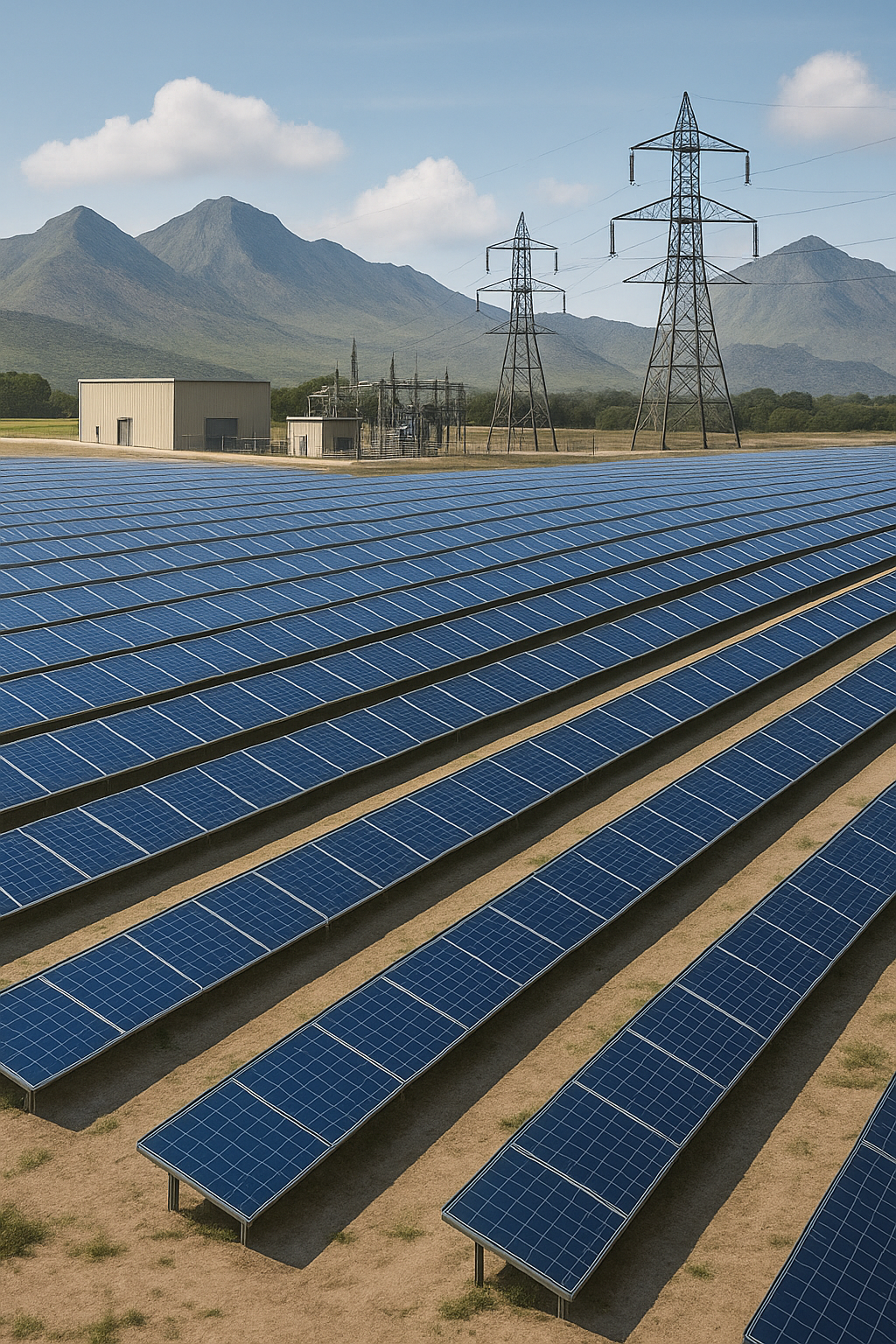
India curtailed more than 8 TWh of solar generation in Q1 FY2027: Kearney
India curtailed more than 8 TWh of solar power generation between April and June 2026, with grid congestion identified as a major factor, according to a report by global management consulting firm Kearney. The report says the nation’s ambition to hit 500 GW of renewable energy capacity by 2030 will depend on how quickly the power transmission network scales up its planning, execution, and digitalization capabilities.

Beyond the battery: Building India’s electronics backbone for the energy transition
The energy-storage value chain should not be viewed only through the lens of battery chemistry and gigawatt-hours. There is a parallel value chain developing around the battery, covering design, PCBA, embedded controls, power electronics, sensing, communication, testing and system integration.
Advertisement
All Markets & Policy news


Anza expects at least a 40% spike in U.S. solar module prices after Section 232
The challenge for developers is to move quickly to secure lower costs before the minimum pricing takes effect, with the options being to secure modules already in the U.S., accelerate imports or shift procurement strategies to preserve project economics.

Advertisement

Can India’s EV revolution deliver on its sustainability promise?
The EV revolution is already underway. Our opportunity now is to build on this momentum and create an electric mobility ecosystem that is sustainable for the environment, creates opportunities for people and businesses, and delivers a confident and dependable ownership experience for millions of Indians.

Make in India’s next test is not capacity, but capability
The government has laid the groundwork through the Production Linked Incentive (PLI) Scheme for high-efficiency solar modules. The Approved List of Models and Manufacturers for Solar cells and Modules and the proposed National Manufacturing Mission with its emphasis on technology, will push the industry to build capabilities that can eventually compete without permanent protection.
Advertisement



Waaree Energies plans Indosolar merger, secures 2 GW solar module order
Waaree Energies has approved a proposal to merge group company Indosolar into Waaree Energies. It said the transaction would consolidate the two parties’ cell and module manufacturing while simplifying the group structure. Waaree has also secured a 2 GW module supply contract from a domestic solar developer.
Advertisement