





India’s 500 GW renewable energy target by 2030 dominates every policy conversation. Capacity additions, auction pipelines, transmission corridors; these are the metrics that make headlines. But there is a quieter, less glamorous constraint that could undermine all of it: the country’s under-investment in testing and certification infrastructure for clean energy equipment.
Testing facilities are not a footnote to India’s energy transition. They are a prerequisite. Here is why the sector deserves far more attention than it gets.
- Indian Conditions Demand Indian Testing
A solar module certified for rooftops in Germany operates in a fundamentally different environment than one installed in Rajasthan. Ambient temperatures exceeding 50°C, sandstorms with high particulate loads, coastal humidity and salt mist in Gujarat, these are not edge cases. They are everyday operating conditions. Studies have shown that thermal cycling and humidity-related degradation can reduce module output by 15–20% over a project’s lifetime if components were not tested against local stress conditions. India’s NABL-accredited labs and MNRE-approved test centres now have the capability to simulate 25-year accelerated weathering in a matter of weeks. Scaling this capacity is not optional; it is essential to protecting the economics of every project deployed.
- Grid Stability Starts at the Test Bench
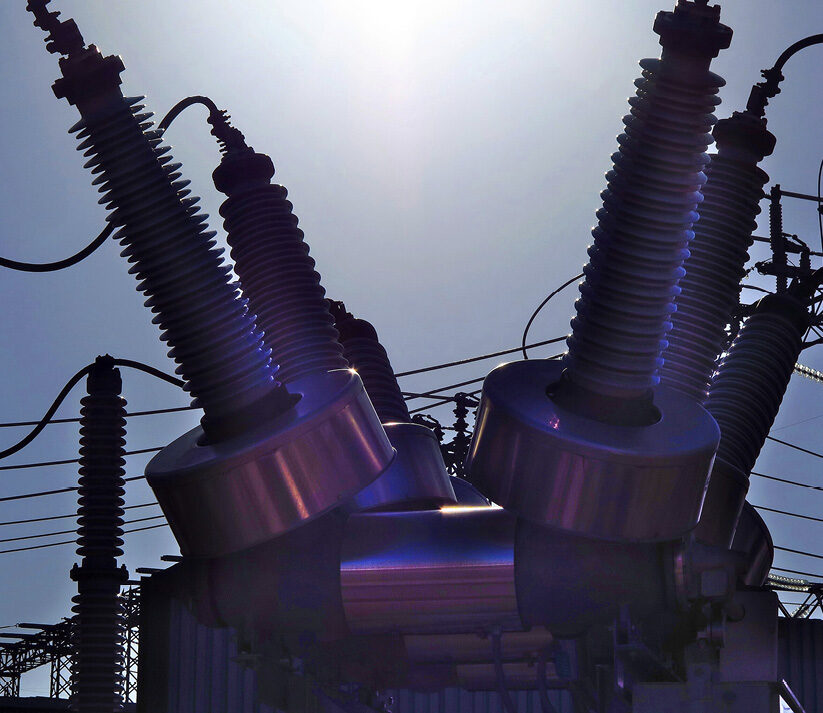
India’s grid is absorbing renewable energy at a pace its architecture was never designed for. Inverters which are interface between generation assets and the grid are increasingly the point of failure. Untested or poorly certified inverters can introduce harmonic distortions and voltage instability that cascade across substations. CPRI (Central Power Research Institute) and similar bodies test these devices under India-specific grid codes, but the pipeline of equipment seeking certification has grown faster than testing throughput. Closing that gap is a grid reliability issue, not just a procurement formality.
- Bankability is Built on Certification
Project finance for renewable energy in India runs into tens of thousands of crores annually. Lenders, whether domestic banks or multilateral development finance institutions require independent technical assessments before disbursement. Equipment without credible test certification increases perceived project risk, which feeds directly into higher interest rates or rejected term sheets. A strong domestic certification regime is, in effect, a subsidy on the cost of capital for green projects. Every credible test report issued by an Indian lab is a reduction in financing friction.
- Manufacturing Cannot Lead Without Testing Following Close Behind
The PLI schemes for solar modules, advanced chemistry cell batteries, and electrolysers are beginning to yield results. Indian manufacturers are producing. But a manufacturer who must send products to TÜV Rheinland in Germany or UL in the US for certification is at a structural disadvantage in time-to-market. Building co-located or nearby testing capacity; anchored by institutions like BIS, CPRI, and emerging private labs is the only way to make the Make in India proposition genuinely competitive, not just in cost, but in speed and credibility.
The Bottom Line
India’s 500 GW goal is not just a procurement challenge. It is a quality and trust challenge. Every gigawatt deployed on unverified equipment is a liability: financial, technical, and reputational. Testing infrastructure is not the exciting part of the energy transition story. But it may well be the part that determines whether the story has a good ending.
Policymakers, developers, and financiers who are serious about 2030 should be asking not just how many panels are being installed — but how many have been tested to survive the next 25 years in Indian conditions.
The views and opinions expressed in this article are the author’s own, and do not necessarily reflect those held by pv magazine.
This content is protected by copyright and may not be reused. If you want to cooperate with us and would like to reuse some of our content, please contact: editors@pv-magazine.com.


By submitting this form you agree to pv magazine using your data for the purposes of publishing your comment.
Your personal data will only be disclosed or otherwise transmitted to third parties for the purposes of spam filtering or if this is necessary for technical maintenance of the website. Any other transfer to third parties will not take place unless this is justified on the basis of applicable data protection regulations or if pv magazine is legally obliged to do so.
You may revoke this consent at any time with effect for the future, in which case your personal data will be deleted immediately. Otherwise, your data will be deleted if pv magazine has processed your request or the purpose of data storage is fulfilled.
Further information on data privacy can be found in our Data Protection Policy.