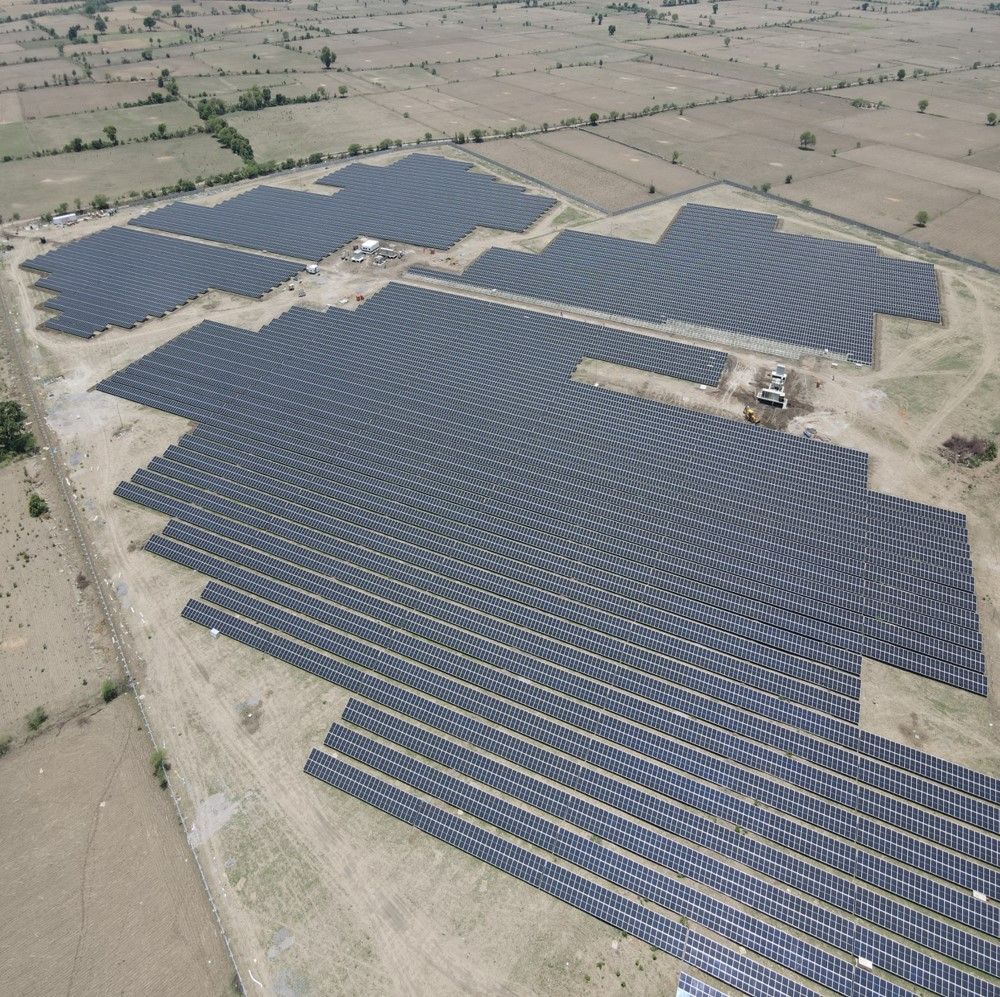





India installed 15.3 GW of solar capacity in the first quarter (Q1) of 2026, marking the highest quarterly capacity addition recorded to date. The addition represents a 143% year-on-year (YoY) increase compared to the 6.3 GW installed in Q1 2025, according to Mercom India’s newly released Q1 2026 India Solar Market Update Report.
Large-scale projects accounted for 82% of the total quarterly solar installations, with 12.6 GW added in Q1 2026. Open access projects contributed 21% of the large-scale solar capacity additions.
Mercom said record commissioning activity during the quarter was driven by a combination of approaching policy deadlines and improved transmission readiness in key solar markets. One of the main drivers was the upcoming implementation of ALMM List-II from June 2026, which prompted developers to accelerate project commissioning under the existing procurement framework amid concerns over limited domestic DCR cell availability and rising module procurement costs.
Installation activity was also supported by stronger execution under the Pradhan Mantri Kisan Urja Suraksha evam Utthaan Mahabhiyan (PM-KUSUM) program, along with accelerated commissioning of open access projects ahead of the next phase of Inter-State Transmission System (ISTS) waiver reductions.
“India’s solar sector recorded its strongest quarter ever in Q1 2026, driven by accelerated project execution ahead of the June ALMM-II deadline and the reduction in ISTS charge-waiver benefits,” said Raj Prabhu, CEO of Mercom Capital Group. “However, transmission bottlenecks could still play the spoiler in what is expected to be a record year for solar installations. While project execution and commissioning activity remain strong, transmission readiness and evacuation infrastructure are struggling to keep pace with the rapid growth in renewable capacity. As renewable penetration increases, curtailment, grid flexibility, and storage integration are becoming critical to sustaining future growth.”
As of March 2026, India’s cumulative installed solar capacity, including large-scale and rooftop, stood at 152 GW. Large-scale solar projects contributed 85%, and rooftop solar accounted for 15% to cumulative installed solar capacity during the quarter.
Solar energy accounted for 28% of India’s total installed power capacity and 55% of the total installed renewable energy capacity.
Rajasthan had the highest cumulative installed large-scale solar capacity, accounting for 32% of the country’s total PV installations. Gujarat and Karnataka followed with 21% and 11%, respectively.
In Q1 2026, Gujarat and Rajasthan led large-scale solar installations, accounting for approximately 40% and 39% of the capacity additions. Maharashtra ranked third, with 6%.
This content is protected by copyright and may not be reused. If you want to cooperate with us and would like to reuse some of our content, please contact: editors@pv-magazine.com.





By submitting this form you agree to pv magazine using your data for the purposes of publishing your comment.
Your personal data will only be disclosed or otherwise transmitted to third parties for the purposes of spam filtering or if this is necessary for technical maintenance of the website. Any other transfer to third parties will not take place unless this is justified on the basis of applicable data protection regulations or if pv magazine is legally obliged to do so.
You may revoke this consent at any time with effect for the future, in which case your personal data will be deleted immediately. Otherwise, your data will be deleted if pv magazine has processed your request or the purpose of data storage is fulfilled.
Further information on data privacy can be found in our Data Protection Policy.