Thermal anchors grid reliability as renewables drive power capacity in FY2027: India Ratings
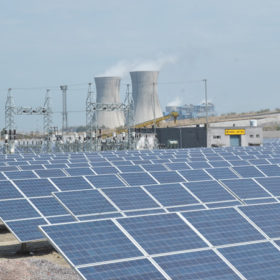
Coal-based thermal power is expected to remain the backbone of electricity generation in FY27, accounting for around 70%, even as renewable energy continues to dominate incremental capacity additions.

Why transformers are the unsung heroes of India’s green revolution
We are preparing for a future where transformers are dynamic energy hubs, stabilizing a grid that is constantly fluctuating between charging EVs and absorbing solar export.
India’s Union Budget 2026–27 removes customs duty on solar glass inputs, lithium battery cell machinery, and critical minerals processing equipment
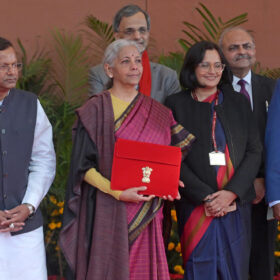
India’s Union Budget 2026–27 extends basic customs duty (BCD) exemptions on the import of capital goods used for lithium-ion cell production for battery energy storage systems (BESS), as well as capital goods required for processing critical minerals. It also removes the 7.5% BCD on sodium antimonate used in solar glass manufacturing.

Carbon steel pipes: The backbone of India’s expanding energy and infrastructure grid
The role of carbon steel pipes in India’s energy and infrastructure grid will continue to evolve alongside the country’s development priorities. As networks expand and operating conditions become more demanding, value will be defined not by capacity alone, but by lifecycle performance, reliability, and sustainability.
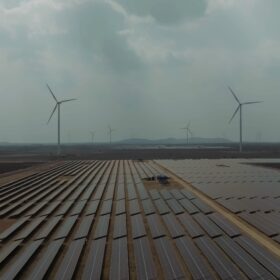
India requires $145 billion in annual energy investment to bridge growth and climate targets
India must mobilise around $145 billion in annual energy investment to sustain economic growth while pushing its net-zero ambitions. The bulk of this capital will be directed toward scaling up renewable power generation, grid infrastructure modernization, and energy storage, according to Wood Mackenzie.

Renewable energy industry’s key expectations from Union Budget 2026
The upcoming budget must prioritize in-house technology and equipment development, provide clarity on delayed power purchase agreements (PPAs) and power sale agreements (PSAs), increase budgetary allocation and policy support for Green Energy Corridors, introduce production-linked incentives for battery energy storage system (BESS) manufacturing, establish an Approved List of BESS Integrators (ALBI), lower the cost of capital through priority sector lending, extend ALMM for solar cells, and continue the ISTS waiver, among other measures.
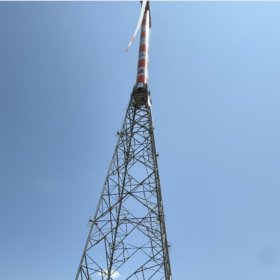
Waaree Renewable Technologies to acquire 55% stake in Associated Power Structures
Waaree Renewable Technologies Ltd’s board of directors has approved the acquisition of an approximately 55% stake in Associated Power Structures Ltd for INR 1,225 crore.
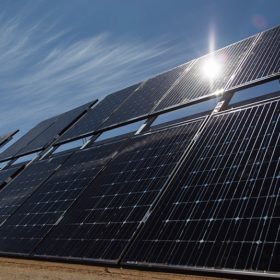
India curtailed 2.3 TWh of solar generation between May and Dec. 2025: Ember
The system operator regularly had to curtail solar generation as an emergency measure to maintain grid security, as other resources were already flexing to their maximum capabilities. Lost solar generation highlights the need for flexibility to grow at pace with solar capacity.
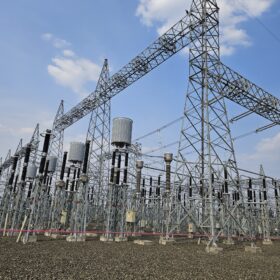
IndiGrid raises INR 1,500 crore through institutional placement
India’s first and largest publicly listed power sector Infrastructure Investment Trust (InvIT), IndiGrid, has successfully raised INR 1,500 crore through an institutional placement (IP). The placement was oversubscribed by around two times and saw strong participation from both domestic and global institutional investors.

Thermal share in power generation to drop below 70% next fiscal: Crisil Ratings
The share of thermal power in India’s electricity generation is expected to fall below 70% next fiscal, driven by slower growth in power demand and a sharp rise in renewable energy (RE) generation, according to Crisil Ratings.