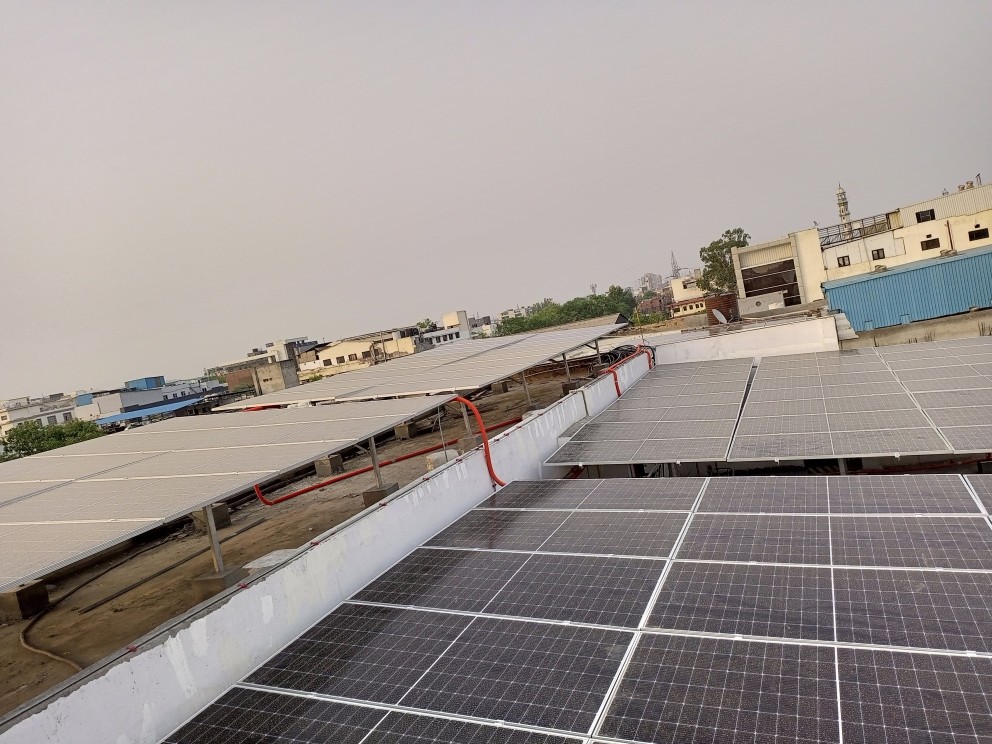





For a long time, solar energy was seen as a way to reduce electricity bills—an operational decision driven by cost savings. But over the years, I’ve seen this perception evolve significantly. Today, solar is no longer just about saving money; it is becoming a strategic decision that reflects how a business thinks about its future.
One of the biggest reasons for this shift is the need for predictability. Businesses today are dealing with constant uncertainty—whether it’s rising power tariffs, fuel price volatility, or supply constraints. Solar brings a level of stability that is hard to achieve otherwise. Once installed, it gives businesses better control over a key operating cost.
At the same time, sustainability is no longer a side conversation. It has moved to the center of decision-making. Companies are being evaluated not just on financial performance, but also on how responsibly they operate. Solar becomes a very visible and credible way to act on that responsibility.
Businesses are now thinking about control and independence. With rooftop solar and newer models like group and virtual net metering, organizations are not just consuming energy—they are actively managing it. That shift in mindset is important.
The way solar investments are evaluated has also changed. Earlier, most conversations were around payback timelines. Today, it is more about long-term value—how consistently the system performs, how much it reduces risk, and how it fits into the company’s larger strategy. Technology has played a big role here, making systems more reliable and easier to manage.
There is also a softer, but equally important, aspect to this. When a company adopts solar, it sends a signal—to its customers, employees, and partners—that it is thinking ahead. In many ways, it becomes a reflection of the company’s values.
Of course, challenges remain. There are still gaps in awareness, and implementation can sometimes be slower than expected due to regulatory or operational complexities. But these are transitional issues.
What is clear is that the role of solar is changing. It is moving from being a cost-saving tool to a strategic asset—one that helps businesses become more resilient, more responsible, and more future-ready.
And increasingly, that’s exactly how boardrooms are beginning to see it.
The views and opinions expressed in this article are the author’s own, and do not necessarily reflect those held by pv magazine.
This content is protected by copyright and may not be reused. If you want to cooperate with us and would like to reuse some of our content, please contact: editors@pv-magazine.com.



By submitting this form you agree to pv magazine using your data for the purposes of publishing your comment.
Your personal data will only be disclosed or otherwise transmitted to third parties for the purposes of spam filtering or if this is necessary for technical maintenance of the website. Any other transfer to third parties will not take place unless this is justified on the basis of applicable data protection regulations or if pv magazine is legally obliged to do so.
You may revoke this consent at any time with effect for the future, in which case your personal data will be deleted immediately. Otherwise, your data will be deleted if pv magazine has processed your request or the purpose of data storage is fulfilled.
Further information on data privacy can be found in our Data Protection Policy.