Solar capacity addition to slow down till FY2019-20: Crisil
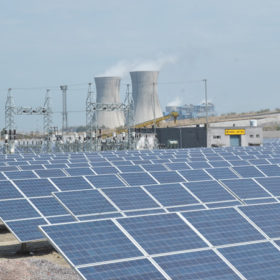
While commissioning is expected to slow down in FY 2018-19 due to the impact of the safeguard duty and GST issues, FY 2019-20 is weak due to delay in auction as several tenders got delayed/cancelled. However, FY2019-20 onwards, solar capacity additions are expected to pick up due to several factors including subsiding/removal of the safeguard duty (which would ease cost pressures).
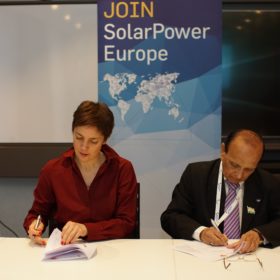
SolarPower Europe and NSEFI sign MoU on solar cooperation
Brussels-based SolarPower Europe and the National Solar Energy Federation of India (NSEFI) have signed a Memorandum of Understanding (MoU) for cooperation on operation & maintenance (O&M), installation quality, digitalisation and storage.

Assam takes a giant leap forward with 70 MW solar park
A state hamstrung by low irradiance, tough terrain and regular flooding is trying to move forward its energy transition. Previously, the largest solar project in Assam had a generation capacity of only 5 MW.
SECI goes into overdrive with 6 GW tender plans announced in five days
The organization responsible for coordinating India’s push for 100 GW of new solar capacity by 2022 has had a busy week. But, as last year illustrated, tenders alone are not always a guarantee of new generation assets.
The long read: Case for optimization
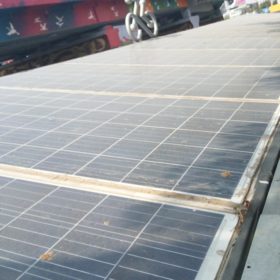
While India’s solar potential is unquestionable, progress has been uneasy and race-to-the-bottom pricing has held back the adoption of technologies such as MLPE. However, that is beginning to change, writes Prasidh Kumar, CEO of Soreva Energy, as grid modernization requires proactive monitoring and optimization technologies.
Solar made up 50% of India’s new power capacity in 2018
The level of new solar capacity – 8,263 MW – however, was 15.5% down from the 9,782 MW added in 2017 owing to safeguarding duty and GST taking a toll on large-scale PV. While utility-scale solar declined 23% year-on-year, rooftop PV remained a bright spot, and registered impressive growth of 66%.

Schneider Electric pulls out of utility-scale PV business
The French power electronics specialist is pulling out of the utility-scale segment to strengthen its profile in the residential and C&I space.

A solar decade: From 9 MW to 28 GW
There is widespread doubt about whether India can achieve its 100 GW solar target by 2022 but, having started from a base of only 9 MW of capacity 10 years ago, it would be foolish to write off the prospects of this solar superpower.
Government approves Rs46,000 crore for KUSUM and rooftop solar
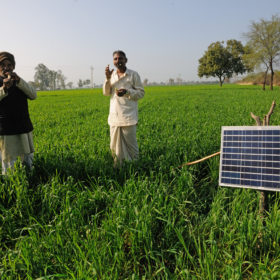
The government of India has approved central financial support of more than Rs46,000 crore by 2022 to promote solar among farmers and in the residential sector. The KUSUM scheme for farmers has been allocated Rs34,422 crore and the rooftop solar program Rs11,814 crore.
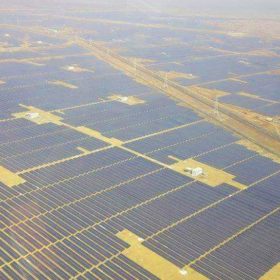
Q4 utility-scale solar down 46%: Bridge To India
India’s utility-scale solar capacity addition during October-December 2018 went down 46 per cent over the corresponding period of 2017. In contrast, rooftop solar grew strongly at 47 per cent.