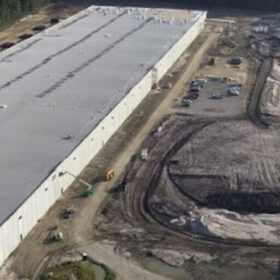
India and Australia helped make up for Chinese solar retreat last year
The world had more than half a terawatt of PV generation capacity at the end of last year as emerging solar markets picked up the slack caused by Beijing’s subsidy about-turn to the tune of a 20% rise in installations outside China.
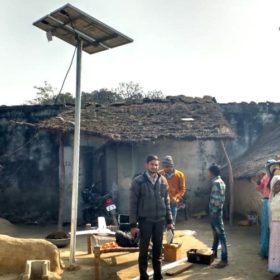
Off-grid villages in Uttar Pradesh go 100% solar
Lack of road access meant PV panels had to be brought in by boat to be installed on the roof of every home under the government’s Saubhagya rural electrification scheme.

India’s solar sector will outperform globally despite near-term challenges, says Fitch Solutions
With Narendra Modi being tipped to triumph again in the current Indian elections, Indian solar capacity is expected to grow robustly, at 15.3% per year, on the back of continued strong government support.
Indian solar market leaders for 2018
ACME Solar installed the largest utility-scale solar capacity in 2018. It also had the largest project pipeline at the end of 2018, closely followed by SB Energy and Azure Power. While modules from China’s ZnShine were used the most, the imposition of the safeguard duty helped domestic manufacturers to capture a larger share of the market compared to 2017, according to clean energy consulting firm Mercom Communications.
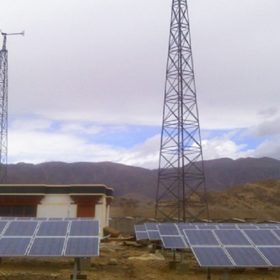
PTC Financial joins USICEF initiative to fund distributed solar projects
Infrastructure finance provider PTC India Financial Services (PFS) has partnered with U.S.-India Clean Energy Finance (USICEF) initiative to fund the most promising, investment-ready distributed solar projects in India.
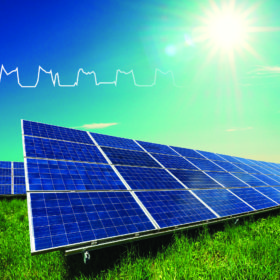
Global solar PV will reclaim double-digit growth in 2019, says IHS Markit
This revived growth comes mainly from markets outside of China, which are forecast to rise by 43% in 2019. While China will grow marginally by 2%, Europe will add over 7 GW with utility-scale installations in Spain alone contributing 60% of the growth in the region. The USA will overtake India to once again become the second-largest PV market.

Financing key to scaling up SME rooftop solar in India — Deloitte
The Micro, Small and Medium Enterprises (MSME) sector is expected to make a significant contribution to India’s rooftop PV target of 40 GW by 2022. However, a range of issues — including low public awareness, the scarcity of low-cost financing and the need for rooftop aggregation models — must be addressed before rooftop solar can be aggressively scaled up, according to a new report from Deloitte and the Climate Investment Funds (CIF).

Phase II rooftop solar will give a big push to reach 40 GW target: Tata Power CEO
The latest government initiative that offers central financial assistance for Group Housing Societies and Residential Welfare Associations would help better adoption of rooftop solar among residential power consumers, which account for only around 9% of the total rooftop solar systems installed in the country (against almost 70% by industrial and commercial users).
No construction permits without solar in one town in Telangana
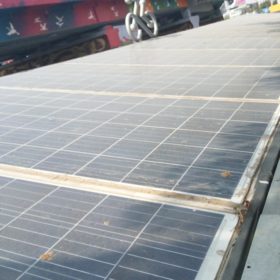
The municipal council of Karimnagar has mandated rooftop solar on new buildings of a certain size as part of the Ministry of New & Renewable Energy’s Smart City Mission, which requires 10% of municipal energy to be generated from solar.

Phase II of Rooftop Solar Scheme approved
The President of India has sanctioned financial outlay of Rs 11,814 crore for phase II of grid-connected rooftop solar programme to achieve ‘40 GW by 2022’ target.