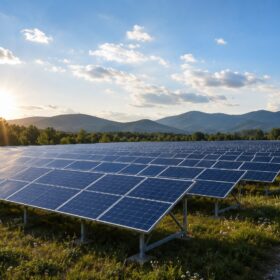
Study finds PV plants reshape land surface conditions, reducing wind speed and increasing soil moisture
A China-based research team conducted a systematic review and meta-analysis of 147 studies on how solar PV systems alter land surface processes, covering 609 installations worldwide and 11 key climate variables. The results show mixed but mostly significant environmental effects, including reduced wind speed, albedo, and land surface or soil temperatures, alongside increased soil moisture, while air temperature changes remained largely non-significant.
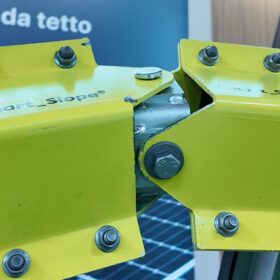
AlphaTracker launches hydraulic mechanism that locks trackers during strong wind gusts
The Portuguese manufacturer unveiled Maxi-Lock, an autonomous hydraulic mechanism that locks solar trackers during strong wind gusts or high-amplitude vibrations, and Smart-Slope, a universal joint-style system designed for uneven terrain. The company claims the technologies can reduce supply and maintenance costs, lower component counts, improve plant availability, and enable higher PV module integration in both conventional and agrivoltaic projects.
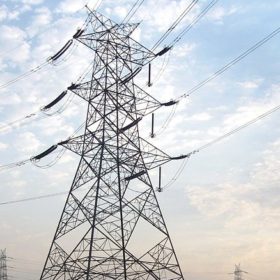
Investment revives in thermal power amid grid stability needs as renewables surge: ICRA
A new report by ICRA says that the thermal power sector in India is witnessing a revived investment emphasis, even as the renewable capacity continue to surge. Thermal power acts as a reliable base-load supply, aiding grid stability amid expectations of power demand growth.

ESG has evolved beyond compliance into core business strategy: Milton Kenny, Premier Energies
Milton Kenny, general manager-ESG at Premier Energies Ltd, discusses how ESG is reshaping the renewable energy sector—from decarbonisation to supply chain transparency and circularity.
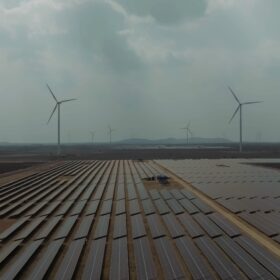
Apple partners CleanMax to build 150 MW of renewable energy capacity for captive consumption in India
Apple has partnered with CleanMax to develop more than 150 MW of new renewable energy capacity in India for captive consumption.

EU funding ban on high-risk inverters, including Chinese suppliers, extends to BESS
The new policy has already applied, and impacts billions in funding from the European Investment Bank on renewable projects including standalone and co-located storage.
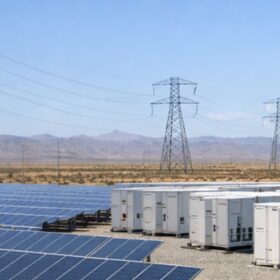
Firm solar and storage costs fall to $54/MWh, says IRENA
A new report by the International Renewable Energy Agency (IRENA) finds that round‑the‑clock solar and wind paired with battery storage deliver power at lower cost than new fossil fuel generation in high‑quality resource regions.
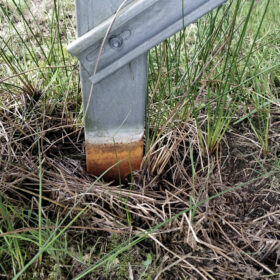
Resisting rust in solar
Over a 30-year asset life, corrosion can evolve into a structural, electrical, and fire safety issue. Corrosion drives up operations and maintenance (O&M) costs, reduces resilience to extreme events, and in some cases, can force premature decommissioning or complete structural replacement Intertek CEA’s Nicholas Hudson and Ankil Sanghvi advise on best practices.
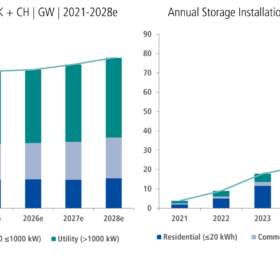
Europe’s solar and storage development: Selectivity amid rising global supply and returning energy shocks
Escalating Middle East tensions and global energy supply risks are accelerating Europe’s shift toward solar and storage, particularly in commercial, industrial, and utility-scale segments where energy security, resilience, and price stability are becoming central investment drivers. At the same time, expanding manufacturing capacity in China and India is redirecting surplus solar and storage supply toward Europe, creating a highly competitive and increasingly selective market where long-term success depends on quality, reliability, ESG alignment, and strategic market positioning.
Oswal Pumps secures INR 162 crore solar pump order from MSEDCL
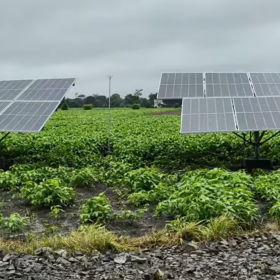
Oswal Pumps has secured an order from Maharashtra State Electricity Distribution Co. Ltd. (MSEDCL) for the supply and installation of 6,869 off-grid solar PV water pumping systems in Maharashtra. The solar pumps will be deployed under Component B of the PM-KUSUM scheme, also known as the Magel Tyala Saur Krishi Pump Yojana.