Marija Maisch

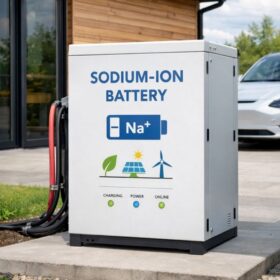
NanoMalaysia unveils sodium-ion prototype surpassing 300 Wh/kg
The new prototype ranks among the most advanced sodium‑ion battery systems reported worldwide.
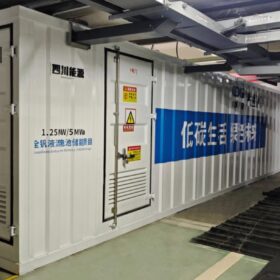
China commissions first urban underground vanadium flow battery system
China has deployed its first 1.25 MW urban vanadium flow battery (VFB), supporting peak AC loads and offering a safer alternative amid tighter lithium-ion storage regulations in dense urban environments.
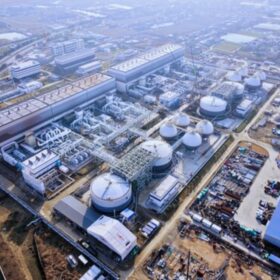
China’s 600 MW/2.4 GWh storage plant becomes world’s largest CAES site
With 600 MW of installed capacity and 2,400 MWh of storage, the Huai’an Salt Cavern project is now the world’s largest compressed air energy storage (CAES) facility, surpassing the 300 MW/1,500 MWh project commissioned earlier this year that previously held the title.
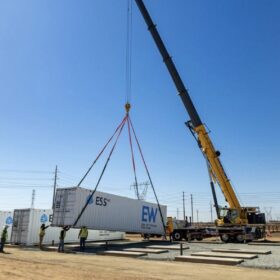
ESS Tech acquires VoltStorage GmbH to expand long-duration energy storage
US-based ESS Tech has acquired the assets and intellectual property of Germany’s VoltStorage GmbH to strengthen its long-duration energy storage (LDES) portfolio and combine two iron-based flow battery technologies.
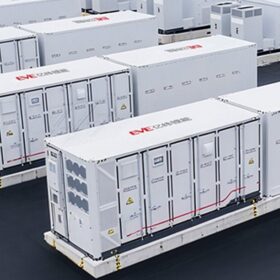
World’s first 628 Ah grid-scale battery enters operation
EVE Energy says a 200 MW/400 MWh battery energy storage project in China has entered operation, which it describes as the world’s first utility-scale deployment of 628 Ah lithium iron phosphate (LFP) cells.
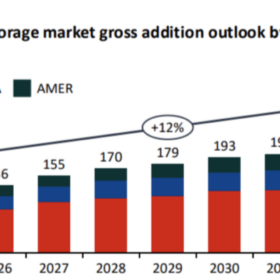
Global BESS capacity tops 250 GW, overtaking pumped hydro for first time
Rystad Energy says it expects global battery energy storage system (BESS) additions to exceed 130 GW/350 GWh in 2026, led by China, the United States, the United Kingdom, Australia, and Germany.
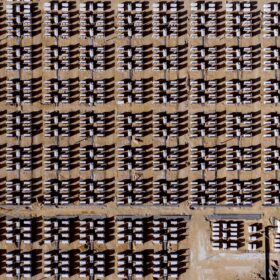
World’s largest AI-powered battery storage cluster comes online in China
The multi-project cluster includes the world’s largest single-site electrochemical energy storage facility: the 4 GWh Envision Jingyi Chagan Hada Energy Storage Power Station.
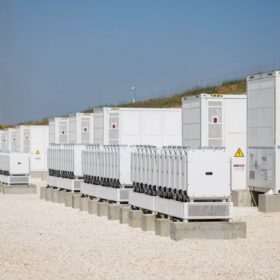
EU installs 27.1 GWh of battery storage in 2025 as utility scale leads
The European Union added 27.1 GWh of battery energy storage capacity in 2025, with utility-scale systems accounting for the majority of new installations as residential storage declined amid lower electricity prices and reduced support schemes, according to a new report from SolarPower Europe.
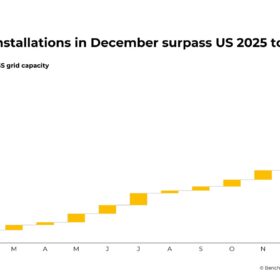
Global BESS demand jumps 51% in 2025 as installations top 300 GWh
Iola Hughes, Head of Research at Benchmark Mineral Intelligence, tells ESS News that 2026 is set to be another strong year for BESS, with forecast additions exceeding 450 GWh and no material supply constraints in sight. Meanwhile, the initial impact of rising lithium prices is already visible at the cell level, but the full effect has yet to ripple through to system pricing.
Sodium-ion battery cells already near lithium-ion cost parity, set to get cheaper
By 2050, sodium-ion batteries with fast learning rates could deliver storage at 11–14 €/MWh – cheaper than lithium-ion at 16–22 €/MWh – while also offering higher energy-to-power ratios and high cycle durability, a new research finds.