





India’s industrial sector is entering a pivotal phase in its energy transition. What was once a routine fuel procurement decision is now becoming a strategic imperative. Rising LPG costs, supply unpredictability, and increasing operational risks are prompting businesses to rethink how they power their operations — not just for efficiency, but for resilience.
For decades, LPG has served as a reliable fuel source across a wide range of industries. Today, however, the challenge is no longer limited to availability or price fluctuations. It is about ensuring business continuity. Inconsistent supply, rising costs, and logistical uncertainties are beginning to influence production planning, operational efficiency, and long-term competitiveness.
For industries dependent on uninterrupted heat and energy input, these risks are significant. Unplanned downtime, delayed output, supply chain disruptions, and operational inefficiencies are no longer isolated concerns — they are strategic vulnerabilities that can directly impact margins and growth.
This is where the conversation is shifting. Across India, forward-looking businesses are beginning to view energy strategy as a core component of operational resilience. In this transition, Compressed Biogas (CBG) is emerging as a practical, scalable, and future-ready alternative.
Industrial consumers today are not just looking for cleaner fuels. They are seeking solutions that can be adopted quickly, require minimal operational disruption, and offer long-term predictability. They want energy systems that are locally available, flexible, and reliable. CBG is increasingly meeting these expectations.
Advancements in infrastructure and delivery models are making this transition more seamless than ever before. Plug-and-play decompression units, cascade-based logistics, pressure regulating and metering systems, and LPG-to-gas retrofit solutions are enabling industries to switch with minimal friction. When supported by end-to-end execution — from engineering and supply to commissioning — the shift becomes less about experimentation and more about operational certainty.
A new generation of integrated energy players is helping accelerate this transition by combining fuel sourcing, logistics, and on-ground infrastructure into a single delivery model. This integrated approach reduces fragmentation, simplifies adoption, and improves reliability — all of which are critical for industrial-scale implementation.
This transition is not simply a fuel shift, but a structural transformation in how industries approach energy security. By linking CBG supply with waste-to-energy ecosystems and industrial distribution networks, integrated platforms are helping build a more resilient and locally anchored energy ecosystem.
Importantly, the move toward CBG is not being driven solely by environmental considerations. The business case is becoming increasingly compelling. Lower fuel costs compared to LPG, improved supply consistency, and reduced operational risk are creating tangible value for industrial users.
In an environment where margins are under pressure and reliability is non-negotiable, these advantages are strategic — not incremental.
India’s broader energy landscape is also evolving rapidly. As the country seeks greater energy security, reduced import dependence, and stronger domestic manufacturing capabilities, cleaner fuels such as CBG, methanol, and ethanol are gaining national significance. These alternatives support a model where industrial continuity and national resilience reinforce each other.
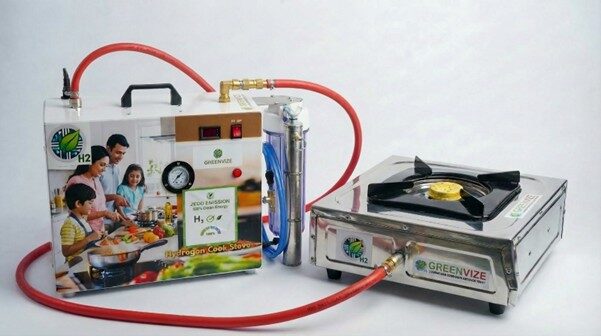
Alongside CBG, emerging fuels such as green hydrogen produced through biomass linked and other renewable pathways are also beginning to enter the industrial energy conversation. Though still at an earlier stage, green hydrogen represents an important long-term opportunity for deep decarbonisation and for building domestically anchored, future-ready energy systems. As this ecosystem matures, such clean fuel pathways could significantly expand India’s sustainable industrial energy mix.
This shift also aligns closely with India’s broader economic priorities — Make in India, domestic capability building, and sustainability-linked industrial growth. Businesses today are no longer being asked only to reduce emissions. They are being encouraged to build energy systems that are locally anchored, operationally resilient, and aligned with India’s long-term economic direction.
The transition to CBG, therefore, is not merely a response to LPG volatility. It is part of a broader move toward a more self-reliant and future-ready industrial energy base.
Equally important is the shift in mindset. For years, alternative fuels were perceived as niche, expensive, or difficult to implement. That perception is changing. Businesses are now asking not whether they should explore alternatives, but how quickly they can adopt energy systems that reduce risk while strengthening long-term competitiveness.
In that sense, India’s LPG uncertainty may ultimately produce something constructive — a broader industrial rethink on energy resilience. Businesses that move early will not only protect themselves from supply disruptions and cost volatility, but also position themselves for a future where resilience, sustainability, and domestic energy security are deeply interconnected.
The shift toward cleaner, dependable fuel systems is no longer a distant aspiration. It is becoming a strategic necessity — and the industries that act now will help define India’s resilient energy future.
The views and opinions expressed in this article are the author’s own, and do not necessarily reflect those held by pv magazine.
This content is protected by copyright and may not be reused. If you want to cooperate with us and would like to reuse some of our content, please contact: editors@pv-magazine.com.



By submitting this form you agree to pv magazine using your data for the purposes of publishing your comment.
Your personal data will only be disclosed or otherwise transmitted to third parties for the purposes of spam filtering or if this is necessary for technical maintenance of the website. Any other transfer to third parties will not take place unless this is justified on the basis of applicable data protection regulations or if pv magazine is legally obliged to do so.
You may revoke this consent at any time with effect for the future, in which case your personal data will be deleted immediately. Otherwise, your data will be deleted if pv magazine has processed your request or the purpose of data storage is fulfilled.
Further information on data privacy can be found in our Data Protection Policy.