





From ESS News
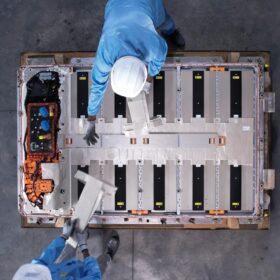
Japanese investment conglomerate SoftBank Group said its telecommunitions arm, SoftBank Corp in Japan, will build zinc-halogen battery cells and storage systems for the Japanese market, and scale to 1 GWh per year.
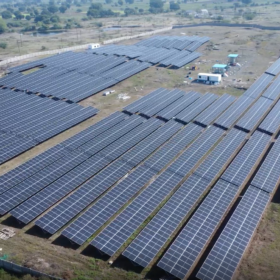
Manufacturing will take place of both batteries and solar panels at SoftBank’s factory in Osaka, Japan, and the site will house both an AI data center and AI hardware plant. On the battery side, it will partner with South Korea-based battery company Cosmos Lab and AI firm DeltaX Co.
Cosmos Lab will work with SoftBank on what it called next-generation zinc-halogen battery cells, and work with DeltaX on the battery designs. Two ventures will be established, with AX Factory to serve as a hub for AI data center operations and hardware manufacturing, and GX Factory that will serve as a manufacturing hub for next-generation batteries, solar panels and related products.
From the press release, Softbank said “At the GX Factory, SoftBank plans to begin manufacturing battery cells and energy storage systems from the fiscal year ending March 31, 2028 (FY2027), with the aim of achieving mass production on a gigawatt-hour (GWh)-per-year scale by around FY2028.”
Zinc-Halogen
Zinc-halogen batteries use pure water as the electrolyte, adding innate safety to the design. Aqueous zinc-ion batteries have been pursued in the past, both in labs and in production, but have a tiny share of the battery market. Halogens elements include iodine, bromine, or chlorine.
Generally, the practical implementation of halogen cathodes face challenges. These, according to peer reviews, include intrinsically low electrical conductivity, severe corrosion, and competing hydrolysis reactions. However, reletive abundance of key materials may make them cost effective, along with intrinsically safe, with a relatively long lifetime.
This content is protected by copyright and may not be reused. If you want to cooperate with us and would like to reuse some of our content, please contact: editors@pv-magazine.com.


By submitting this form you agree to pv magazine using your data for the purposes of publishing your comment.
Your personal data will only be disclosed or otherwise transmitted to third parties for the purposes of spam filtering or if this is necessary for technical maintenance of the website. Any other transfer to third parties will not take place unless this is justified on the basis of applicable data protection regulations or if pv magazine is legally obliged to do so.
You may revoke this consent at any time with effect for the future, in which case your personal data will be deleted immediately. Otherwise, your data will be deleted if pv magazine has processed your request or the purpose of data storage is fulfilled.
Further information on data privacy can be found in our Data Protection Policy.