





The solar industry has traditionally measured success through installed capacity. Megawatts commissioned and expansion targets have been the primary indicators of growth.
However, as the sector matures, the focus is shifting towards actual performance. The key metric today is how efficiently a plant converts its installed capacity into consistent energy generation.
In practice, most plants operate below their designed potential due to a combination of losses, many of which are manageable.
Soiling as a Performance Loss Factor
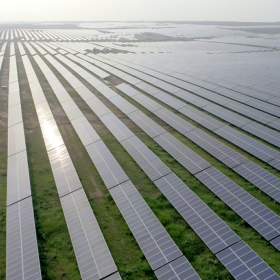
Solar panels operate in open environments and are continuously exposed to dust, pollution, bird droppings, and airborne particles. Over time, these elements accumulate on the module surface and reduce the amount of sunlight reaching the photovoltaic cells.
This accumulation, referred to as soiling, is one of the most common environmental and maintenance-related loss factors in solar power plants.
Under typical operating conditions, soiling can reduce energy output by up to 30 percent, depending on the location and surrounding environment.
Waterless robotic cleaning systems are specifically designed to address this issue in a consistent and scalable manner across utility-scale installations.
Impact on Energy Generation and Revenue
A reduction in irradiance directly affects energy generation, which in turn impacts revenue.
Even moderate efficiency losses can have measurable financial implications, particularly in utility-scale and commercial installations. Lower generation leads to reduced cash flow, extended payback periods, and pressure on expected returns.
At scale, these losses are not marginal. They accumulate over time and affect overall project performance.
This is where structured cleaning approaches become critical in maintaining output stability across large solar portfolios.
Cleaning as a Performance Intervention
Solar panel cleaning is one of the most direct and effective ways to restore performance losses caused by soiling. By removing the layer of accumulated contaminants, cleaning improves light transmission and enables panels to operate closer to their designed efficiency.
Field implementations have shown that consistent cleaning can improve energy output in the range of 6 to 10 percent in dust-prone conditions.
Across multiple deployments, automated cleaning solutions have demonstrated measurable improvements in generation while reducing dependency on manual intervention.
Importance of a Structured Approach
In many cases, cleaning is carried out reactively after a visible drop in performance. This approach results in avoidable generation losses before intervention takes place.
Maintenance-related losses increase when routine cleaning and inspections are not performed consistently.
A planned cleaning schedule, aligned with site conditions, ensures that soiling is managed before it significantly impacts output.
Advanced AI-driven scheduling systems enable cleaning cycles to be optimised based on environmental conditions, improving both efficiency and resource utilisation.
Evolving O&M Priorities
As solar projects scale and tariffs decline, operational efficiency is becoming increasingly important. There is a clear shift from capacity expansion to performance optimisation.
Within this context, cleaning plays a critical role because it offers:
- Direct impact on energy generation
- Measurable improvement in performance ratio
- Alignment with financial outcomes
Waterless robotic cleaning and predictive maintenance capabilities are increasingly aligned with this shift towards data-driven O&M strategies.
Conclusion
The long-term value of a solar power plant depends on its ability to consistently deliver expected energy output.
Soiling is a predictable and manageable factor that directly affects both performance and revenue. Addressing it through regular and structured cleaning practices is essential for maintaining efficiency and protecting returns.
As demonstrated across multiple large-scale projects, systematic and technology-driven cleaning approaches can improve generation consistency while optimising operational costs.
Solar panel cleaning should therefore be treated as an integral part of performance management, rather than a secondary maintenance activity.
The views and opinions expressed in this article are the author’s own, and do not necessarily reflect those held by pv magazine.
This content is protected by copyright and may not be reused. If you want to cooperate with us and would like to reuse some of our content, please contact: editors@pv-magazine.com.



By submitting this form you agree to pv magazine using your data for the purposes of publishing your comment.
Your personal data will only be disclosed or otherwise transmitted to third parties for the purposes of spam filtering or if this is necessary for technical maintenance of the website. Any other transfer to third parties will not take place unless this is justified on the basis of applicable data protection regulations or if pv magazine is legally obliged to do so.
You may revoke this consent at any time with effect for the future, in which case your personal data will be deleted immediately. Otherwise, your data will be deleted if pv magazine has processed your request or the purpose of data storage is fulfilled.
Further information on data privacy can be found in our Data Protection Policy.