BYPL commissions solar microgrids with storage batteries

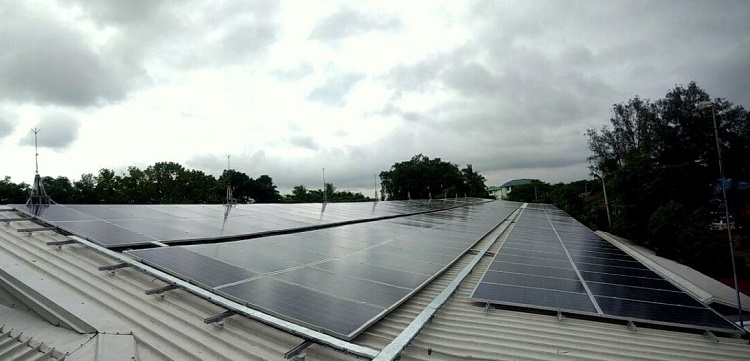
Power discom BSES Yamuna Power Limited (BYPL) has launched a pilot to establish solar microgrids in Delhi, becoming one of the first discoms in the country to do so in an urban setting.
“These microgrids will combine rooftop solar with lithium-ion-based battery energy storage systems. As a technology demonstrator, four such microgrids have been set-up at BYPL offices in East Delhi”—daily newspaper Economic Times quoted from a BSES statement while sharing the details.
The energy generated through rooftop solar is used and the surplus is fed into the grid, which has the potential to reduce electricity bills.
According to the statement, a pan discom (including at consumer location) roll-out of 1,000 such solar-energy battery storage microgrids has the potential to save about 62 million units of electricity and over three lakh litres of diesel amounting to about Rs 41 crore on an annualised basis—cumulatively for the discom and the consumers, which would lead to a CO2 reduction of about 51,000 tonnes.
“The initial results of the pilot project at four BYPL locations in East Delhi are very encouraging. At these locations, the discom has installed rooftop solar plans varying between 5 KW and 7 KW and energy battery storage between 7 kWh and 10 kWh. They show that over this period only 8 per cent of grid power (net of exports) was used,” BSES said.
According to the discom, the balance 92 per cent was generated and met through the solar plant coupled with the energy battery storage. Apart from this, around 1,245 litres of diesel and 0.24 million units of electricity amounting to about Rs 20 lakh can be saved on an annual basis. Additionally, it could also reduce CO2 of around 205 tonnes, the statement said.
The discom has tied-up with Council on Energy, Environment and Water (CEEW) to gauge and assess the system performance of the pilot.
At present, the cost of setting-up a rooftop solar system is around Rs 40,000 per KW and around Rs 80,000 per KW for an energy storage system.
This content is protected by copyright and may not be reused. If you want to cooperate with us and would like to reuse some of our content, please contact: [email protected].

Please login to comment
[…] Dr Ravishankar: While issues of load shedding have been addressed and reduced to a great extent in urban India, rural India still suffers from its fair share of power issues. In a country like ours, which is blessed with abundant sunlight for over 300 days of the year, one of the best solutions is the use of a mix of renewable energy sources that support a microgrid. […]