JinkoSolar ships 52 GW in first 9 months of 2023
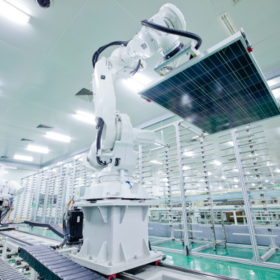
JinkoSolar says it shipped 52 GW of PV modules in the first nine months of 2023, bringing its total shipments to 190 GW since its foundation.

Tongwei plans 16 GW PV cell factory
Tongwei says it will build a new 16 GW solar cell factory in Meishan City, China’s Sichuan province.
Big module makers in China call for wafer standards
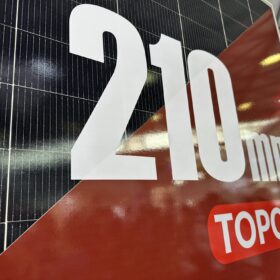
Trina Solar, JinkoSolar, JA Solar, Longi, Risen, Canadian Solar, Tongwei, Chint, and Das Solar have issued a joint statement demanding the standardization of wafer sizes.
Maxeon sues Tongwei for patent infringement in Germany
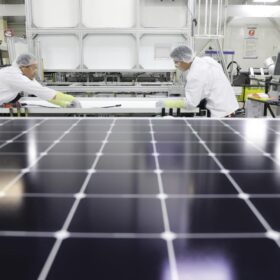
Maxeon Solar Technologies has filed a lawsuit against Tongwei Solar in Germany’s Dusseldorf district court for the alleged infringement of its European patent for shingled solar cell technology.
Tongwei led global polysilicon capacity in 2022, says Bernreuter Research
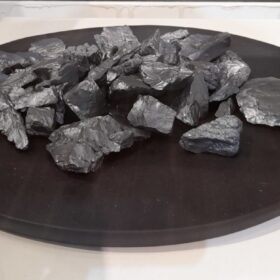
The world’s top four largest polysilicon producers in 2022 were Chinese companies, led by Tongwei with 345,000 metric tons (MT), followed by GCL Technology, Daqo, Xinte, and Wacker Chemie.
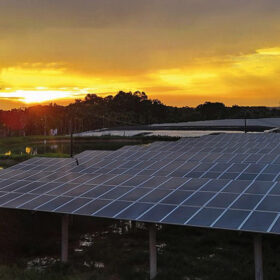
Shingle all the way
While shingled cells have been around for a while, Tongwei’s adoption of the technology is notable as it is a manufacturer with considerable scale. If shingling can overcome some hurdles, it could prove a welcome solution as unshaded sites for PV become elusive in mature solar markets.
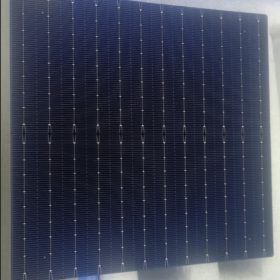
TOPCon solar cell achieves 24.2% efficiency via new plasma-assisted atomic layer deposition tech
A team of international researchers has simplified the deposition of thin film layers in the commercial production of TOPCon solar cells. Via a tube-type industrial plasma-assisted atomic layer deposition (PEALD) technique, they were able to achieve a power conversion efficiency of 22.8% in a 60-cell, 613 W TOPCon module.
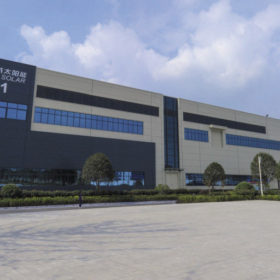
China’s solar cell capacity exceeds 361 GW
Tongwei has also secured another massive polysilicon order and Golden Glass has invested in more heterojunction solar cell capacity. Furthermore, China’s National Energy Administration (NEA) said 23.7 GW of new solar was deployed in China in the first five months of the year.
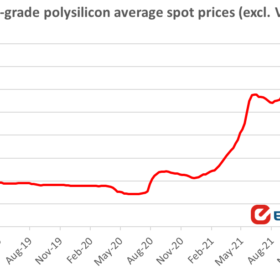
Polysilicon price fluctuations expected to continue until late 2023
Two industry experts have provided analyses of the current polysilicon price scenario in a chat with pv magazine and both agreed that polysilicon demand is still growing faster than supply. The price may decrease starting from the second quarter and reach more reasonable levels by the end of the year.

USA: Government report says Trump’s solar tariff has accomplished little
The U.S. ITC has released a report highlighting changes in the domestic solar cell and module manufacturing industry, showing that while there has been an increase in domestic module manufacturing, the overall program’s success, relative to the $740 million in tariffs, has created little measurable benefit.