



India’s education sector stands among the largest in the world, comprising over 248 million students, 1.47 million schools, more than 43 million university and college students, and nearly 10 million teachers. This vast network of educational institutions generates a significant environmental footprint, with buildings alone producing an estimated 230 million tonnes of CO₂ every year, a number that continues to grow as the sector expands. Recognising the urgent need to address this challenge and make India’s educational campuses energy-efficient, Sunkonnect has announced an ambitious plan to cut 15% of these emissions in the next four years. That’s a targeted reduction of approximately 34 million tonnes of CO₂, an unprecedented effort in the industry and a move that positions India’s education sector as a frontrunner in national climate action.
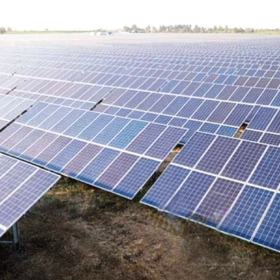
Most educational institutions in India operate primarily during daylight hours, taking full advantage of the abundant sunshine. This creates a unique opportunity to harness renewable energy by integrating solar power, paving the way for truly net-zero campuses with real-time carbon footprint monitoring. Capitalizing on this potential, Sunkonnect, through its Sunsol solution, aims to install solar rooftops on more than 5,000 schools across the country over the next 7 to 10 years.
Rohit Sikkewal, Sustainability and Climate Change Solution Expert at Sunkonnect, said, “Our educational institutions are more than just infrastructure; they are the breeding ground for the next generation of thinkers and leaders. Despite progressive policies like the National Education Policy 2020, there’s a clear gap between awareness and real action on campus sustainability. Our goal is to bridge that gap, empowering students, faculty, and staff to take ownership of their environmental impact and drive meaningful change for the sector.”
Sunkonnect has recently partnered with a private university as part of its broader decarbonization strategy. Through such collaborations, the company will roll out Greenhouse Gas (GHG) Footprint Assessment and craft a comprehensive sustainability roadmap for campuses, establishing a benchmark for environmental stewardship in academia. This initiative also marks Sunkonnect’s strategic entry into India’s USD 35 billion education market, meeting the rising demand for world-class sustainability standards.
As part of its net zero goal, Sunkonnect is aligning its decarbonization strategy with the GHG Protocol Corporate Accounting and Reporting Standard, which spans direct and indirect emissions across Scopes 1, 2, and 3. With electricity usage accounting for 78% of campus emissions globally and Indian higher education institutions averaging 2.67 tonnes CO₂ emissions per student, the path to meaningful reduction is clear: renewables, energy efficiency, and smarter resource management.
Sunkonnect’s plan is practical and tailored to industry realities, starting with energy audits and retrofits, LED lighting upgrades, waste segregation, and the elimination of single-use plastics. The next phase (one to three years) will include rooftop solar PV installations, rainwater harvesting, EV charging stations, and biogas plants. Long-term strategies feature net-zero pledges, vehicle-free zones, biodiversity monitoring, and advanced water systems, all focused on reducing emissions per student and per square foot.
Standing apart from traditional consultancies, Sunkonnect provides ongoing implementation support, technology deployment, and regular performance monitoring through formalised agreements. Sustainability will also be embedded into curricula, with project-based learning and hands-on GHG assessment exercises preparing students for India’s projected 35 million green jobs by 2047.
Sunkonnect estimates that energy efficiency and smart infrastructure can deliver a 15–25% cut in Scope 1 and 2 emissions, translating to the targeted 34 million tonnes CO₂ reduction. Waste and water interventions could drive up to 50% savings, making a 40-60% per capita carbon footprint reduction possible over five years, in line with IGBC Green Campus standards.
As India moves towards its 2070 net-zero goal and recruiters increasingly look beyond metros for talent (62% according to NASSCOM 2024), Sunkonnect’s blueprint is set to redefine sustainability in education. This strategy stands as a replicable, industry-specific model, positioning Indian campuses as powerful agents of climate action and national progress.
About Sunkonnect:
Sunkonnect is one of the leading global renewable energy management consulting firms headquartered in Singapore. Founded by Dr. Avishek Kumar in 2017, the firm has emerged as a one-stop solution for organisations worldwide seeking to navigate the energy transition, scale up solar and wind energy adoption, implement BESS (Battery Energy Storage System) solutions, achieve sustainability goals, secure green building certifications, and pursue Net Zero ambitions. The company delivers a full spectrum of services, including technical consulting, engineering, project development, quality assurance, energy audits, carbon accounting, digital energy management, and certification support, empowering its clients to drive measurable environmental performance and a sustainable future. With a presence spanning Singapore, India, Malaysia, Vietnam, Thailand, and clients in China, USA, Indonesia, Australia, Africa, and the Middle East, the company is accelerating the global shift to sustainability through technology, expertise, and data-driven solutions.