UltraTech Cement targets 85% green energy in its total energy mix by 2030
Currently, UltraTech Cement has a green energy capacity of 691 MW (262 MW from waste heat recovery systems and 429 MW contracted renewables), which meets about 22% of its current electricity requirements.
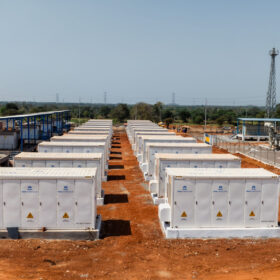
Cost of battery-based energy storage, INR 10.18/kWh, expected to reduce with VGF and PLI Schemes
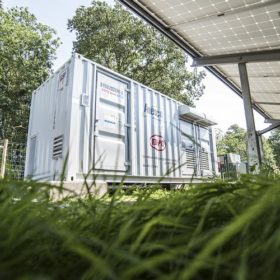
Currently, the cost of battery-based energy storage in India is INR 10.18/kWh, as discovered in a SECI auction for 500 MW/1000 MWh BESS. The government has launched viability gap funding and Production-Linked Incentive (PLI) schemes to make battery storage affordable.
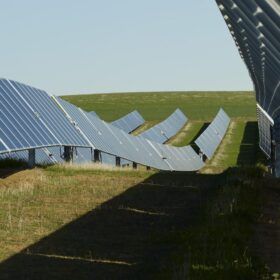
Nextracker hits 10 GW milestone in Middle East, Africa, and India solar power markets
Nextracker’s smart solar trackers are now either operational or under fulfillment for 10 GW of PV projects located in the Middle East, Africa, and India.

Gates-backed Fourth Power pilots thermal storage based on TPV cells
Fourth Power, backed by Bill Gates’ venture firm, has developed high-density thermal energy storage based on thermophotovoltaic cells. The tech, which is reportedly 10 times cheaper than lithium-ion batteries, is based on the U.S. company’s patented liquid metal heat transfer system.

Mitigating solar supply chain challenges
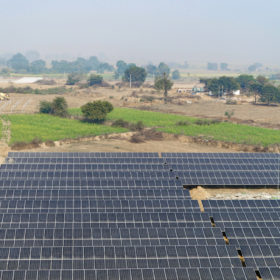
Large-scale solar projects in India are facing delays of at least two-three months. The primary reason is Indian companies’ dependency on Chinese products and equipment, which may result in shipping delays and cost fluctuations. But, many companies in India have their solar module stocks already ready and can provide their products at the same price as Chinese brands, Tanmoy Duari, CEO, AXITEC Energy India, tells pv magazine.
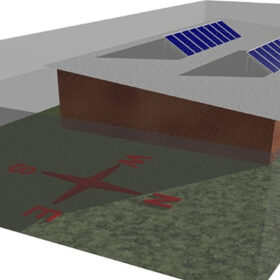
Bifacial PV on rooftops can provide energy yield gains of up to 22.6%
Scientists in Australia have combined Monte Carlo Ray Trace (MCRT) techniques and electrical modeling to assess the potential energy gains of bifacial rooftop PV systems compared to monofacial arrays. They found that rooftop reflectivity is a key factor in increasing a bifacial PV system performance, and that system and module design should also be carefully considered.
Adani Group to invest $100 billion in green energy transition over 10 years
Adani Group targets to become net zero by 2050 or earlier for five of its portfolio companies — Adani Green Energy, Adani Energy Solutions, Adani Ports & SEZ, ACC, and Ambuja Cements.
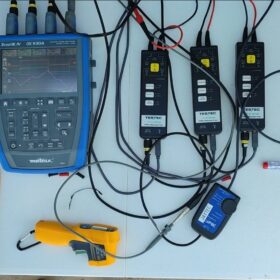
PI Berlin releases new tool to detect faults in inverters
PI Berlin has developed a new tool to detect problems in inverters such as defective printed circuit boards, faulty switching algorithms, and deficiencies in components and sensors.
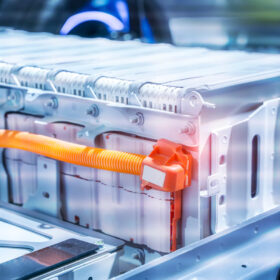
Hindalco to set up lithium battery foil manufacturing facility in Odisha
Hindalco will invest INR 800 crore to build a new battery foil manufacturing plant near Sambalpur in Odisha. The facility will initially produce 25,000 tonnes of the foils for Lithium-ion and Sodium-ion battery cells.
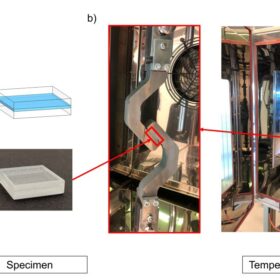
New research identifies advantages of POE encapsulants in dual-glass solar modules
To understand better the long-term effects of humidity on durability of glass-glass modules, Austrian researchers carried out lengthy damp-heat tests on double glass modules made with EVA and POE encapsulants. They identified several POE advantages, such as improved interfacial strength and less water uptake, among others.