Waaree Clean Energy to develop multi-technology green hydrogen project for TMEIC Industrial Systems
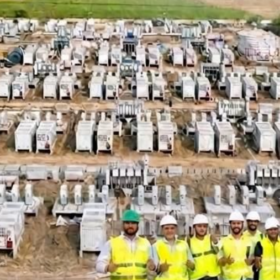
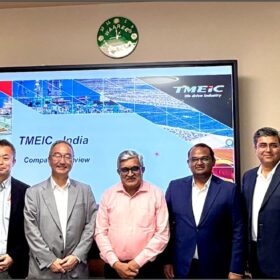
Waaree Clean Energy Solutions, a wholly owned subsidiary of Waaree Energies Ltd, has secured an order to develop a multi-technology green hydrogen project at the facility of TMEIC Industrial Systems India in Tumkur, Karnataka.
JSW Energy commissions 250 MW of renewable energy capacity, including hydro, since April 2026
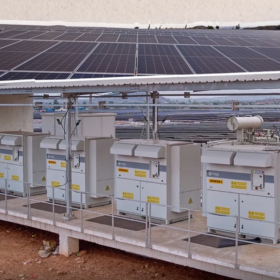
JSW Energy has commissioned 250 MW of renewable energy capacity since April 2026, comprising 130 MW of wind, 69.4 MW of solar, and the 50 MW Tidong Hydro Plant. With this addition, its total installed power generation capacity has reached 13.7 GW.

Siemens Energy India Q2 FY2026 revenue up 27.4% YoY
Siemens Energy India Ltd has reported a revenue from operations of INR 2,394 crore for the quarter ended March 2026, marking a 27.4% year-on-year increase from INR 1,880 crore in the corresponding quarter of FY 2025. Profit after tax increased 52.4% YoY to INR 375 crore.
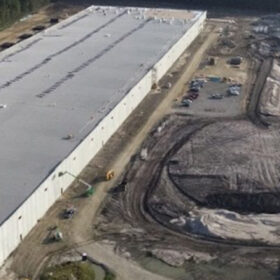
Inox Clean buys US assets of Boviet Solar
Through this asset purchase, Inox Clean gains an operational capacity of 3 GW of TOPCon solar module manufacturing in the United States, positioning it in line with the “Make in America, For America” initiative.
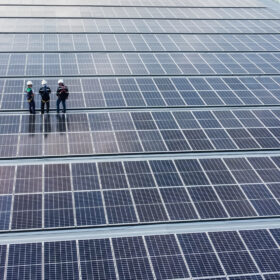
Solar approaches 3 TW, but the industry faces new challenges
Global solar PV capacity reached around 2,974 GW by end-2025, with nearly 698 GW added in 2025. The sector, however, is shifting from rapid deployment to integration challenges, as high penetration rates drive curtailment, storage demand, grid constraints, and evolving policy and market designs.
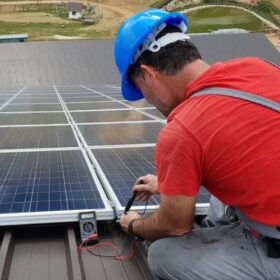
Solar industry faces rising risks from fires and battery faults
The 8th annual Solar Risk Assessment from kWh Analytics identifies equipment-driven fires, regulator fines, and battery inaccuracies as the latest threats to renewable asset returns.
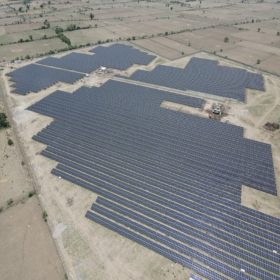
India added record 15.3 GW solar capacity in Q1 2026: Mercom
One of the key drivers behind the record solar capacity additions in Q1 2026 was the upcoming implementation of ALMM List-II from June 2026. The policy deadline prompted developers to accelerate project commissioning under the existing procurement framework amid concerns over limited domestic DCR cell availability and rising module procurement costs, according to Mercom.
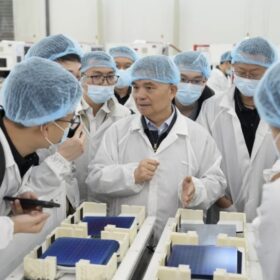
Jolywood starts mass production of low-silver TOPCon solar cells
The Chinese manufacturer said its novel TOPCon cell design enables partial replacement of silver with aluminum paste while maintaining TOPCon-level efficiency of over 27% and compatibility with existing production lines.
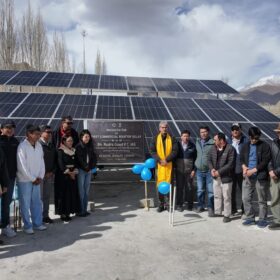
Tata Power Renewable Energy deploys Ladakh’s first commercial rooftop solar project
Tata Power Renewable Energy Ltd (TPREL) has implemented a 50 kWp rooftop solar installation at Hotel Barath in Leh, marking the first commercial rooftop solar project in the Union Territory of Ladakh.
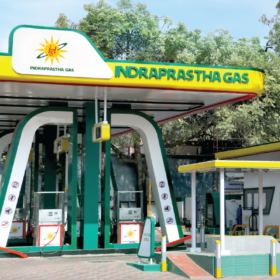
Indraprastha Gas Ltd tenders EPC for 200 MW solar project with battery storage in Rajasthan
Indraprastha Gas Ltd (IGL) has invited bids for the engineering, procurement and construction (EPC) of a 200 MW DC (160 MW AC) solar power project integrated with a battery energy storage system (BESS) in Rajasthan.