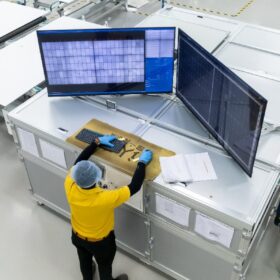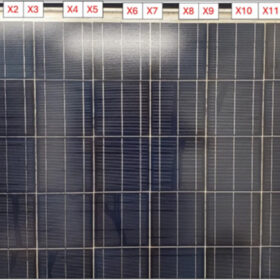
New technique measures water ingress in PV modules without disconnecting them
A German research team has developed a nondestructive, on-site method to quantify water ingress in photovoltaic modules using near-infrared absorption (NIRA) spectroscopy calibrated with Karl–Fischer titration (KFT). The approach enables precise measurement of absolute moisture content in sealed modules without disassembly, improving inspection, failure analysis, and lifetime prediction.

Indonesia tenders 1.2 GW of solar
Indonesia’s PLN has launched a tender for a 1,225 MW solar project that will be spread across several regions of the country. The state-owned utility has not publicly announced a closing date.
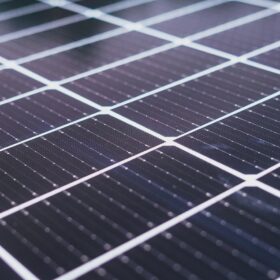
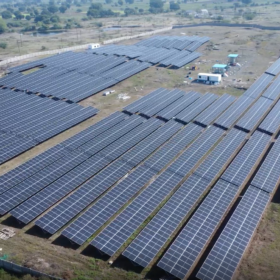
NTPC switches on 100 MW at Ramagundam solar project; ACME commissions BESS capacity in Rajasthan
NTPC Ltd has declared the commercial operation of 100 MW out of the total 176 MW solar PV project in Ramagundam, Telangana. In a separate development, ACME Solar has commissioned a 33.333 MW/160.480 MWh battery energy storage system (BESS) project at Badi Sid village in Rajasthan.

Maximising plant profitability: Why solar panel cleaning is critical for stronger ROI
The long-term value of a solar power plant depends on its ability to consistently deliver expected energy output. Soiling is a predictable and manageable factor that directly affects both performance and revenue. Addressing it through regular and structured cleaning practices is essential for maintaining efficiency and protecting returns.
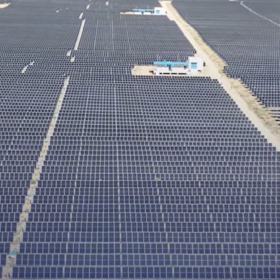
NTPC Renewable Energy tenders BoS package for 900 MW solar in Andhra Pradesh
NTPC Renewable Energy Ltd has invited bids for the balance of system (BoS) package for the development of 900 MW of grid-connected solar PV projects at Kurnool in Andhra Pradesh. The tender covers two projects (500 MW and 400 MW) with a combined capacity of 900 MW.
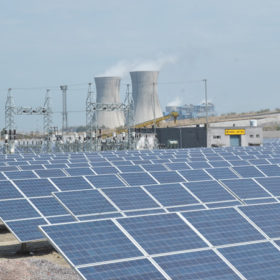
India’s top state-run energy firms invest INR 2.33 trillion in fossil fuels vs INR 0.30 trillion in clean energy in FY 2025
While a significant share of state-run energy firms’ current fossil fuel capital expenditure is tied to ongoing projects, new and incremental investments can be progressively rebalanced toward clean energy, says Deepak Sharma, a consultant at the International Institute for Sustainable Development.
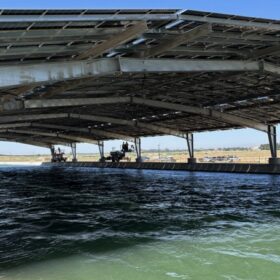
Solar on canals reduces water evaporation by 70% and algae growth by 85%
The 1.6 MW Nexus pilot project in California has demonstrated that solar panels installed over irrigation canals can significantly reduce water evaporation and algae growth by 85%, while also showing operational efficiency.
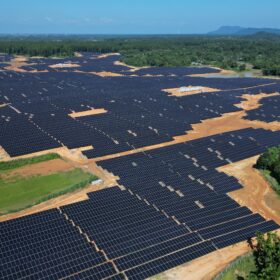
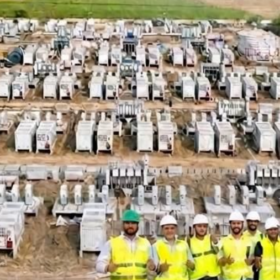
Rays Power Infra commissions 1.1 GW of solar capacity in FY 2026
Rays Power Infra today announced that it has commissioned 1.1 GW of solar capacity in the financial year 2026, marking its largest single-year addition to date. The installations, spread across Karnataka, Rajasthan and Gujarat, take the company’s cumulative commissioned portfolio beyond 2.4 GWp.

Why solar + storage needs intelligence before scale
The intelligent integration of solar and storage is no longer optional. Data-driven approaches are essential to ensure compliance, efficiency, and long-term reliability. Building systems with insight not only prevents costly mistakes but also creates an energy ecosystem that is not just larger, but smarter, more resilient, and adaptable to future demands.

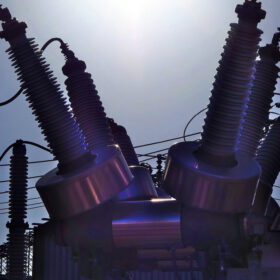
Intermittent renewables and rising demand: Why grid resilience is now critical
Renewable energy is abundant but intermittent. Demand is growing but uneven. Infrastructure exists but is often misaligned with where and when power is needed. In this environment, the grid has become more than a passive network; it is an active balancing system. Its resilience will determine whether the energy transition delivers stability or introduces volatility.