German research institute unveils 99.74% efficient power electronics for solid-fuel heat pumps
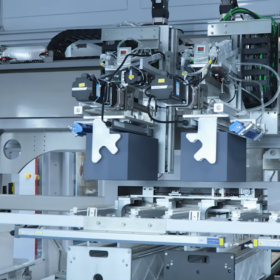
Germany’s Fraunhofer Institute for Applied Solid State Physics (IAF) has developed an ultra-efficient circuit topology for voltage converters with an electrical efficiency of 99.74%. The tech could considerably raise the coefficient of performance for electrocaloric heat pumps and the scientists are now considering components based on semiconductor gallium nitride (GaN) for higher power density and efficiency.
Germany deployed 6.26 GW of solar in H1
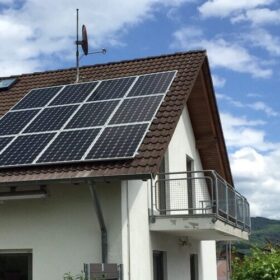
Germany installed more than 1 GW of new PV systems in June alone. Its cumulative installed PV capacity hit 73.8 GW at the end of the first half of this year.

Addressing the intricacies of BIPV fire safety
The adoption of building-integrated photovoltaics (BIPV) has been hindered by the complexity of fire safety standards, creating challenges for manufacturers and suppliers. However, efforts such as the IEA PVPS Task 15 report and collaborative research have shed light on the importance of comprehensive guidelines, reliable testing laboratories, and international cooperation.
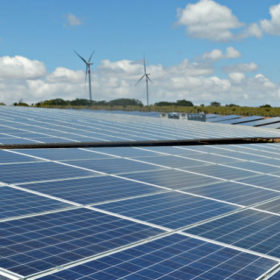
India will add 45 GW of renewable energy capacity over next two fiscals, says CareEdge Ratings
India will install around 20-25 GW of new renewable energy capacity annually over the next two fiscals, driven by a healthy project pipeline and a strong bidding roadmap. The decline in solar module prices and one-year relaxation for the approved list of module manufacturers (ALMM) bode well for the capacity addition.

Solar module prices, auction volumes, and the outlook for capacity addition
Timely scale-up in tendering activity and moderation in solar PV cell and module prices, if sustained, would support improvement in capacity addition in the renewable energy sector.

Italian startup offers solar kits packed in barrels
Italy’s Barrel claims that solar kits packed in barrels are ideal for remote areas and conflict zones. Its standard packages consist of 6 kW solar modules, 5.6 kW single-phase hybrid inverters, and 3.55 kWh lithium batteries.
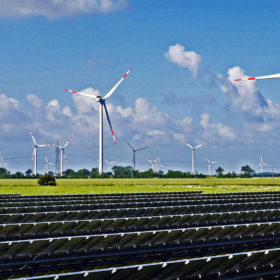
Integrating higher share of renewable energy in India’s power system
To increase the share of renewable energy, India needs to introduce demand-side measures like time-of-use tariffs, develop a well-connected national grid, deploy various energy storage options for grid balancing services, and convert its fossil-fuel-powered fleet to operate flexibly.
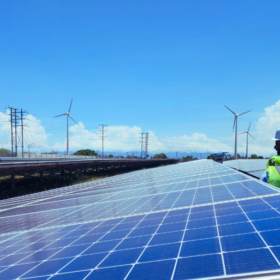
IFSCA and Climate Policy Initiative sign MoU on sustainable finance
The International Financial Services Centres Authority (IFSCA) and Climate Policy Initiative – India (CPI) have signed a Memorandum of Understanding to support the mobilization of sustainable finance in India.
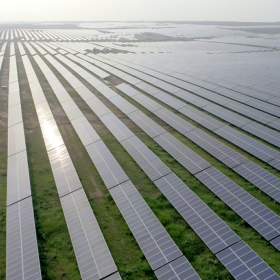
India must add 32 GW of solar capacity per year to meet PV target for FY 2030
India will have to add over 30 GW of solar capacity annually to meet the 293 GW PV target in the optimal energy mix for 2029-30. The nation had installed 68 GW of PV capacity as of May 31, 2023.
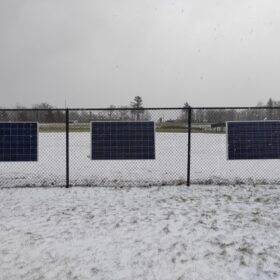
Using existing fences as near-zero-cost racking solution for PV deployment
American researchers are proposing to use steel zip ties to attach solar modules to fences in animal farms as a low-cost racking solution for agrivoltaic applications. They found the proposed approach is technically and economically viable, provided careful wind load tests are conducted on the fences.