
Solar approaches 3 TW, but the industry faces new challenges
Global solar PV capacity reached around 2,974 GW by end-2025, with nearly 698 GW added in 2025. The sector, however, is shifting from rapid deployment to integration challenges, as high penetration rates drive curtailment, storage demand, grid constraints, and evolving policy and market designs.

Solar industry faces rising risks from fires and battery faults
The 8th annual Solar Risk Assessment from kWh Analytics identifies equipment-driven fires, regulator fines, and battery inaccuracies as the latest threats to renewable asset returns.

India added record 15.3 GW solar capacity in Q1 2026: Mercom
One of the key drivers behind the record solar capacity additions in Q1 2026 was the upcoming implementation of ALMM List-II from June 2026. The policy deadline prompted developers to accelerate project commissioning under the existing procurement framework amid concerns over limited domestic DCR cell availability and rising module procurement costs, according to Mercom.

Tata Power Renewable Energy deploys Ladakh’s first commercial rooftop solar project
Tata Power Renewable Energy Ltd (TPREL) has implemented a 50 kWp rooftop solar installation at Hotel Barath in Leh, marking the first commercial rooftop solar project in the Union Territory of Ladakh.

“India’s battery energy storage market is transitioning from aggressive tendering to execution-led scale” — Ratul Puri, Chairman, Hindustan Power
Ratul Puri, Chairman of Hindustan Power, speaks to pv magazine about the key challenges in scaling renewable energy deployment, the growing role of battery storage and carbon markets, and Hindustan Power’s strategy in supporting India’s clean energy transition.

Renewable energy central to India’s industrial competitiveness: Pralhad Joshi
Union Minister for New and Renewable Energy Pralhad Joshi highlighted that renewable energy is becoming a critical determinant of competitiveness in key industrial sectors such as steel, aluminium, chemicals, automotive and textiles. He emphasised the importance of emerging areas including green hydrogen, battery storage, pumped hydro, offshore wind and round-the-clock renewable energy solutions in the next phase of growth.
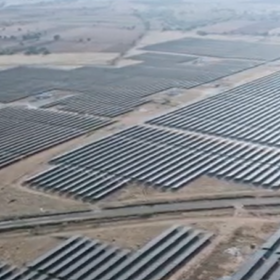
CleanMax posts 340% growth in consolidated PAT for FY2025–26
Revenue from operations for FY2025–26 increased to INR 1,913 crore, representing a 28% growth YoY. Profit after tax (PAT) surged 341% to INR 85.6 crore.
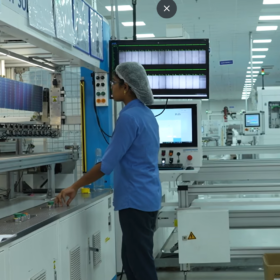
Tata Power reports FY26 PAT of INR 5,118 crore, up 7% YoY
Renewables business PAT increased 59% YoY to INR 1,994 crore (including INR 857 crore from solar cell and module manufacturing unit).

How distributed energy resources can help India meet its 2030 clean energy targets faster
Distributed energy resources, rooftop solar, C&I open-access systems, behind-the-meter storage, solar agricultural pumps, microgrids, share one decisive advantage: deployment speed. And speed is not the only advantage. Power consumed where it is generated avoids the 15-22% aggregate technical and commercial losses in India’s distribution networks.

ESG has evolved beyond compliance into core business strategy: Milton Kenny, Premier Energies
Milton Kenny, general manager-ESG at Premier Energies Ltd, discusses how ESG is reshaping the renewable energy sector—from decarbonisation to supply chain transparency and circularity.