GSECL seeks consultant for pumped storage project
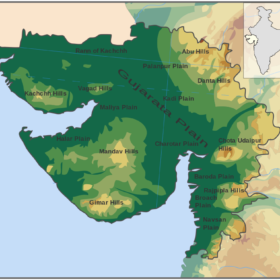
Gujarat State Electricity Corp. Ltd (GSECL) has invited bids to provide project management consultancy services for a standalone pumped storage hydropower project in Gujarat. The project is planned at UKAI Dam Reservoir in Ukai. Bidding closes on July 31.

World Bank approves $1.5 billion to support India’s low-carbon transition
The World Bank has approved $1.5 billion in financing to accelerate India’s development of low-carbon energy. The financing will help India scale up renewable energy, develop green hydrogen, and stimulate climate finance for low-carbon energy investments.
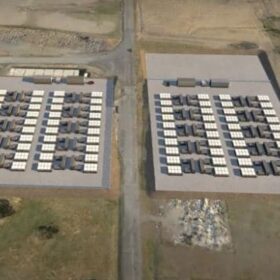
‘Renewables will eat itself,’ says Australian analyst
Over the next five to 15 years, batteries will undercut the business case for major transmission and interconnector projects. These assets will nonetheless likely be built, decreasing price spreads and eating into the revenues of batteries, predicts analyst Warwick Johnston.
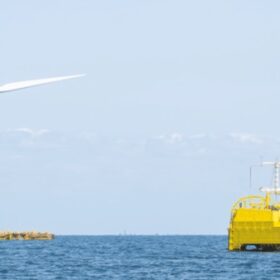
Lhyfe launches world’s first offshore hydrogen project
Lhyfe has started producing offshore hydrogen via a pilot project in France, and Toyota and its partners have agreed to invest in hydrogen in Thailand. The Australian authorities, meanwhile, have approved a hydrogen project in Victoria.
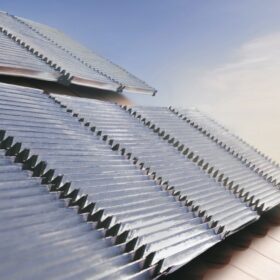
Solar-driven photoreactors to generate hydrogen on rooftops
Scientists led by the Karlsruhe Institute of Technology have designed panel-like photoreactors relying on a water-splitting photocatalyst that could produce hydrogen on rooftops or dedicated solar farms. They claim the photoreactors have high economic potential because of their ‘extremely’ low costs.
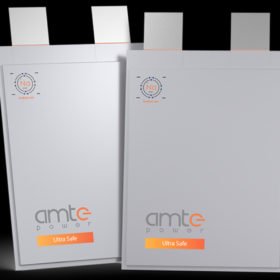
Global sodium-ion battery market expected to reach $2.6 billion by 2028
The global sodium-ion battery market will grow at 16.2% annually to touch $2.6 billion by 2028. Major drivers include an increasing demand for these batteries as a lithium battery replacement for renewable energy storage and the growing trend towards low-speed electric cars.
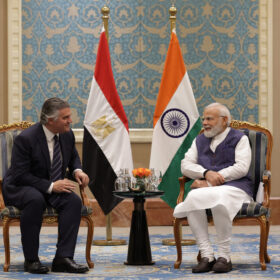
India and Egypt talk renewable energy, green hydrogen
Hassan Allam, chief executive officer of Egypt’s Hassan Allam Holding Co., discussed cooperation with Indian companies in renewable energy and green hydrogen, during his recent meeting with India’s prime minister Narendra Modi.
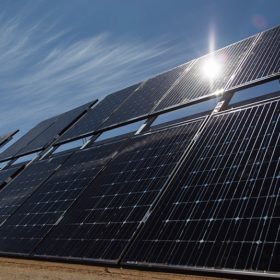
NHPC to develop 2 GW pumped storage, 1 GW solar projects in Odisha
The state-owned hydropower producer has signed a memorandum of understanding (MoU) with Grid Corp. of Odisha (GRIDCO) to develop 2 GW of pumped storage and 1 GW of solar energy projects in Odisha.
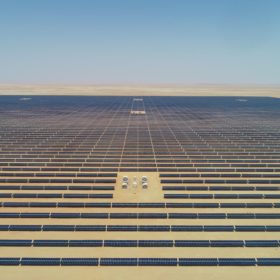
Sterling and Wilson Renewable Energy reports strong order inflow in FY 2023
The solar and energy storage EPC provider is planning to collaborate with competent agencies for support towards development of robotic system for module cleaning, suiting to the company’s in-house designs.
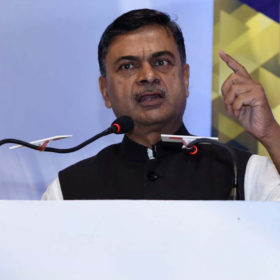
Power minister hints at another PLI scheme for grid-scale battery storage
The minister also underlined the need for diversification of supply chains by using alternative battery technologies such as sodium-ion.