Designs for solar+storage+hydrogen systems in buildings
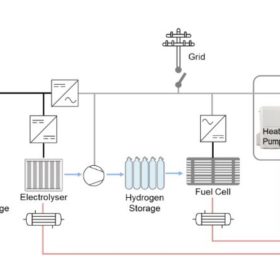
German scientists have tried to determine whether a PV system linked to a small electrolyzer, a fuel cell, and lithium-ion batteries could fully power a grid-connected household. Their new proposal consists of a 6.8kW PV array, a 5kW electrolyzer, a 1.24kW fuel cell system, and battery storage.
SunPower launches whole-home backup solution
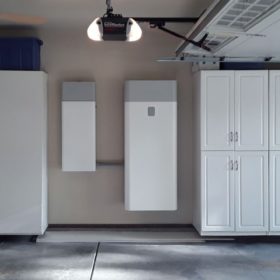
The US manufacturer has expanded the battery capacity options for its SunVault Storage product, up to 26 kWh and 52 kWh configurations.

Servotech appoints vice president for EV charger business
As vice president, Deepak Kumar will lead end-to-end supply chain and operations for the electric vehicle (EV) charger vertical at Servotech.
Australian researchers promise lifespan boost for lithium-ion batteries
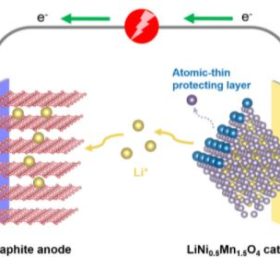
Researchers from The University of Queensland have developed a new nanotechnology that purportedly more than doubles the lifespan of high-voltage lithium-ion batteries, paving the way for higher density and lower-cost energy storage solutions.

World will need 5.2TW of solar this decade to avoid climate breakdown
The International Renewable Energy Agency’s latest global outlook has spelled out just how ‘woefully’ far the world is from capping temperature rises at 1.5C, and lamented: ‘The stimulus and recovery efforts associated with the pandemic have also proved a missed opportunity.’
Ricoh launches mini hydropower system for remote locations, usable with solar-plus-storage
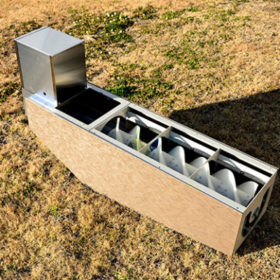
The 1kW pico-hydro generation system can be used with factory drainage systems and irrigation canals. According to the manufacturer, it is made with 3D-printed sustainable materials based on recycled plastics and is able to generate electricity even with a small stream of water. Solar and storage may be linked to the system to ensure stable power supply.

Battery supply could remain tight into next year
Analyst Wood Mackenzie has predicted soaring demand for electric vehicle devices will ensure supply will not keep pace with demand until some point in 2023.

Solar power generation for EV charging far more land-efficient than cultivation for ethanol blending
A new report by IEEFA proposes enhancing India’s electric vehicle (EV) adoption strategy as an alternative to further promotion of blended fuel, given the land-use efficiency gap between renewable energy generation for EV charging and cultivation for ethanol blending in fuels. Matching the distance driven by electric vehicles (EVs) charged from one hectare of solar generation would require ethanol derived from up to 251 hectares of sugar cane or 187 hectares of maize, it estimated.
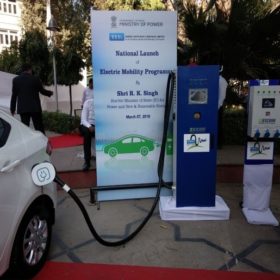
Exicom completes installation of 5,000 EV chargers
The company has deployed 3,600 AC and 1,400 DC electric vehicle (EV) chargers across 200 cities in 20 States of India.
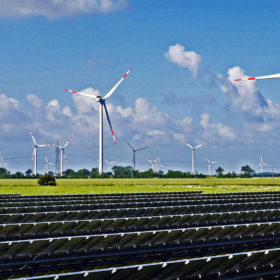
ArcelorMittal, Greenko partner on a renewables-plus-storage project
UK-headquartered ArcelorMittal will own and fund a hybrid wind-solar project with energy storage for round-the-clock RE supply to the Hazira plant of its joint venture ArcelorMittal Nippon Steel India. Greenko will design, construct and operate the project.