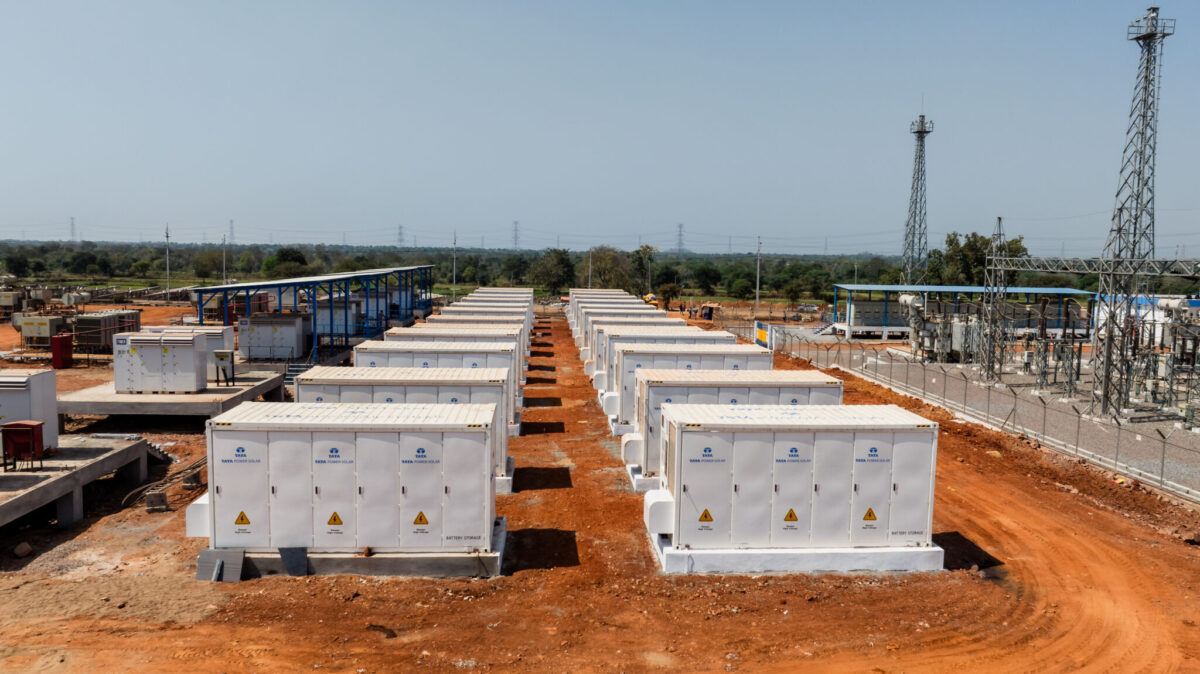





New modelling by Ember finds that solar paired with battery storage could supply 90% of India’s electricity demand at a levelised cost of electricity (LCOE) of INR 5.06/kWh ($56/MWh).
The Ember study finds that while a fully solar-powered system is technically possible, moving closer to 100% would be costlier as each additional percentage point requires increasingly more solar and storage, leading to higher system costs. Moreover, with other existing and planned clean sources such as wind, hydro and nuclear, the country would not need 100% solar.
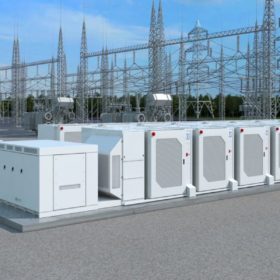
India’s electricity demand exceeded 2,000 TWh in 2024. The Ember study states that meeting 90% of this would require around 930 GW of solar capacity—– less than one-third of India’s 3,343 GW of estimated feasible ground-mounted solar potential—and 2,560 GWh of battery storage. In other words, 4.9 GW solar capacity and 13.5 GWh battery capacity for every 1 GW annual average demand load. Only 5% of the annual solar generation would need to be curtailed when it exceeds demand and battery storage capacity.
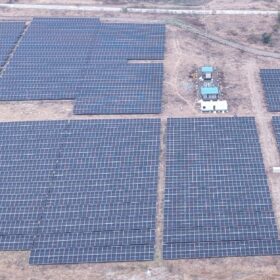
India has installed 143 GW of solar as of February 2026, around 4% of its estimated feasible 3,343 GW ground-mounted potential.
The study states that during January-April, when solar radiation is typically above the annual average, batteries can shift abundant daytime solar into the evening and night so that solar and storage meet 100% of demand almost every day. During peak summer (May–June), when demand is around 10% above average, they can still meet about 88% of demand.
The main challenge is not shifting solar generation from day to night with batteries but maintaining supply during extended periods of weak solar output, especially during the monsoon.
According to the Ember report, solar and batteries are already cheap enough to provide around 90% of electricity in many of India’s largest states (by electricity demand) at lower LCOE than their current average power purchase costs. Using the same system configuration that achieved 90% in the national analysis, solar-plus-battery systems could supply between 83% and 92% of demand in the ten largest states.
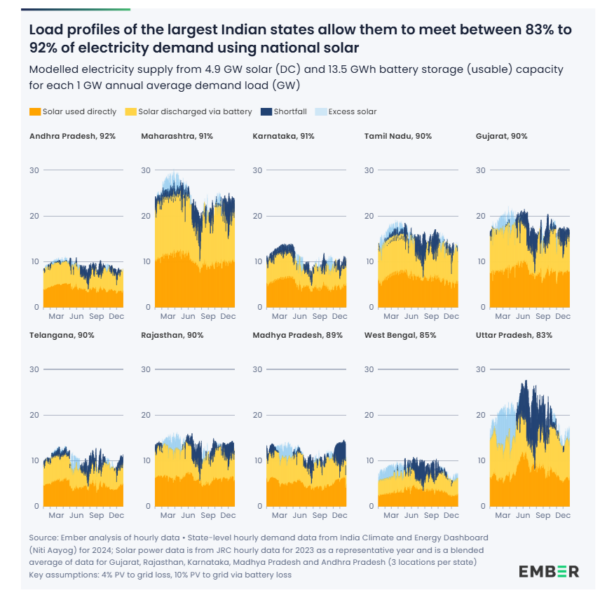
Seven states reach 90% or more, led by Andhra Pradesh (92%). Uttar Pradesh shows the weakest result but remains at a high level of 83%. “States with higher demand in the sunniest months achieve the highest shares, while states with stronger monsoon-season demand, like Uttar Pradesh and West Bengal, perform less well,” states the report.
Solar accounted for 9.4% of India’s all electricity generation in 2025, nearly doubling from 5.3% in 2022. It plays an important role during the day, meeting up to a quarter of demand during the sunniest hours of the day but none at night. Solar could play an even larger role in India’s electricity system over the longer term – especially with the help of cheap batteries.
To explore how solar-plus-battery storage could translate India’s vast solar potential into a reliable electricity supply, Ember modelled how solar generation from India’s highest-potential states could meet hourly electricity demand, assuming no grid constraints. Ember used solar irradiation data from 15 locations across Gujarat, Rajasthan, Karnataka, Madhya Pradesh and Andhra Pradesh. This provides a broad geographical coverage while still reflecting that large-scale solar deployment is likely to take place primarily in high-resource states with high land availability. The model uses national hourly demand data from 2024.
This content is protected by copyright and may not be reused. If you want to cooperate with us and would like to reuse some of our content, please contact: editors@pv-magazine.com.




By submitting this form you agree to pv magazine using your data for the purposes of publishing your comment.
Your personal data will only be disclosed or otherwise transmitted to third parties for the purposes of spam filtering or if this is necessary for technical maintenance of the website. Any other transfer to third parties will not take place unless this is justified on the basis of applicable data protection regulations or if pv magazine is legally obliged to do so.
You may revoke this consent at any time with effect for the future, in which case your personal data will be deleted immediately. Otherwise, your data will be deleted if pv magazine has processed your request or the purpose of data storage is fulfilled.
Further information on data privacy can be found in our Data Protection Policy.