





India’s clean energy story is no longer about how much we can build but whether what we build will work when it matters most. To be sure, the country’s clean energy ambitions are among the most ambitious anywhere — 500 GW of non-fossil fuel capacity by 2030, net zero by 2070, and a rapidly growing manufacturing ecosystem in solar, batteries, and green hydrogen. The targets are bold, the investment is flowing, and the political commitment is visible. Yet beneath the optimism lies an uncomfortable truth that will determine whether the transition succeeds or stalls. It’s the question of reliability.
As things stand, Indian economy size is likely to surpass $5 trillion by 2030, driven by manufacturing expansion, infrastructure development, and strong economic reforms. However, sustaining that growth requires not just clean energy but also one that is predictable, uninterrupted and dispatchable. A steel mill in Odisha, a graphite processing plant in Madhya Pradesh, a semiconductor fab in Karnataka, or a data centre in Hyderabad cannot function on power that arrives only when the sun shines or the wind blows. They need electrons on demand, 24 hours a day, every day of the year. The moment clean energy fails to deliver that reliability, the transition loses the constituency that matters most — the industrial consumer who actually pays cost-reflective tariffs and cross-subsidises the rest of the system.
Solar and wind are valuable resources, and India is blessed with both. But the sun sets, the wind stills, and the grid does not pause to accommodate either. Meanwhile, India’s current storage capacity stands at a fraction of what its renewable ambitions demand. Peak solar generation is often concentrated in the afternoon and floods the grid precisely when industrial demand is low, while the evening demand triggers expensive, carbon-intensive energy. This problem demands a structural solution.
States with high renewable penetration are managing increasingly complex balancing acts, and distribution companies are discovering that cheap solar PPAs signed a decade ago did not account for the integration costs that arrive when variable generation reaches 20-30% of the energy mix.
The consequences of ignoring existing situation of intermittency of renewable energy generation, can hurt Indian economy by increasing input costs for manufacturers, stifling foreign direct investment, and forcing businesses into expensive solutions like deploying diesel generators, captive coal, and load curtailment.
According to estimates from the India Energy Storage Alliance (IESA), inadequate storage infrastructure could cost India billions of dollars in stranded renewable assets and foregone industrial output over the next decade.
The missing piece is not more solar panels or wind capacity. India can install those in several GW over many years. The missing piece is the infrastructure of reliability — storage at scale, flexible generation that can ramp in minutes, transmission corridors that move renewable energy from where it is generated to where it is consumed, and forecasting and scheduling systems that manage variability in real time rather than after the fact.
A shift from capacity to reliability
What India’s energy transition needs now is a rethinking of how generation, storage, and grid intelligence work together rather than in isolation.
Hybrid energy systems are emerging as one of the most compelling responses to this challenge. By co-locating solar and wind assets with battery storage, and increasingly with pumped hydro, these systems smooth out the challenges that make standalone renewables unpredictable. A well-designed hybrid plant does not only generate power but also manages it while delivering clean energy on demand.
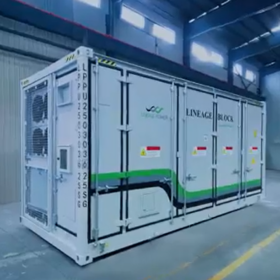
Storage, in particular, is the foundation that transforms intermittent generation into firm power. While battery energy storage systems are becoming cost-competitive faster than most analysts’ predictions. But it is not technology alone that determines success but how storage is integrated across the energy stack.
Grid modernization is another critical leg of this stool. Smart grid technologies like real-time demand forecasting, automated switching, and advanced metering allow operators to anticipate and respond to fluctuations before they turn into outages. Without this intelligence layer, even the best generation and storage assets underperform.
The policy architecture must evolve accordingly. Today, India’s renewable energy policy is overwhelmingly oriented toward capacity addition — megawatts installed, auctions conducted, record-low tariffs achieved. These are necessary metrics, but they are insufficient. The next phase of policy must reward reliability contribution — the ability of a generator, storage system, or demand-response provider to deliver firm, dispatchable power when the grid needs it, not merely when nature provides it.
The states and institutions that solve reliability first will attract the energy-intensive industries that define economic competitiveness — advanced manufacturing, data infrastructure, mineral processing, and green hydrogen production. Those that treat reliability as an afterthought will find their clean energy capacity underutilised, their industrial consumers migrating to captive generation, and their transition ambitions stranded alongside their thermal assets.
The competitive advantage
For sure, India’s energy transition will not be won by any single technology. It will perhaps be won by the organizations and platforms that can integrate across solar, hydro, and storage.
This is where cross-sectoral experience becomes decisive. For instance, while deploying solar power at scale is a discipline, designing a hybrid system incorporating a hydro balancing and intelligent storage dispatch is a different ball game entirely. The latter requires not just engineering capability, but also deep operational insight across the full energy value chain.
At its core, India’s clean energy story is a developmental story. Reliable, affordable, and clean power will electrify the next tier of manufacturing clusters and power hospitals and schools, apart from supporting digital infrastructure that will define the country’s next phase of growth.
The question for the next decade is not whether India can build enough renewable capacity but whether that capacity will be reliable enough to carry the weight of a $5 trillion economy in the making. Meanwhile, a new class of energy platforms are being designed not just to build assets but also to orchestrate them into reliable, dispatchable power.
The views and opinions expressed in this article are the author’s own, and do not necessarily reflect those held by pv magazine.
This content is protected by copyright and may not be reused. If you want to cooperate with us and would like to reuse some of our content, please contact: editors@pv-magazine.com.


By submitting this form you agree to pv magazine using your data for the purposes of publishing your comment.
Your personal data will only be disclosed or otherwise transmitted to third parties for the purposes of spam filtering or if this is necessary for technical maintenance of the website. Any other transfer to third parties will not take place unless this is justified on the basis of applicable data protection regulations or if pv magazine is legally obliged to do so.
You may revoke this consent at any time with effect for the future, in which case your personal data will be deleted immediately. Otherwise, your data will be deleted if pv magazine has processed your request or the purpose of data storage is fulfilled.
Further information on data privacy can be found in our Data Protection Policy.