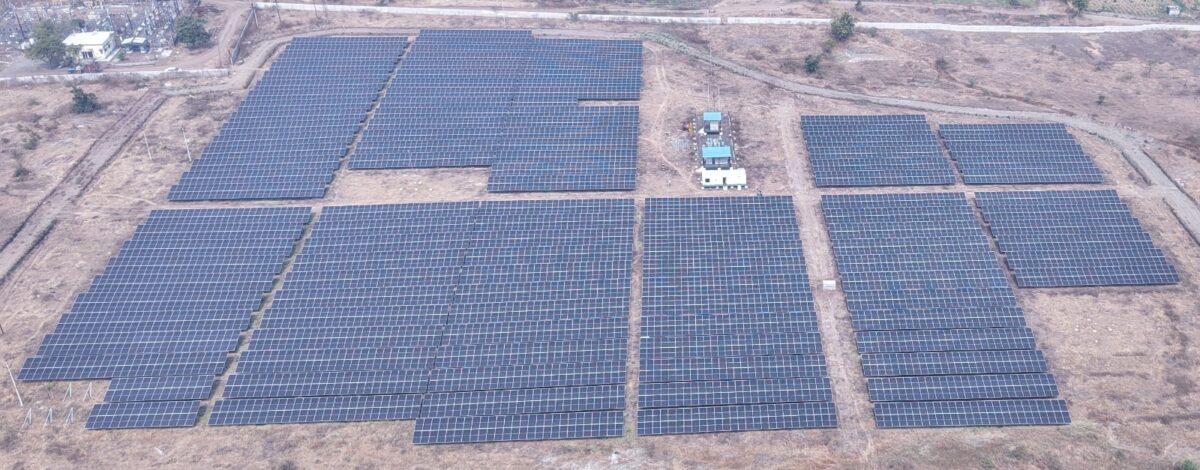





The Union Cabinet has approved changes to the foreign direct investment (FDI) policy for investments from countries sharing land borders with India, aimed at boosting FDI inflows into sectors such as solar cells (polysilicon and ingot-wafer), electronic components, and capital goods manufacturing. Under the revised rules, investments with non-controlling beneficial ownership of up to 10% are allowed through the automatic route, subject to applicable conditions. Additionally, investment proposals in identified manufacturing sectors will be processed and cleared within 60 days.
Sanjeev Aggarwal, Founder and Executiive Chairman, Hexa Climate, describes the move as a pragmatic recalibration rather than an open-door policy. “Allowing sub-10% beneficial ownership through the automatic route is a targeted move — it enables technology partnerships and JVs without giving up control of strategic assets,” he said, underscoring its significance for renewable energy component manufacturing.
Aggarwal noted that in solar, the downstream segment is well-capitalized. The real bottleneck has moved upstream—cells, wafers, and polysilicon—where larger capital, longer timelines, and real technology risk deter investments.

Hexa Climate
While India has scaled module capacity significantly, it remains structurally dependent on Chinese supply chains for ingots, wafers, and polysilicon. “Production-linked incentives (PLI) alone can’t fix that. Controlled FDI can accelerate technology transfer and backward integration in ways that subsidies cannot,” he said.
As per Mercom’s latest report, India’s cumulative PV module manufacturing capacity reached around 210 GW as of Dec. 2025, while cell manufacturing capacity stood at only about 27 GW. Wafers, the intermediate stage between polysilicon and solar cells, remain a key gap with limited domestic wafer manufacturing capacity, while commercial-scale polysilicon production is yet to begin.
Under the updated FDI rules for the specified sectors, the majority shareholding and control of the investee entity must remain with resident Indian entities owned and controlled by resident Indian citizens.
Aggarwal emphasized the importance of oversight: “The key word is “controlled.” This isn’t about opening the floodgates. It’s about using foreign capital to build capabilities we genuinely need — while making sure strategic decisions on pricing, supply, and technology stay in Indian hands. The government seems to understand this distinction, which is encouraging.”
CA Baratam Satyanarayana, Director & CFO, Bondada Group, says relaxed FDI norms could improve capital access and strengthen supply chains across the renewable energy value chain, particularly in solar manufacturing, battery storage technologies, and green hydrogen components such as electrolysers. “India is positioning itself as a global manufacturing hub for clean energy technologies, and greater foreign participation can accelerate technology transfer, improve production efficiencies, and deepen local manufacturing ecosystems,” he notes. “Over time, such investment flows could contribute to building integrated renewable manufacturing clusters, enhancing India’s competitiveness in global clean energy markets.”

Bondada Group
What it means for renewable energy infrastructure
The new guidelines address issues created by Press Note 3 (2020), which was introduced during the COVID-19 pandemic to prevent opportunistic takeovers of Indian companies. The rule required government approval for investments from entities in countries sharing land borders with India.
While intended to prevent opportunistic takeovers, applicability of PN3 restrictions to cases where LBC investors may have only non-strategic, non-controlling interests was seen as adversely affecting investment flows from investors including global funds such as PE/ VC funds.
“The signal matters,” Aggarwal says. He explains that many global funds were caught in PN3 ambiguity—not because they were directly linked to China, but because the broad definition created friction for anyone with even minor exposure to investors from neighbouring countries. The 60-day processing timeline and automatic route for sub-10% stakes could help clear that logjam.
Satyanarayana says easing FDI norms will boost investor confidence and unlock greater global participation in India’s renewable energy sector. “International investors, sovereign wealth funds, and climate-focused capital are increasingly looking at India as a key growth market due to its ambitious energy transition targets,” he said. “Greater policy clarity and improved access to foreign capital can help lower the cost of capital for renewable projects. This could accelerate project development timelines and enable developers to scale investments in next-generation clean energy infrastructure such as green hydrogen production facilities and integrated renewable energy parks. It could also facilitate new financing structures, including green bonds, blended finance, and long-term infrastructure funds.”
However, Aggarwal cautions that easing FDI norms alone will not solve deeper challenges in the renewable energy sector. “PN3 was never the real barrier for most global investors,” he says. “Grid readiness, unsigned PSAs, DISCOM payment delays, and the regulatory risk premium in our cost of capital — these are the things that keep deal teams up at night. India’s cost of capital for grid-scale renewables is still 80% higher than in advanced economies.”
Aggarwal says that while a more open FDI framework is necessary, it’s not sufficient. The RE sector still needs sanctity of contracts and policy stability that lets investors underwrite long-dated commitments without crossing their fingers.
The risks
While relaxed FDI norms could unlock significant capital inflows, they also carry risks for domestic players.
Aggarwal highlights three concerns: “First, dependency. If this accelerates Chinese investment in solar and storage manufacturing, we could end up replicating at the production level the same import dependency we’re trying to reduce at the product level. That would be ironic.
“Second, pricing aggression. Chinese manufacturers entering India directly — not through exports but through local operations — could undercut domestic players in ways that hollow out the PLI scheme and set back India’s manufacturing ambitions.
“Third, selective technology transfer. Capital coming in for assembly and final-stage manufacturing, but not for the upstream know-how that actually builds Indian capability. We’ve seen this movie before in other sectors.”
Aggarwal adds that competition in Indian RE is healthy and necessary, but it must build India’s industrial base — not replace Chinese imports with Chinese factories on Indian soil. The safeguards need to be structural: sector-specific conditions, technology-sharing requirements, and clear guardrails on what constitutes a strategic asset.
Satyanarayana echoes the need for careful oversight. “While relaxed FDI norms could unlock significant capital inflows, careful regulatory oversight will be essential to ensure that investments align with India’s strategic and economic interests. One potential risk is the possibility of market concentration if a few large international players dominate key segments of the renewable value chain,” he says.
“To mitigate this, regulators could ensure transparent approval mechanisms, strong compliance frameworks, and safeguards for domestic manufacturers and developers. Encouraging joint ventures, technology partnerships, and local manufacturing commitments could also help ensure that foreign investments contribute to long-term sectoral growth.”
This content is protected by copyright and may not be reused. If you want to cooperate with us and would like to reuse some of our content, please contact: editors@pv-magazine.com.



By submitting this form you agree to pv magazine using your data for the purposes of publishing your comment.
Your personal data will only be disclosed or otherwise transmitted to third parties for the purposes of spam filtering or if this is necessary for technical maintenance of the website. Any other transfer to third parties will not take place unless this is justified on the basis of applicable data protection regulations or if pv magazine is legally obliged to do so.
You may revoke this consent at any time with effect for the future, in which case your personal data will be deleted immediately. Otherwise, your data will be deleted if pv magazine has processed your request or the purpose of data storage is fulfilled.
Further information on data privacy can be found in our Data Protection Policy.