The rise of green hydrogen-as-a-service: How AI digital twins are powering the net-zero future
As green hydrogen scales from pilot projects to industrial supply chains, the organizations that pair AI-powered digital twins with green hydrogen-as-a-service (GHaaS) commercial structures will be best positioned to deliver clean hydrogen at competitive cost and speed.
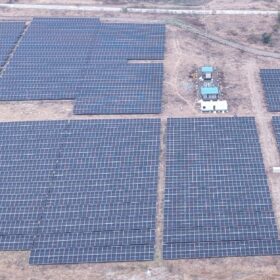
How relaxed FDI norms could transform India’s renewable energy sector
The amended FDI policy for investments from countries sharing land borders with India aims to attract capital and technology for critical solar components—such as cells, wafers, and polysilicon—while retaining strategic control of assets with domestic entities. Industry experts say it could accelerate renewable energy infrastructure and manufacturing, but it also carries risks, including pricing pressure, making careful regulatory oversight essential.
The Hydrogen Stream: BPCL-Sembcorp JV secures 10ktpa green hydrogen contract from Numaligarh Refinery
NeuEN Green Energy Pvt. Ltd. (NeuEN), a 50:50 joint venture between Bharat Petroleum Corp. Ltd (BPCL) and Sembcorp Green Hydrogen India, has secured a contract to supply 10,000 tonnes per annum (10 ktpa) of green hydrogen to Numaligarh Refinery Ltd (NRL).
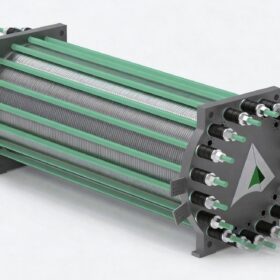
Advait Greenergy opens 30 MW alkaline electrolyser assembly facility in Gujarat
The facility is designed as a scalable platform, with a roadmap to expand from 30 MW to 100 MW by the end of 2026, 300 MW by 2027, and ultimately 1 GW of annual manufacturing capacity.
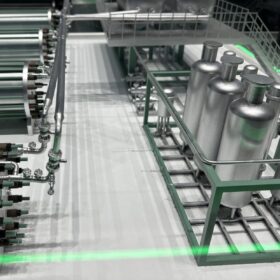
The Hydrogen Stream: India launches Hydrogen Valley Innovation Cluster under National Green Hydrogen Mission
India has launched the Hydrogen Valley Innovation Cluster under the National Green Hydrogen Mission to accelerate the transition of green hydrogen technologies from laboratory research to industrial deployment.
Waaree Energies arm signs 50 MW alkaline electrolyzer agreement with ZFI
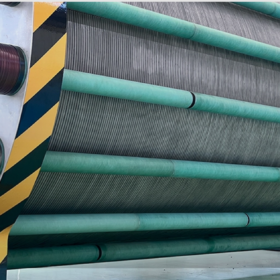
Waaree Clean Energy Solutions will deploy, own and operate alkaline electrolyzer stacks for Zero Footprint Industries Ltd’s decentralized green hydrogen projects across northern India over the next five years. The renewable-powered hydrogen produced will support decarbonization of process industries and inland transport applications.
“We’re ready to support our customers’ energy transition—whether from electrons or molecules”: Thermax executive VP
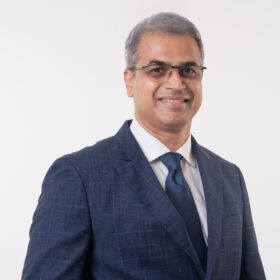
Arun Unni, Executive Vice President and Business Head – New Energy & Head of Strategy at Thermax, speaks to pv magazine about the evolving green hydrogen market, electrolysis economics, and the company’s ambitions in this space through global technology tie-ups. He also discusses the emerging carbon credit trading system and new opportunities for Thermax in biomass, sustainable fuels, and round-the-clock renewable energy solutions.
Advait Greenergy signs MoUs for green hydrogen technology, storage, and EPC
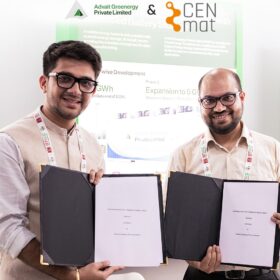
Advait Greenergy has partnered with electrolyser technology providers Switzerland-based CENMAT and US-based Power to Hydrogen Inc. (P2H2), India-based EPC firm JESCO Projects, and hydrogen storage specialist VJ Industries to support the development of green hydrogen projects in India.
The Hydrogen Stream: NTPC Green signs MoU with Assago Industries for green ammonia supply
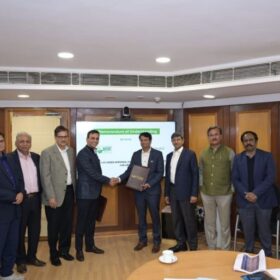
NTPC Green Energy Ltd (NGEL) has signed a Memorandum of Understanding (MoU) with Assago Industries for the supply of green ammonia, CO₂, renewable power, and other utilities to support the production of 1,000 tonnes per day (tpd) of green urea.
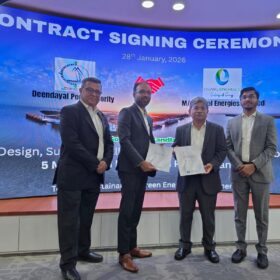
Oswal Greenzo Energies secures India’s first port-based 5 MW green hydrogen project at Deendayal Port, Kandla
Oswal Greenzo Energies, a joint venture between Oswal Energies Ltd and Greenzo Energy India Ltd, has been awarded a contract for the design, supply, installation, testing, and commissioning of a 5 MW green hydrogen plant at Deendayal Port, Kandla. The facility will be India’s first green hydrogen plant located at a major port, positioning Deendayal Port as an early mover in maritime decarbonisation.