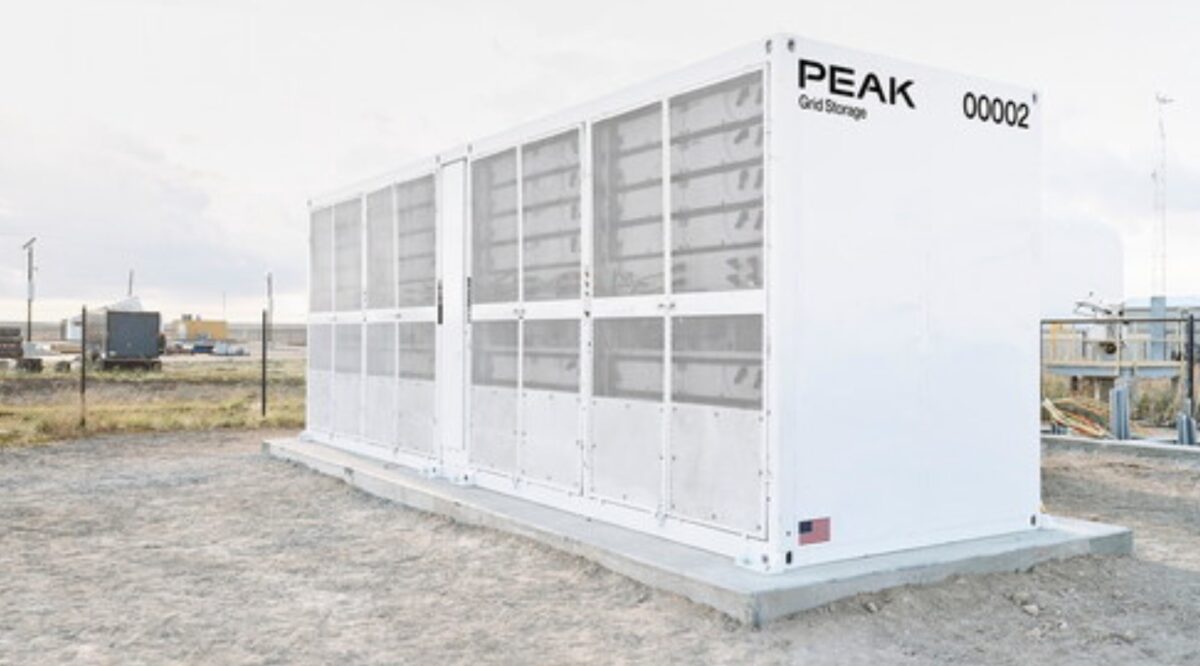





The Midcontinent Independent System Operator (MISO) will receive its first sodium-ion battery thanks to a dual pilot project from battery company Peak Energy and global energy company RWE Americas. The project comes a mere eight months after Peak deployed the largest grid-scale sodium-ion storage system in the United States.
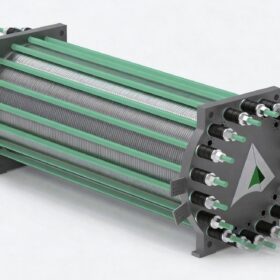
Set to be deployed in Eastern Wisconsin, Peak’s passively cooled, grid-scale energy storage system could be the first ripple indicating MISO’s pivot toward next-gen, non-lithium storage as the grid operator faces capacity constraints, rising costs and solar project cancellations that some industry experts suspect could slow battery deployment.
Sodium-ion cells are particularly well-suited for the Midwest, given that they can operate safely at wide temperature ranges without negative impacts on performance. By integrating passive cooling and prioritizing low degradation designs, Peak systems should reduce overbuild, require less routine maintenance and waste less energy, to the tune of cutting 90% of auxiliary power use. According to the company, their proprietary ESS can reduce the lifetime cost of energy stored by an average of $70/kWh, which is around half the total price of an average battery system today.
This could have a significant impact in MISO, which, like many Eastern markets, has struggled to catch up to California and Texas’ storage deployment. According to a 2025 report from Aurora Energy Research, installing 10 GWh of battery storage capacity by 2035 could slash up to $27 billion in total MISO system costs compared to a baseline scenario. Doing it with Peak’s systems could cut the total storage system costs down another 25% compared to lithium-ion options.
To continue, please visit our ESS News website
This content is protected by copyright and may not be reused. If you want to cooperate with us and would like to reuse some of our content, please contact: editors@pv-magazine.com.



By submitting this form you agree to pv magazine using your data for the purposes of publishing your comment.
Your personal data will only be disclosed or otherwise transmitted to third parties for the purposes of spam filtering or if this is necessary for technical maintenance of the website. Any other transfer to third parties will not take place unless this is justified on the basis of applicable data protection regulations or if pv magazine is legally obliged to do so.
You may revoke this consent at any time with effect for the future, in which case your personal data will be deleted immediately. Otherwise, your data will be deleted if pv magazine has processed your request or the purpose of data storage is fulfilled.
Further information on data privacy can be found in our Data Protection Policy.