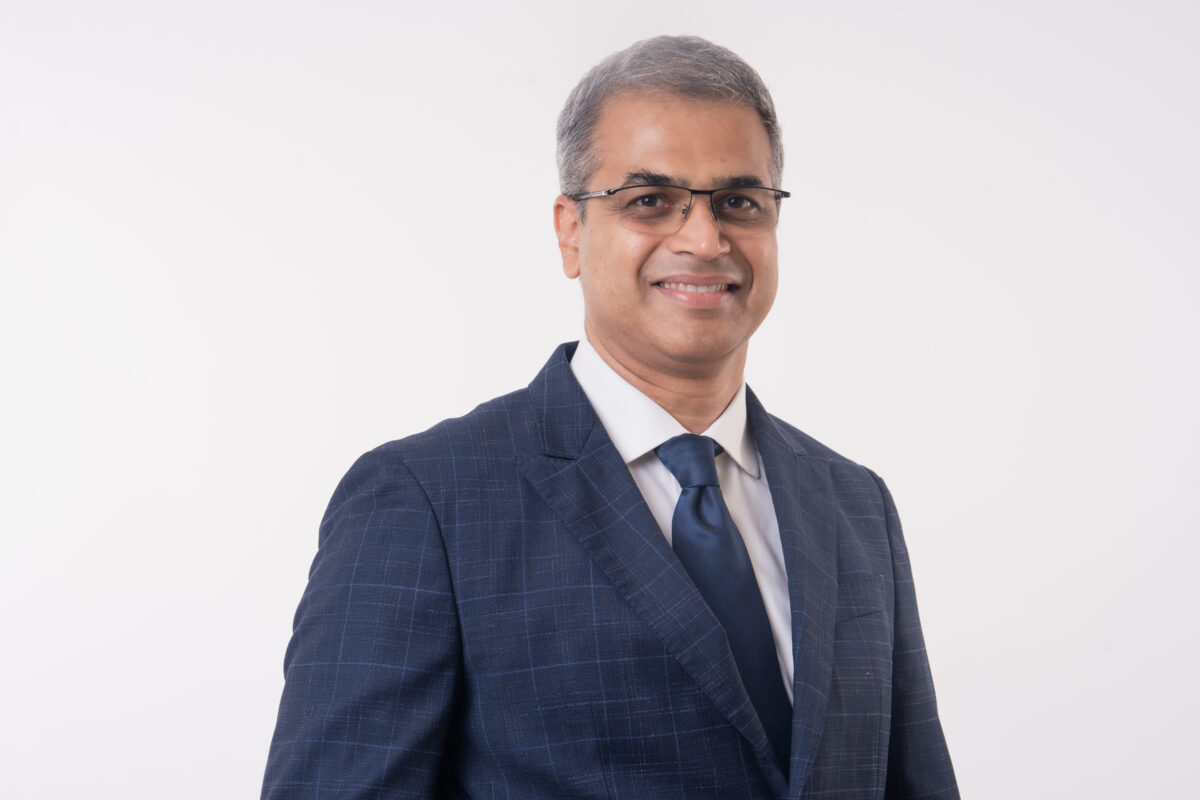





pv magazine: Thermax has a long legacy in industrial solutions, and with India targeting net zero emissions and 500 GW of non-fossil fuel capacity by 2030, what possibilities do you see for Thermax in this space?
Arun Unni: Thermax is fundamentally a B2B, technology-driven company. Our role is to support customers across the entire breadth of the energy transition journey.
Energy transition can happen in multiple ways. One is through efficiency—reducing the amount of energy required to produce the same output. The other is by replacing brown energy with green energy. This replacement can happen through electrons, such as solar, wind, hybrid systems, and battery energy storage, or through molecules, including compressed biogas (CBG), steam, and hydrogen.
Beyond energy, when we look at the broader decarbonization pathway and environmental impact, there is also a need to address clean water and clean air. Whenever a customer is thinking about sustainability or decarbonization, Thermax has technologies that can come into play across this entire spectrum. We are keen to be part of a larger share of our customers’ energy transition conversations, whether from an electrons or molecules perspective, and that is how we see ourselves.
A lot is happening in the green hydrogen space, with many companies entering into technology tie-ups with global players, Thermax being one of them. Do you think India is on track to meet its green hydrogen targets? What are the gaps that need to be addressed?
India’s green hydrogen targets were designed as a mix of domestic consumption and exports. While things have moved at some pace in the last 12 months on the domestic front—particularly in refineries and green ammonia for fertilizers—the traction globally has softened a bit.
Because the target was a mix of domestic and international demand, meeting the overall number may be challenging simply because of slower absorption of green ammonia. That said, domestically, it is encouraging to see plans translating into action. Refineries have awarded contracts, and fertilizer companies have already begun placing orders.
We expect almost 2 GW of electrolyzers to be procured by Indian customers over the next 18–24 months, whether for domestic or global use, and we are aiming to secure a fair share of that volume.
What’s the reason for the slowdown in global green ammonia demand?
Globally, it has been a period of political and economic tumult. Changes in governments across the world have made it challenging to maintain consistent policy support for green hydrogen and green ammonia.
From a technology and cost perspective, this is not a major concern—especially in India, where green hydrogen costs are becoming globally competitive. But green hydrogen at this particular period of time requires policy support to scale-up, and that support has not been consistent across regions such as the US, Europe, and other markets.
Recent tenders in India have revealed very low green hydrogen prices. Do you see this trend continuing?
We have been involved in deep conversations with many of these players in the ecosystem, particularly from an electrolyzer technology perspective. While we are not developers ourselves, it is encouraging to see the depth of thought that developers are applying to achieve these price points.
Hydrogen is not just about a one-time capital expenditure. It is a combination of capex, opex, and long-term servicing over a 20-year operating life. And so we do see that if the thinking comes together—not just from a cost perspective, but also from an engineering and an O&M perspective—there is potential for this trend [lowering of prices] to continue. It will not be easy, but it is possible.
What role do electrolyzers play in reducing the cost of green hydrogen?
Electrolyzers play a critical role. The largest cost component in green hydrogen production is renewable power, and optimizing renewable energy costs is the single biggest lever for cost reduction. However, the amount of renewable energy consumed depends directly on electrolyzer efficiency.
Electrolyzer capex typically accounts for around 30–35% of total hydrogen production costs. As a result, electrolyzer manufacturers have a role to play in both improving efficiency and reducing costs.
Importantly, efficiency should not be viewed only at the stack level. Much of the industry discussion is about stack efficiency—the core electrolyzer part.
We, at Thermax, look at efficiency at the system level, where energy, heat, and all other inputs are utilized far more effectively. And that’s where we think the interesting opportunities will lie—ensuring fewer units of electricity consumption per kg of hydrogen produced.
While capex optimization remains important, we believe efficiency improvements offer a bigger opportunity for cost reduction.
Could you tell us about the technology tie-ups or partnerships Thermax has entered into with global players in electrolysis? Which technologies are you focusing on, and why?
From a go-to-market perspective, we are currently focusing on two electrolysis technologies.
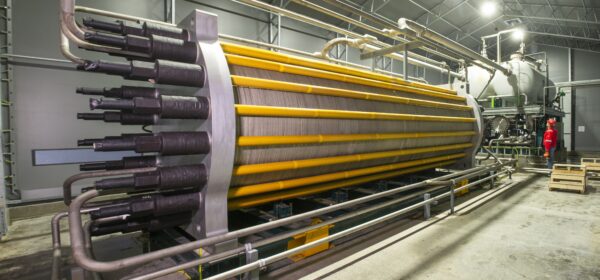
The first is alkaline electrolysis, which is commercially available today. We have partnered with HydrogenPro after conducting extensive due diligence on several players across East Asia, Europe, and other regions. Under Indian conditions—which are quite different from many other markets, including grid variability, power reliability issues, and fluctuating power profiles that electrolyzers must handle—we want to not only remain competitive on capex and efficiency but also provide reliable service across the full lifecycle of the plant. We are already in discussions with customers on this offering.
The other technology that we bet on is solid oxide electrolysis, through our partnership with Ceres. Solid oxide systems operate at higher temperatures and pressures and can utilize waste heat to significantly improve efficiency compared to low-temperature technologies. So, with that, we hope to leverage Thermax’ strengths in heat and energy management. Especially in industries like steel, refining, and green ammonia, where waste heat is an opportunity, we think solid oxide electrolysis can deliver very competitive efficiencies.
Importantly, under both these electrolyzer partnerships, we are actively involved in joint technology development.
From a longer-term perspective, we are also evaluating other electrolysis technologies that are still in the R&D phase, including AEM.
Thermax
What electrolyzer production capacity is Thermax targeting? Have you started pilot production, or have these systems been installed anywhere in India?
The alkaline electrolyzers we are talking about, are already in operation in multiple geographies, including Japan and the United States. In fact, now there are a few modules either already in operation or in the process of commissioning in Germany. These are HydrogenPro–Thermax alkaline electrolyzers.
In the Indian context, now that our partnership agreement has been finalized, we are moving into the production phase. We have identified a manufacturing location at one of our facilities in Pune, where electrolyzer production will be set up.
We expect domestic demand for electrolyzers in India to begin from around mid-2026. Accordingly, we are planning to be ready to deploy systems to our first set of customers by that time.
Do you see the electrolyzer manufacturing market evolving in the same way as solar modules or battery storage, where concerns around oversupply have emerged in India?
Electrolyzer manufacturing is somewhat different. While electrolyzers are modular, they are significantly more complex than solar PV modules, where much of the technology is standardized at the cell or module level. Electrolyzers involve a fair amount of engineering.
While there may be an initial spurt of players entering the market, over the next few years greater clarity will emerge on which electrolyzer technologies perform best under Indian operating conditions. Rather than broad consolidation (given the limited capacity at present), a few clear winners are likely to emerge in this space.
Given that demand is defined, I wouldn’t say there is overcapacity yet; however, capacity will build up as demand picks up.
If we were to compare the feasibility of green hydrogen from bio-waste/agri-waste and water electrolysis-based technologies, how would you rate the two for India?
I think both approaches have potential, and it’s not a matter of choosing one over the other. Currently, electrolysis-based green hydrogen is a bit more proven on the demonstration curve, than green hydrogen from bio sources.
At the same time, we are closely exploring green hydrogen production from biomass or agricultural waste. Scaling it to large volumes will require the development of an entire value chain, delaying commercialization.
Nonetheless, it represents a significant opportunity.
How has the carbon credit trading system evolved in India, what are the challenges, and what role do you see for players like Thermax in this segment?
The carbon credit trading system is a crucial part of enabling decarbonization and sustainability in India. Early interventions, like energy efficiency improvements or adopting renewable power, are relatively easier for customers to adopt because they are bottom-line accretive at the outset.
When it comes to solutions like green hydrogen, which are not yet cost-competitive, customers need to justify that difference in cost. This is where a carbon credit trading system comes in place. The system has achieved a reasonable amount of maturity, and with trading set to begin next year, we anticipate an uptick in sustainability-related investments.
There are two phases: Establishing the feasibility, making sure that the model is working, the trading of certificates happens, etc, and establishing a basic comfort level with the system, which I think should happen sometime next year. Beyond that, the aggressiveness of decarbonization targets that we set for ourselves will also be very, very important in accelerating the overall decarbonization effort in the country. For example, if the carbon credits themselves don’t receive as much uptick or if the value is not very high, then more expensive projects cannot be funded on the back of carbon credits. We hope that after an initial stabilisation phase, the targets will be stiffer for companies to decarbonize, and there will be sufficient market traction and value for carbon credits. While the prices may not reach European levels, a reasonable price level would still allow for better investments in the space.
What are the other areas in renewable energy that you are working on or plan to enter, and what are your plans for global expansion?
We approach every opportunity by looking at India first, and then globally. Beyond BioCNG and electrolyzers, we have a strong presence in biomass-based steam and utilities business, as well as renewable solar and wind solutions. We are also deploying battery-enabled solutions, including RTC (round-the-clock) systems, which are already in the market.
Additionally, we have a fuel cell product for a specific application that we plan to further develop. In other decarbonization spaces—such as sustainable aviation fuel (SAF) and methanol—we have the right technology tie-ups to support the market.
Because we focus on technology, engineering, and scale-up, we think that we have a distinct advantage in making these systems work specifically in India. If it works in India, it can work globally.
This content is protected by copyright and may not be reused. If you want to cooperate with us and would like to reuse some of our content, please contact: editors@pv-magazine.com.




By submitting this form you agree to pv magazine using your data for the purposes of publishing your comment.
Your personal data will only be disclosed or otherwise transmitted to third parties for the purposes of spam filtering or if this is necessary for technical maintenance of the website. Any other transfer to third parties will not take place unless this is justified on the basis of applicable data protection regulations or if pv magazine is legally obliged to do so.
You may revoke this consent at any time with effect for the future, in which case your personal data will be deleted immediately. Otherwise, your data will be deleted if pv magazine has processed your request or the purpose of data storage is fulfilled.
Further information on data privacy can be found in our Data Protection Policy.