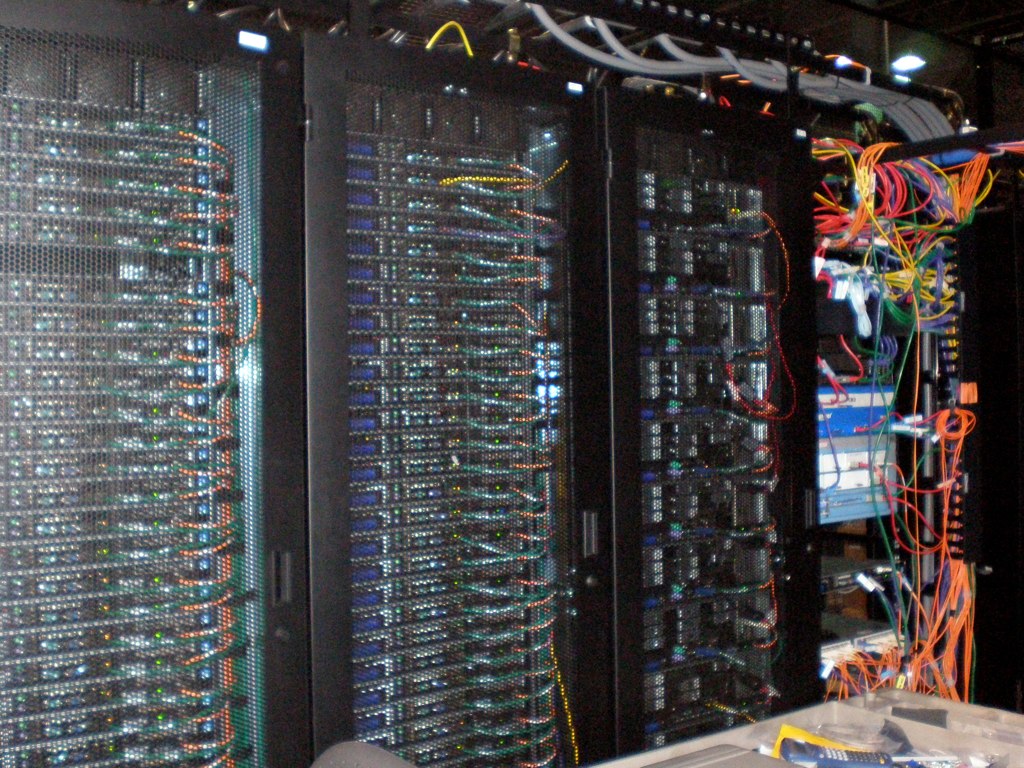





A decade and a half ago, the idea that everyday financial transactions would shift almost entirely to digital platforms or that vehicles could navigate streets without human drivers, felt improbable. Since then, technology has advanced at extraordinary speed, redefining expectations around immediacy, accuracy, and automation. What has changed just as fundamentally, but is discussed far less, is the infrastructure required to sustain this new digital reality. Every layer of convenience today is underpinned by compute, data, and power at unprecedented scale.
India brings a unique dimension to this transformation. With more than 1.4 billion people and a rapidly expanding digital footprint beyond major metros, the country is emerging as one of the world’s most data-intensive economies. Digital payments now run into billions of transactions every month, national digital identity platforms handle massive authentication volumes, and hundreds of millions of users across Tier II, Tier III, and rural regions drive video streaming, gaming, e‑commerce, and AI‑enabled services every day.
This surge is colliding with a simple constraint: distance. When digital experiences depend on real‑time responses whether for AI applications, immersive media, connected devices, or mission‑critical services latency becomes a hard limit. Centralized cloud architectures anchored in a handful of metro hubs introduce delays, rising network costs, and power inefficiencies. At the same time, power prices and land constraints in major data-center clusters are increasing, making it harder to scale infrastructure endlessly in the same locations.
Against this backdrop, edge computing is no longer optional. It is becoming foundational.
From Centralized Cloud to a Distributed Digital Economy
In the early 2010s, the digital economy was still relatively centralized. Cloud computing and large data centers were optimized for aggregation, storage, and batch processing. Users were concentrated in urban centers, and latency was often an acceptable trade‑off for scale and cost efficiency.
That centralized model is now under strain. India alone is estimated to have reached roughly 2,070 MW of data center capacity by the end of 2025, up from about 1,255 MW in 2024, driven by AI adoption, 5G rollout, and video‑led consumption, even as power, land, and network constraints become more visible. At the same time, global data center markets are grappling with power constraints, rising energy costs, and land limitations, making the continued expansion of a few large hubs increasingly inefficient.
More importantly, the nature of workloads has changed. Robotics, autonomous systems, precision agriculture, AI-assisted healthcare, and industrial automation are no longer experimental. They depend on continuous computation and split-second decisions. In such environments, every additional millisecond of latency directly translates into operational risk, lost productivity, or degraded user experience.
This is where edge computing becomes central to the conversation.
India’s Digital Growth Is No Longer Metro-Centric
One of the most critical realities shaping India’s infrastructure future is often underestimated: India’s digital growth is happening beyond the metros.
A majority of India’s internet users today reside in Tier II and Tier III cities and semi‑urban regions, and they are now driving the fastest growth in OTT consumption, digital payments, online gaming, vernacular content, and voice‑based AI interactions not just catching up with metros.
This shift fundamentally alters infrastructure requirements. When users are geographically distributed and engagement is continuous, processing data far from its point of creation becomes inefficient: latency tolerance shrinks, network costs rise, and maintaining consistent service quality becomes increasingly difficult. Infrastructure has to follow users which is exactly what edge architectures are designed to do.
The Evolution: From Core to Edge
The cloud revolution delivered unprecedented scalability, but it also introduced distance. In latency‑critical scenarios, centralized architectures struggle to deliver predictable performance at scale. Edge computing addresses this gap by relocating compute, storage, and networking closer to users, devices, and machines.
By processing data locally, edge infrastructure can reduce response times from tens or even hundreds of milliseconds to near-real-time levels. It also limits the amount of raw data that must traverse long-haul networks, easing congestion and improving power efficiency. Centralized data centers continue to play a vital role, but increasingly as part of a hub-and-spoke architecture, complemented by regional and deep-edge facilities.
Why Edge is Redefining Digital Experiences
Across sectors, the impact of edge computing is becoming increasingly visible. Let’s consider the real transformations:
· Autonomous vehicles rely on processing sensors and environmental data locally for instant decisions, where a difference between 10 ms and 100 ms can be the difference between safety and catastrophe.
· Robotic and AI‑assisted surgeries harness ultra‑low latency processing to execute precise movements, where both patient data and model inference must be handled securely and in real time at or near the hospital edge.
· Industrial automation uses edge nodes on factory floors to monitor and adjust machinery in real time, reducing downtime and enabling predictive maintenance that depends on immediate AI inference on streaming data.
· Smart cities deploy edge‑enabled surveillance, traffic management, and emergency response systems so that video analytics and sensor fusion happen locally, not hundreds of kilometres away, enabling faster reactions and better resource allocation
· Entertainment & Streaming: A 30-minute stream over an edge network saves 0.02–0.05 kWh compared to distant data centers, cutting energy use while reducing buffering and improving playback.
· Gaming: Edge computing brings latency down from 100 ms to under 10 ms, delivering smoother, faster gameplay with lower power use and network strain.
None of these would be feasible at scale if we relied solely on centralized clouds. The sheer volume, velocity, and variety of data flooding networks today demand a distributed infrastructure and edge data centers are the critical backbone enabling this shift.
AI Inference: The Workload Pulling Compute to the Edge
If AI training represents centralized, compute-intensive activity, AI inference represents its everyday execution. Once models are trained, they are invoked continuously, serving users, analysing images, detecting anomalies, and enabling real-time decisions across industries.
Running inference close to users and machines delivers three decisive advantages. Latency drops sharply, enabling instant responses. Network and cloud costs become more predictable as raw data backhaul is minimized; and data privacy, sovereignty, and resilience improve as sensitive information remains local.
As AI becomes ubiquitous, the economics and physics of inference make one outcome inevitable. Training may remain centralized, but intelligence in action must be distributed. The edge is where AI becomes operational at scale.
Why Enterprises and Hyperscalers Should Care Now
This shift is unfolding alongside a broader economic inflection. Rising disposable incomes, sustained GDP growth, and a rapidly formalizing digital economy are expanding the addressable user base for premium, real‑time services. For hyperscalers and enterprises, the question is no longer whether demand exists, but how quickly infrastructure can be aligned with where that demand is emerging.
India’s distributed edge data center landscape offers a rare opportunity:
· Lower total power and network costs: Processing data locally reduces repeated long‑haul transmissions and the cooling and network overheads associated with moving every packet back to a distant core, which can translate into significant power savings for bandwidth‑heavy and AI‑heavy workloads.
· Reduced carbon footprint and better sustainability alignment: Localized infrastructure eases strain on congested grid pockets, enables better use of regional renewables, and aligns with tightening ESG expectations for data‑intensive enterprises and hyperscalers operating in India.
· Scalable, future‑ready efficiency: Newer Indian facilities are being designed with improved PUE, advanced cooling for high‑density racks, and renewable integration, positioning them to support AI, high‑performance computing, and dense edge nodes without runaway operating costs.
· Bandwidth and operational savings: Edge architectures reduce backhaul and cloud egress dependence by doing more at the network edge and sending only necessary insights upstream, supporting smoother scaling as device counts and AI usage grow.
India offers a rare combination of massive demand, geographic diversity, and digital ambition. It is not only a high-growth market, but also a proving ground for next-generation hub-and-spoke architectures that integrate hyperscale cores with regional and edge facilities. As workloads decentralize and intelligence moves closer to users, the strategic question is no longer simply “Why edge?” but increasingly “Why not India’s Edge?”
The views and opinions expressed in this article are the author’s own, and do not necessarily reflect those held by pv magazine.
This content is protected by copyright and may not be reused. If you want to cooperate with us and would like to reuse some of our content, please contact: editors@pv-magazine.com.





By submitting this form you agree to pv magazine using your data for the purposes of publishing your comment.
Your personal data will only be disclosed or otherwise transmitted to third parties for the purposes of spam filtering or if this is necessary for technical maintenance of the website. Any other transfer to third parties will not take place unless this is justified on the basis of applicable data protection regulations or if pv magazine is legally obliged to do so.
You may revoke this consent at any time with effect for the future, in which case your personal data will be deleted immediately. Otherwise, your data will be deleted if pv magazine has processed your request or the purpose of data storage is fulfilled.
Further information on data privacy can be found in our Data Protection Policy.