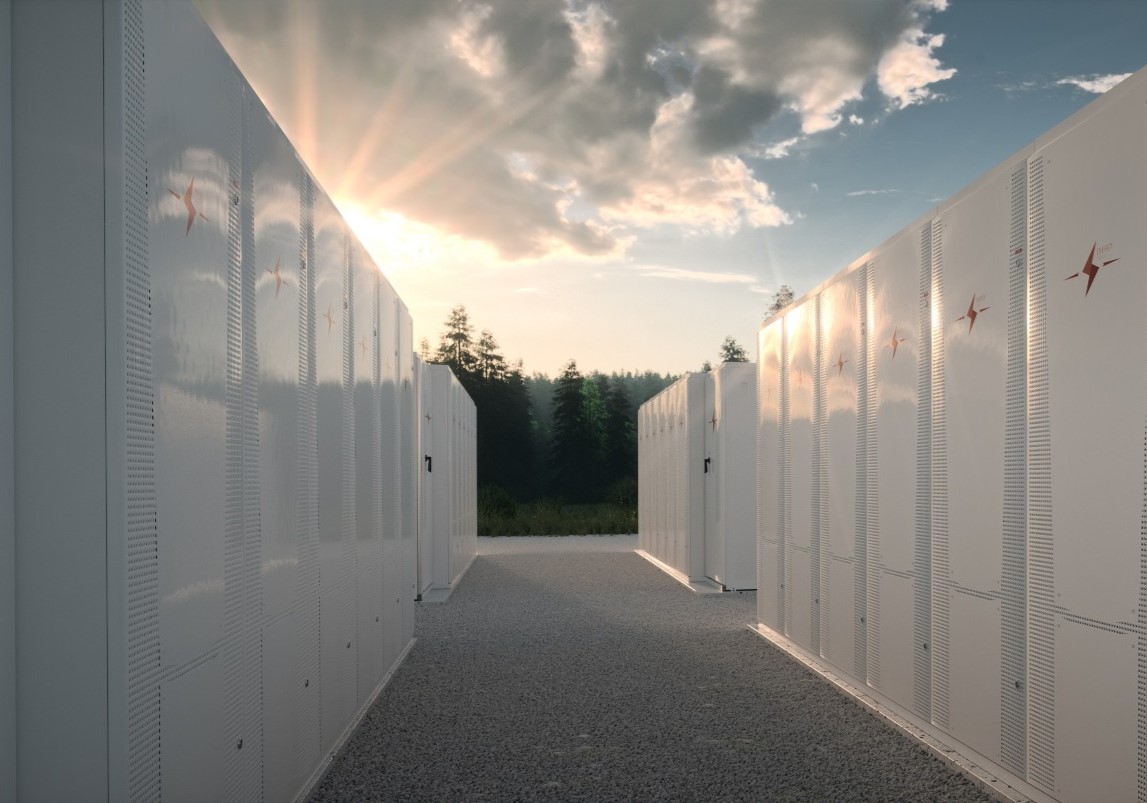





The Indian Ministry of Power said in a statement on Monday that cost of battery energy storage systems (BESS) in India has dropped sharply over recent years.
Tariff-based competitive bidding during 2022–23 revealed costs of around INR 10.18/kWh ($0.11/kWh), assuming two full cycles per day. Recent tenders, however, indicate that BESS can now be installed at roughly INR 2.1/kWh ($0.023/kWh) – without viability gap funding (VGF) for the same usage pattern. Market trends suggest that storage is more likely to be utilised for 1.5 cycles per day, which corresponds to an effective cost of INR 2.8/kWh. By comparison, recent solar project tariffs are averaging around INR 2.5/kWh.
To support the expansion of battery storage, the Ministry of Power is administering multiple schemes. The first VGF scheme aims to deploy 13,220 MWh of BESS capacity with a budgetary support of ₹3,760 crore ($415 million). In June 2025, the Ministry launched a second VGF scheme for 30 GWh of BESS capacity, backed by ₹5,400 crore from the Power System Development Fund (PSDF).
Transmission incentives have also been introduced. Inter-State Transmission System (ISTS) charges are waived for 12 years for co-located BESS projects commissioned by June 2028. For non-co-located projects, the ISTS waiver applies to projects commissioned before June 2025 and then gradually reduces in 25% annual steps.
On the manufacturing side, the Ministry of Heavy Industries is implementing the Production Linked Incentive (PLI) scheme, titled National Programme on Advanced Chemistry Cell (ACC) Battery Storage, to establish 50 GWh of domestic manufacturing capacity. Of this, 10 GWh is earmarked for grid-scale stationary storage (GSSS) applications. Approved in May 2021 with a total outlay of INR 18,100 crore, the PLI scheme is expected to encourage domestic production of battery cells, reduce import dependency, and further drive down BESS costs in the future.
These combined policy measures signal a strong push by the Indian government to make battery storage affordable, scalable, and domestically supported, aligning with the country’s broader renewable energy and grid flexibility goals. However, progress towards establishing a domestic manufacturing industry has been “uncertain,” report analysts – despite the promising example set by India’s solar producers.
From ESS News
This content is protected by copyright and may not be reused. If you want to cooperate with us and would like to reuse some of our content, please contact: editors@pv-magazine.com.




By submitting this form you agree to pv magazine using your data for the purposes of publishing your comment.
Your personal data will only be disclosed or otherwise transmitted to third parties for the purposes of spam filtering or if this is necessary for technical maintenance of the website. Any other transfer to third parties will not take place unless this is justified on the basis of applicable data protection regulations or if pv magazine is legally obliged to do so.
You may revoke this consent at any time with effect for the future, in which case your personal data will be deleted immediately. Otherwise, your data will be deleted if pv magazine has processed your request or the purpose of data storage is fulfilled.
Further information on data privacy can be found in our Data Protection Policy.