



WeNaturalists today released its flagship “India’s Climate Conversations & Action Report 2026,” highlighting a deep and persistent climate action gap in the country. Framed as “From Global Conflict to Local Action: How Climate Awareness is Rising in a Disrupted World,” the report reveals that only 10% of Indians feel informed enough to act on climate change a figure unchanged since 2011 despite 96% awareness, 89% recognising it as a serious threat, and a 34% surge in climate conversations between 2023 and 2024. The findings underscore a critical inflection point where rising geopolitical instability and accelerating climate risks are amplifying discourse, but not translating into meaningful action.
At the same time, India’s climate conversations are accelerating rapidly. On WeNaturalists, nature-related content grew 34% between 2023 and 2024, with 2025 already reaching 80% of the previous year’s volume, signalling a record-breaking year. The movement is overwhelmingly citizen-led, with 97% of all content created by individuals, while user-generated content delivers up to 4× higher engagement than branded campaigns. Participation is strongly event-driven, with spikes such as +950% growth on Earth Day and 95% on World Environment Day, highlighting the catalytic power of collective climate moments.
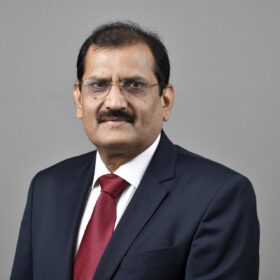
Commenting on the findings, Amit Banka, Founder & CEO, WeNaturalists, said, “India is at a defining moment in its climate journey. We have near-universal awareness, a billion people connected online, and a generation that is actively shaping the climate conversation. The real challenge now is turning this awareness into action. This is not just a gap, it is a structural bottleneck in converting intent into impact. As climate risks intensify and global disruptions reshape energy realities, the urgency is no longer about raising awareness it is about enabling action at scale. Meaningful change will only happen when individuals, communities, and businesses come forward and take collective responsibility. The opportunity ahead is to translate this surge in digital engagement into informed, measurable behaviour change on the ground, and that is where real climate impact will be defined.”
The movement is also being driven by a new generation and a shifting geography. Gen Z (ages 13–27) contributed 89% of eco-content in 2024, while 63% of green job seekers fall within the 21–30 age group. Tier 2 and Tier 3 cities are emerging as high-growth hubs, with eco-creator bases expanding 3× faster than metros, a 50% rise in green job activity, and a growing share of participation (now 35%) coming from smaller cities such as Indore, Jaipur, Kochi, and Bhubaneswar signalling a structural shift in where climate action is being driven.
India’s climate conversation is now being driven by everyday experiences. People are most concerned about issues like air pollution, extreme heat, water shortages, plastic waste, and loss of wildlife.
The report further links global geopolitical developments directly to India’s climate urgency. With 69% of cruzde oil transiting the Strait of Hormuz destined for Asian markets and 84% of flows tied to the region, India remains highly exposed to global energy disruptions. This vulnerability is accelerating the clean energy transition, reflected in a 91.5% surge in renewable energy investment between 2023 and 2024 and a 35× expansion in solar capacity over the past decade.
The report concludes that India has the awareness, digital reach, and demographic strength to lead climate action at scale. The real challenge now is to bridge the gap between knowing and doing by turning growing conversations into consistent, on-ground action that creates lasting impact.
About: WeNaturalists is a global digital platform that helps climate changemakers and activists connect, collaborate, and take meaningful action. It brings together climate and nature professionals, researchers, and enthusiasts to share knowledge and drive real-world impact. The platform focuses on bridging the gap between awareness and action through initiatives, discussions, and community-led programs. It also actively engages students and young professionals to build a strong, future-ready climate ecosystem.