Sineng Electric launches world’s largest sodium-ion battery storage project
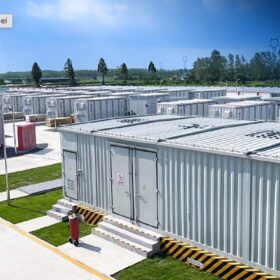
Sineng Electric’s 50 MW/100 MWh sodium-ion battery energy storage system (BESS) project in China’s Hubei province is the first phase of a larger plan that will eventually reach 100 MW/200 MWh. The initial capacity has already been connected to the grid and can power around 12,000 households for an entire day.
PV industry faces consolidation, says JinkoSolar
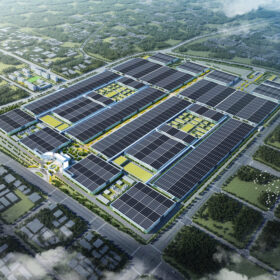
JinkoSolar has begun converting its production to n-type tunnel oxide passivated contact (TOPCon) products to stay competitive, says Frank Niendorf, the company’s general manager for Europe. He predicts that several market players in the value chain will exit the market soon.
SJVN allocates 1.2 GW solar at average price of $0.030/kWh
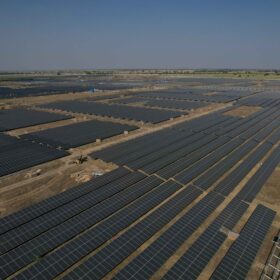
Acme Solar, Essar Renewables, NTPC Renewable Energy, Onward Solar, and SAEL Industries have emerged winners in SJVN’s tender for the selection of developers for 1.2 GW of solar projects anywhere in India.

Israel mandates rooftop solar on new big buildings, targets 3.5 GW by 2040
The Israeli authorities have introduced new regulations requiring rooftop PV on new large buildings, with plans to install 3.5 GW by 2040. The minimum production capacity has been set at 5 kW.
India installed 12.1 GW of solar in H1 2024
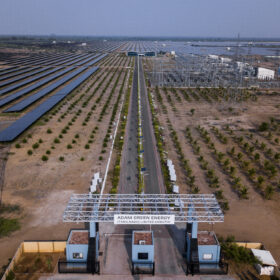
India installed about 9.6 GW of utility-scale solar, 1.8 GW rooftop, and 688 MW off-grid capacity in the Jan.-June period of 2024, says a new report by JMK Research.
Sustainability: A non-negotiable reality for long-term business growth
By proactively embracing more sustainable practices and aligning themselves with global sustainability goals, companies can ensure their continued viability and contribute to a healthier planet. The journey towards sustainability may be complex and challenging, but it is an investment that will yield significant returns in the long run.
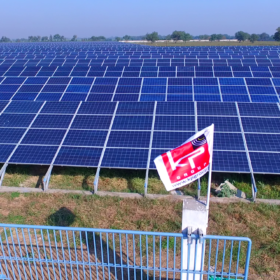
KPI Green’s Q1 profit grows 99% yoy
KPI Green Energy’s revenue for the April-May-June quarter increased 83% year-on-year to INR 350 crore. Profit is 99% up to INR 66 crore.
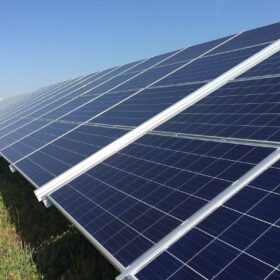
JSW Energy secures LoA for 230 MW renewables-plus-storage project
JSW Neo Energy has received a letter of award from Solar Energy Corp. of India (SECI) to set up renewable energy projects backed with energy storage system for supply of 230 MW of firm and dispatchable renewable power in a demand-following manner.
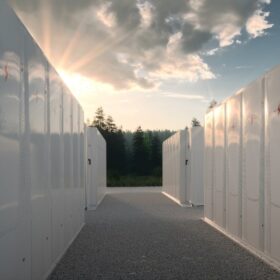
FRV reaches financial close on first Australia standalone battery project
Fotowatio Renewable Ventures Australia says it has begun construction on its first standalone battery energy storage system in the country after reaching financial close on the project.
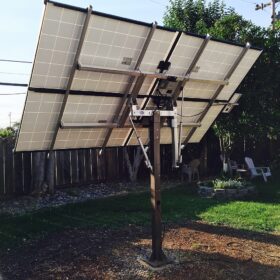
Dual-axis solar tracker based on UV, MEMS sensors
Researchers have designed a new tracking system that utilizes an arithmetic optimization-based PID controller. The proposed tracker uses two different sensor types – a UV sensor and a micro-electromechanical solar (MEMS) sensor. The first one calculates the intensity of UV radiation received from the sun, and the second one forecasts the sun’s path across the sky.