Modular lift system for solar panels
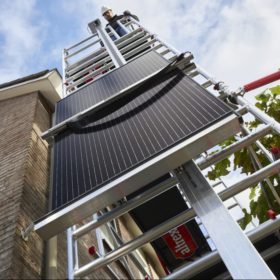
Altrex, a scaffolding and ladder producer in the Netherlands, has developed a new modular lift solution for solar panels. The system can raise one solar panel at a time and can be operated by a single installer using nothing other than a cordless drill, the company claims.

Australian firm launches 36 kW/120 kWh storage system made of second-life EV batteries
Relectrify said its new storage system is suitable for commercial and industrial applications and is designed for installations in the 120 kWh to 2 MWh range.

Indian researchers improve perovskite-based solar cell structure
A numercal study by researchers at India’s Chitkara University has shown enhanced charge extraction in metal-perovskite-metal back-contact solar cell structure through electrostatic doping. The proposed design yielded a 59.4% improvement in power conversion efficiency over previously reported structures.

Viridian Solar unveils roof-integrated solar panels with power of 335/340 W
The new devices feature efficiencies ranging from 20.7-21%. The panels are said to be compatible with a wide range of slates and tiles, include special fixings for different batten thicknesses, and achieve the highest fire rating and wind resistance without modifications to the roof.
IESA partners Norway’s Greenstat to support India’s hydrogen mission
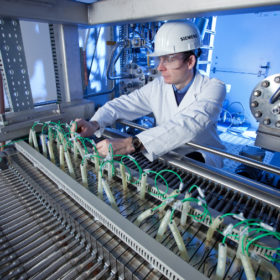
India Energy Storage Alliance (IESA) and Greenstat Hydrogen India will collaborate on establishing a Norwegian Centre of Excellence on Hydrogen in India and supporting the development of green hydrogen technologies.

Quantum dot solar cells and the search for stability
In various forms, quantum dot technology has attracted plenty of attention among PV researchers recently. And as efficiencies have crept past the 15% mark, the community is beginning to look at other factors limiting the viability of quantum dot solar cells in a commercial setting. Scientists in Germany examined the degradation mechanisms affecting different quantum dot materials; and suggest a standardization of stability testing to enable comparability of results.

Modeling the potential of lead-free perovskites
Scientists in India modeled the performance of tin-based perovskite (methylammonium tin triiodide) finding that with careful optimizations the material could achieve efficiencies beyond 28%.
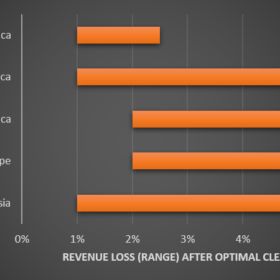
New model to predict PV module cleaning cycles and resulting profits
A group of scientists in Bangladesh has developed a model to determine the optimal cleaning schedule for a PV installation at any location in the globe, requiring only the average insolation and soiling rate for a given site to make the calculation. The study also draws new conclusions regarding the influence of sandstorms and rain on soiling, and aims to be among the first studies to paint a global picture of soiling trends by region.

IIT Bombay, BHEL in race to develop high-efficiency solar cells
India’s Ministry of New and Renewable Energy is funding the research to develop high-efficiency crystalline silicon solar cells, including those with passivated emitter and rear contact structure, and perovskites.
DST to fund trans-national research in digitalization for green energy transition
February 17 is the last date to submit proposals targeting implementation, adaption, and knowledge creation of digital solutions in energy systems and networks. The projects will be funded by the Department of Science and Technology, under India’s Ministry of Science and Technology.