NTPC, Mitsubishi sign MoU for hydrogen co-firing in Auraiya gas power plant
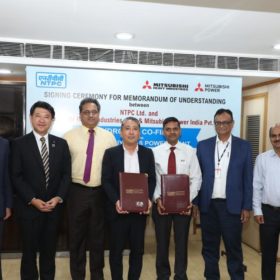
NTPC and Japan’s Mitsubishi Heavy Industries (MHI) have signed an agreement for hydrogen co-firing in MHI’s gas turbines installed at NTPC Auraiya gas power plant in Uttar Pradesh. The two companies will collaborate to carry out the study and identify key actions for introducing hydrogen co-firing blended with natural gas.

Torrent Group commits $7.28 billion renewables investment in Rajasthan
The Group will invest more than INR 60,000 crore ($7.28 billion) in setting up renewable energy projects, including green hydrogen, in the Indian state of Rajasthan.

Longi eyes green hydrogen market in India
Longi is entering the green hydrogen market in India with its alkaline electrolyzer offerings. It will also roll a next-generation Hi-MO solar module later this year, which, it says, will outshine all the prevailing panel technologies.

Sodium-ion battery anode made from toxic hogweed
Russian researchers have transmuted poisonous Sosnowsky’s hogweed into high-grade anode material for sodium-ion batteries. The obtained material has a Coulombic efficiency of 87%, which is on par with the best reported results for hard carbons synthesized from other raw materials.
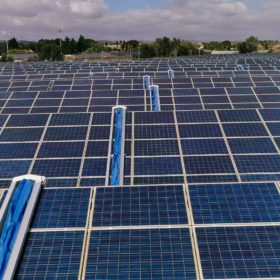
Avaada signs $2 million robotic cleaning deal with Airtouch Solar
Indian developer Avaada Group has selected Israeli robotic cleaning specialist Airtouch Solar for the maintenance of PV modules at its solar farms in Rajasthan and Maharashtra. The robotic cleaning contract between the two companies is pegged at around $2 million.
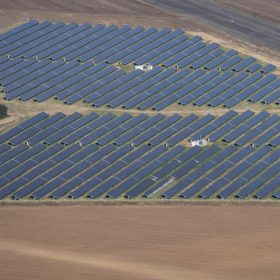
Why do solar power plants work inefficiently?
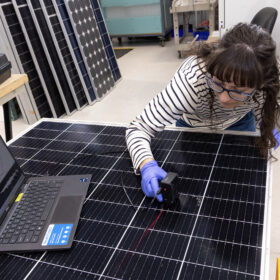
When choosing a solar power plant, individuals and businesses pay the most attention to its power – after all, this will determine how much electricity will be produced. Other equipment, systems and sensors that allow monitoring and analysis of the operation of the power plant are often underestimated. But they shouldn’t be: the solar power plant will be used for several decades, so various failures and poor-quality monitoring can have a significant impact on the efficiency of electricity production.

Challenges to utility-scale solar in India
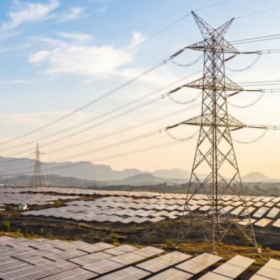
The growth of utility-scale solar PV in India is marred by several challenges such as availability of land, limited local manufacturing capacity, high transmission and distribution losses, grid integration, and other inefficiencies.

Contendre Solar unveils 550 W half-cut mono PERC module
Maharashtra-based Contendre Solar has unveiled CG X 144 series mono PERC modules in power outputs ranging from 535 W to 550 W, with power conversion efficiency between 20.7% and 21.3%.

Fraunhofer ISE develops direct metallization tech for heterojunction solar cells
Germany’s Fraunhofer ISE is applying its FlexTrail-printing technology to the direct metallization of silicon heterojunction solar cells. It said the technique reduces the use of silver, while maintaining high efficiency levels.
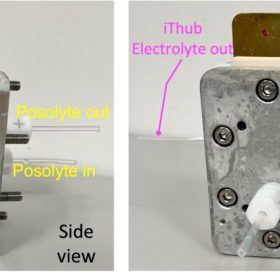
Zinc-cerium redox flow battery for renewable energy storage
Scientists in Hong Kong have designed a redox flow battery with electrolytes made of zinc and cerium. They claim to have solved the incompatibility issue posed by these two elements. The device achieved a record average Coulombic efficiency of 94% during cycling.