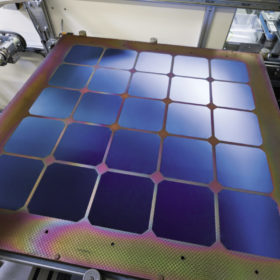
The long read: Does ALD live up to assembly line expectations?
As demand for atomic layer deposition equipment spreads among Chinese solar cell manufacturers, experts throughout the industry are sharing their insight on the merits of this emerging manufacturing technology. The numbers they crunch reveal tough competition for incumbent plasma-based deposition techniques. But beyond the hype, does atomic layer deposition truly offer the better deal?
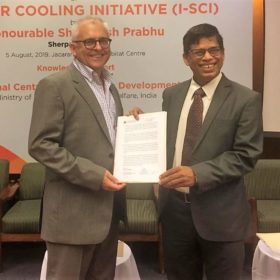
UK university to research solar-powered cold chains for Indian agriculture
The University of Birmingham is a research partner on the Solar Cooling Initiative of International Solar Alliance that aims to spread the use of solar and solar-hybrid energy in agriculture.
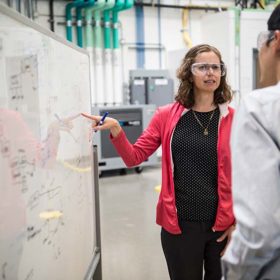
Stitching together the grid of the future
A vision of a decentralized, renewable-powered electricity grid is being brought a step closer by scientists at the U.S. National Renewable Energy Laboratory. Their project, Autonomous Energy Grids, aims to take an overarching look at the solutions that will power this grid of the future, and to fill any gaps that appear between them.

Commercial solar at grid parity in China but a hard line is needed on soft costs
Deploying commercial and industrial PV in China without subsidy is already profitable in some areas, according to a new study, but prohibitive soft costs and cheap electricity are the main barriers for such installations in areas where grid parity remains out of reach.
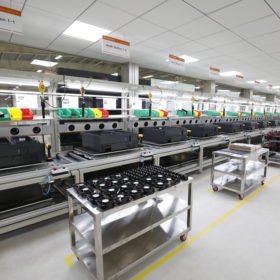
Thinktank says India must prioritize a vertically integrated solar supply chain
To develop cost-competitive solar modules the nation must adopt a phased program and set up 15 GW of silicon-ingot-to-solar-module manufacturing capacity by 2024, according to The Energy and Resources Institute.
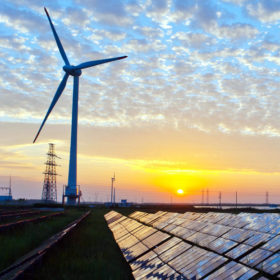
Corporate clean energy PPAs to smash last year’s record: BloombergNEF
Power purchase agreements for 8.6 GW of clean energy have been signed in 2019 till July—up from 7.2 GW at the same time last year—with USA alone accounting for up to 70% of the deals. India continues to lead the Asia Pacific region despite registering a slowdown in the activity.
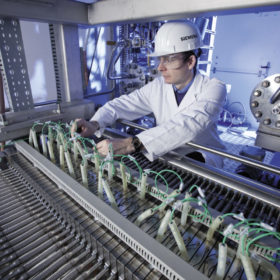
A close look at nature could lead to cheaper hydrogen
Scientists at the Australia National University have observed a key stage in the process of photosynthesis which could be copied to greatly increase the efficiency of sunlight-powered water splitting processes used to produce hydrogen.

BHEL tenders for supply of grid-connected power conditioning units
Bids are invited for supply, installation and commissioning of eight 1250kW 3-phase grid-connected power conditioning units for a 10 MW (AC) solar power plant in Charanka Solar Park of Gujarat. Bids will open on August 26.
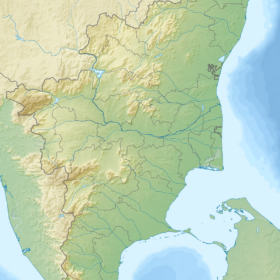
NLC commissions 100 MW solar plant in Tamil Nadu
The plant—located at Maranthai and Pudur Villages in Tirunelveli District of Tamil Nadu—is part of 709 MW solar power projects awarded by utility Tamil Nadu Generation and Distribution Corporation.
MNRE invites solar research proposals
The ministry has invited proposals for high-efficiency perovskite solar cells, solar panel recycling, hybrid inverters and new applications that combine solar and storage, among others.