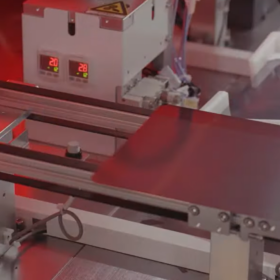
India’s critical minerals sector faces financing challenges: IEEFA
While the National Critical Mineral Mission (NCMM) aims to create regulatory and institutional enablers to develop the critical minerals supply chain, focused capital expenditure is needed to accelerate large-scale mining, refining, and processing. The NCMM creates intent and incentives, but outcomes will depend on institutional execution.
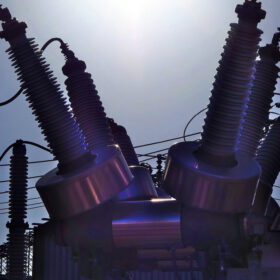
U.S. transformer market faces severe supply constraints
Severe shortages of power transformers are stalling grid expansion as developers face skyrocketing prices and four year wait times for critical equipment.

Coal India scraps solar manufacturing arm
Coal India Ltd said today that the name of its arm CIL Solar PV Ltd has been struck off from the Register of Companies under Section 248(5) of the Companies Act, 2013, and that the subsidiary now stands dissolved.

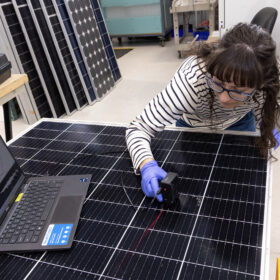
The hidden engine: Why testing infrastructure is the real bottleneck in India’s green energy race
India’s 500 GW renewable energy target by 2030 dominates every policy conversation. Capacity additions, auction pipelines, transmission corridors; these are the metrics that make headlines. But there is a quieter, less glamorous constraint that could undermine all of it: the country’s under-investment in testing and certification infrastructure for clean energy equipment.
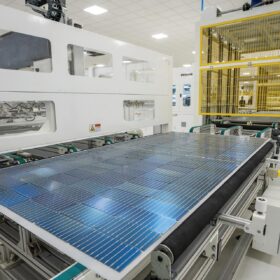
NTPC seeks solar modules for 1.2 GW PV projects at Khavda Renewable Energy Park
NTPC Renewable Energy Ltd (NTPC REL) has invited bids for the supply of solar PV modules for 1,200 MW of solar projects planned at the Khavda Renewable Energy Park – South Block in the Rann of Kutch, Gujarat.

EU ban on Chinese inverters sparks strong response from Beijing
China strongly criticized the EU’s ban on Chinese inverters in EU-funded solar projects, warning it could damage trade relations, supply chains, and Europe’s energy transition.
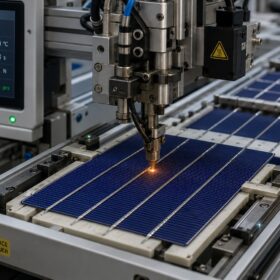
U.S. solar panel manufacturers need to learn to solder
CEA’s 2026 manufacturing quality report finds that yield rates vary widely based on the age of solar module assembly facilities, with mature Chinese firms nearing 100% and U.S. outlier facilities ranging all the way down to 30%.
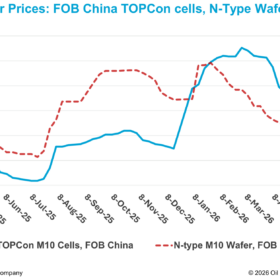
China TOPCon solar cell prices stabilize as holiday lull slows trading
In a new weekly update for pv magazine, OPIS, a Dow Jones company, provides a quick look at the main price trends in the global PV industry.
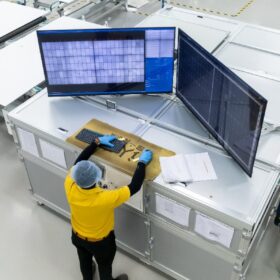
Solex Energy FY2026 revenue surpasses INR 1,600 crore
Solex Energy, a solar module manufacturer and EPC services provider, has reported a 248% year-on-year increase in revenue from operations to INR 885.53 crore for the fourth quarter of FY2026. Revenue for the twelve months ended March 31, 2026, rose 144.3% to INR 1,618 crore.
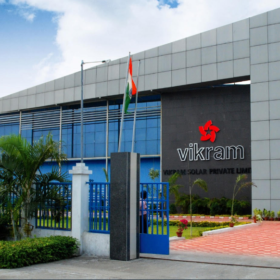
Vikram Solar reports record Q4 FY2026 revenue of INR 1,453 crore
Vikram Solar has reported its highest-ever quarterly revenue of INR 1,453 crore in Q4 FY2026, marking a 22% year-on-year increase. Profit after tax (PAT) also rose 22% YoY to INR 110 crore.