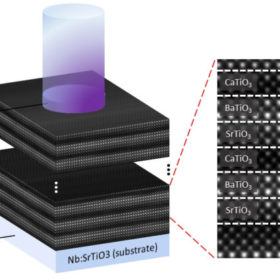
Crystal arrangement results in 1,000x more power from ferroelectric solar cells
German researchers developed a lattice arrangement of three different layers of ferroelectric crystals that created a powerful photovoltaic effect.

Four-terminal heterojunction perovskite tandem solar cell with 30.09% efficiency
Developed by a Vietnamese-Korean research group, the complex PV device was built with a bottom bifacial crystalline silicon perovskite-filtered heterojunction sub-cell that is able to absorb all solar spectra in the short-wavelength range.

EverSource-backed GreenCell to deploy 3,250 electric buses in three years
The company will initially launch 750 electric buses across key intercity and inter-state transit routes in Southern and Western India. To support the e-bus rollout, it is also building a captive charging infrastructure network across highways with 600 DC chargers of 180/240 kW capacity rating.
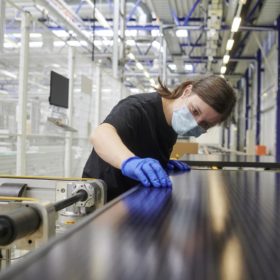
Meyer Burger plans to launch solar PV roof tiles in 2022
The Swiss group has acquired an integrated solar roof system solution from an unidentified German engineering service provider for this purpose. The aim is grow this sector from a niche market.

India offers fastest energy payback on silicon solar rooftop systems
The energy payback time of a silicon PV rooftop system mounted in India is only 0.44 of one year (160.6 days), compared to 0.53-0.67 year in Africa, 1-1.3 years in Europe, and 1.42 years in Canada, reveals a world map by German research body the Fraunhofer Institute of Solar Energy Systems (ISE). For the calculation, the report authors considered the installation used a typical, Chinese-made, 60-cell, PERC, 19.9%-efficient solar module.

The long read: What research is needed for the effective recycling of batteries?
With manufacturing ramping up year by year and policies already looking to get ahead of the large volumes of end-of-life products, the landscape for lithium-ion battery recycling is rapidly changing. pv magazine recently spoke with Mari Lundström, associate professor of chemical and metallurgical engineering at Aalto University, to find out what is needed on the research side for the effective recycling of batteries.
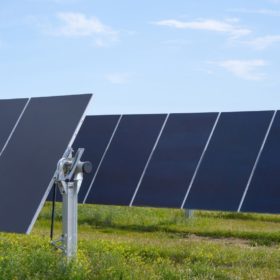
First Solar plans a 3.3 GW Indian module fab
The U.S.-based manufacturer is planning a vertically integrated thin-film solar module manufacturing facility in India. The factory will likely be built in Tamil Nadu and become operational in the second half of 2023.
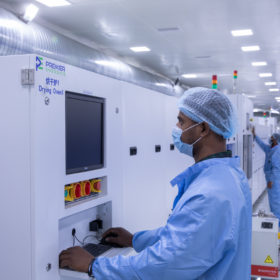
Premier Energies unveils new solar facility
The Indian manufacturer has opened a new facility in Telangana with an annual cell and module production capacity of 750 MW.
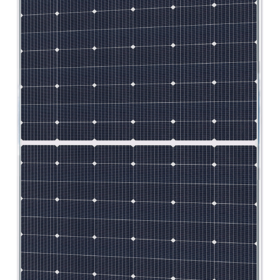
Jakson unveils 21% efficient mono PERC solar modules
The Indian solar manufacturer has released the Helia series of high-efficiency mono PERC PV panels. Ranging from 450W to 600W outputs, the multi-busbar modules are designed for use in residential, commercial and utility-scale installations.
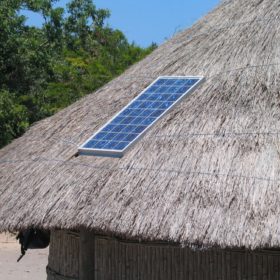
Solar manufacturers warn of 12-18 months disruption for standalone products
Potential price rises of 14% for the solar home systems that are driving access to electricity in the world’s under-served regions could signal further arrested progress towards the UN goal of universal access by 2030.