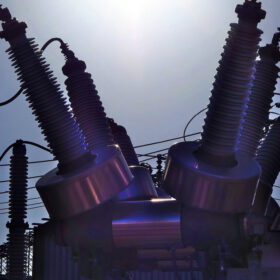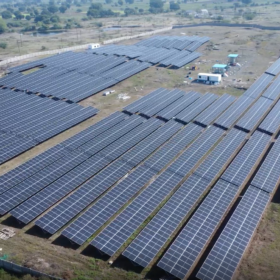
Evergreen Renewables to invest INR 4,000 crore in Gujarat
Advait Infratech will invest in the manufacturing and assembly of fuel cells and electrolyzers in Gujarat. Waaree will set up a green hydrogen/green ammonia production facility along with hybrid (solar, wind) renewable energy generation.
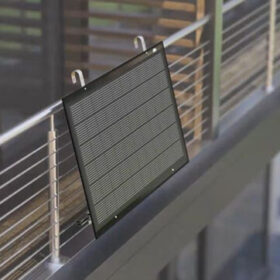
Italian startup unveils 350 W balcony TOPCon solar modules
Fly Solartech Solutions Srl’s new 60-cell modules have a power conversion efficiency of 17.87% and a temperature coefficient of -0.27% per degree Celsius. The company offers the panels with 300 W, CEI-021-certified microinverters featuring 96.5% peak efficiency.
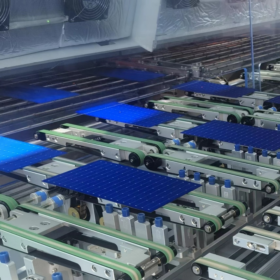
China’ Akcome sets up pilot factory for perovskite PV cells
Akcome says it hopes to soon start commercial production of its heterojunction (HJT) perovskite solar cells, but it has yet to provide a specific time frame.

“Solar module prices are likely to remain subdued in the near term”
Vikram V, vice president & co-group head-corporate ratings, ICRA Ltd, speaks to pv magazine about falling solar cell and module prices, its impact on the Indian pv manufacturers, and way forward.

Major trends in the Indian solar PV sector
The Indian solar PV sector is experiencing transformative trends, driven by a combination of technological advancements, government support, and a growing awareness of the need for sustainable energy sources. The rapid expansion of solar capacity, coupled with innovations such as floating solar farms and green hydrogen production, paints a promising picture for the future of renewable energy in India.

A look back at solar in 2023
The Indian government has demonstrated a robust commitment to advancing solar energy by implementing various strategic initiatives.

Thin-film solar is the future of agrivoltaics
In contrast with traditional panels, thin-film solar modules are much more adaptable to these agricultural situations, thanks to their flexible, lightweight design.
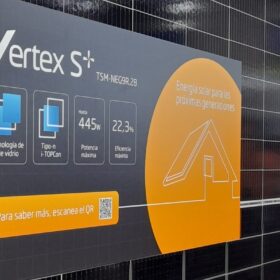
Solar manufacturers unite to develop standards for 700 W-plus modules
Solar module size standardization will enhance supply chain efficiencies, boost production, and lower costs, according to the 700W+ Photovoltaic Open Innovation Ecological Alliance, which aims to accelerate the industrialization of PV modules above 700 W.
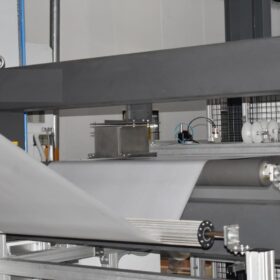
RenewSys launches encapsulant for n-type TOPCon solar PV Cells
RenewSys says its Conserv E–NT POE (polyolefin elastomer) encapsulant is specially designed to prevent the degradation of n-type TOPCon solar modules in field operations. The encapsulant suits both glass-glass and glass-backsheet TOPCon panels.

Solar bike paths go online in Netherlands
Two new PV bike-path projects are now operating in the Netherlands under an initiative launched in 2018 by Rijkswaterstaat, the Dutch water management agency.