The long read: All about albedo
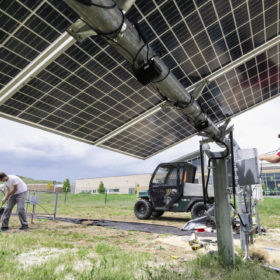
With analyst predictions going as high as 40 GW for annual bifacial demand by 2023, it is imperative for stakeholders across the industry to understand the behavior of these modules in the field. Ground albedo and the way that diffuse and reflected light hits the rear side of the modules are the key concerns. A better understanding of these factors, gained from sophisticated yield-modeling simulations and bifacial test installations all over the world, has already helped to identify the challenges and opportunities in optimizing projects to maximize bifacial energy yield.
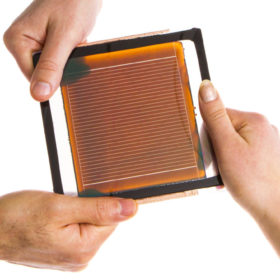
Perovskites meet the stability standard
European research group Solliance says its perovskite modules have passed three key industry standard reliability tests: Light soaking, damp heat and thermal cycling. The group said it is the first time perovskite modules of that size have achieved such results and represents a milestone in the technology’s move toward commercialization.

Visaka’s solar roof receives IEC CB 2016 and UL 61730 certification
Compliance to revised IEC standards allows the ATUM roof with integrated solar panels to chart markets in over 50 countries.

India’s solar cell and module exports grow 157% in eight months
Following a dip in the last fiscal year, the value of cell exports saw a massive surge to an estimated Rs133,000 lakh from April to November. Exports to the U.S. tripled during the eight-month period as shipments to Turkey and Belgium rebounded to become the next two biggest export markets.

Longi claims 22.38% efficiency world record for PERC mono panel
The Chinese manufacturer said the result was confirmed by Germany’s TÜV Rheinland. The achievement beats the company’s previous record of 21.65%, set last month.

Loom Solar wins the ‘Fastest Growing SMB of the Year’ award at Amazon SMBhav 2020
The monocrystalline solar panel manufacturer aims to reach 100 million customers and achieve Rs 100 crore revenue by FY 2020-21.

CEL amends 5 MW module supply tender for Maharashtra
Eligibility criteria has been relaxed to include authorized distributors, resellers and dealers as well. Further, there are relaxations in the supply order carried out in the last one year. Bidding now closes on January 22.
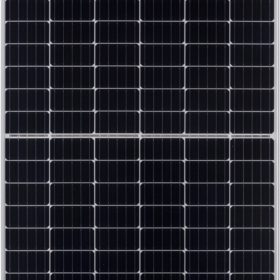
Half-cut modules from Sharp
The Japanese electronics giant has unveiled three monocrystalline half-cut cell modules said to provide 2-3% better performance than standard, full cell panels. The claimed efficiency of the modules exceeds 19.5% and Sharp says power output ranges from 330-395 W.
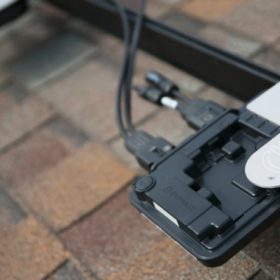
Loom Solar launches IoT based AC modules
The emerging startup has become the second Indian module manufacturer to launch AC panels integrated with Enphase microinverters, after Waaree announced its partnership with Enphase in 2007.
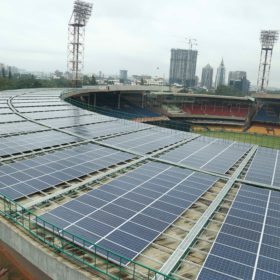
2020 Solar Match: Chasing the Target
While openers like SRISTI scheme for rooftop solar and KUSUM for farmland solar are likely to give a promising start, their implementation on the ground will determine our winning trajectory this year. Simply going by the connotation of 6 balls an over in the game of Cricket, this article looks at 6 factors that will push India to achieve its 2022 solar target.