Top 5 trends shaping India’s battery energy storage systems market in 2025
India’s battery storage landscape is undergoing a decisive transformation in 2025. Across utilities, regulators, and developers, BESS has moved beyond early-stage exploration and is increasingly recognized as an essential component for grid stability, renewable integration, and long-term energy planning.

Attero announces INR 150 crore investment to expand e-waste and copper recycling capacity across India
Once the new plants are commissioned, Attero’s overall processing capacity across e-waste and metals recovery will reach 244,000 tonnes per annum.
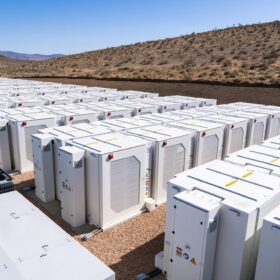
Batteries now cheap enough to make dispatchable solar economically feasible
A new analysis from energy think tank Ember shows that the cost of storing electricity with utility-scale batteries has fallen to just $65/MWh as of October 2025 outside China and the US, making it economically feasible to deliver solar power when it is needed.
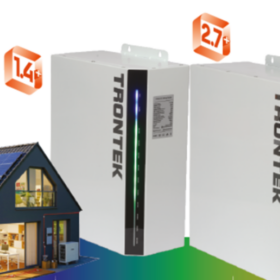
Trontek enters residential energy storage market with 1.4 kWh and 2.7 kWh lithium battery systems
Trontek has entered the residential energy storage market with the launch of Powercube 1.4 kWh and Powercube 2.7 kWh lithium-ion battery storage systems that support both solar and grid charging.
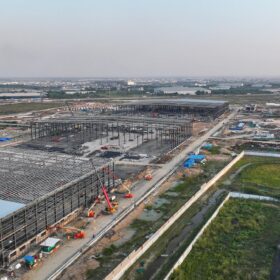
Agratas advances construction at its Sanand battery facility
Agratas, the global battery business of the Tata Group, is rapidly advancing the construction work for its battery manufacturing facility in Sanand, Gujarat. This facility will have a planned annual capacity of 20 GWh in its first phase.
India could attract $4.1 trillion in green investments by 2047: CEEW
Around 92% of the required investments—about $3.79 trillion—would flow into the energy transition, spanning renewable energy, storage, clean mobility, and green hydrogen.

Oscal releases 2 kWh battery for home, off-grid, on-grid use
The Chinese company said its 2,016 Wh portable LiFePO₄ energy-storage system is expandable to 22,176 Wh with additional battery modules. It delivers 2,400 W output, offers 16 ports, app-based control, and includes built-in audio and lighting features for home, travel, and off-grid use.

‘It’s not a matter of sodium versus lithium, we need both’
A US research team has developed all-solid-state sodium batteries that retain performance down to subzero temperatures. The systems utilize a special chloride-based solid-electrolyte-coated cathode.
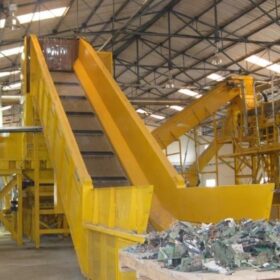
Industry body IESA submits recommendations to strengthen battery recycling ecosystem
Industry body India Energy Storage Alliance (IESA) has called for clearly defined roles and responsibilities under the Battery Waste Management Rules, the adoption of global standards, recycled content targets aligned with emerging battery chemistries and domestic manufacturing, and support for eco-design to enable easier recycling.

India’s evolving battery landscape: An interview with Trina Solar’s Leo Zhao
Leo Zhao, Head of Energy Storage, Trina Solar Asia Pacific, speaks to pv magazine about why India is a strategic market for utility-scale energy storage, the latest trends and technology adoption, and Trina Solar’s plans for the market.