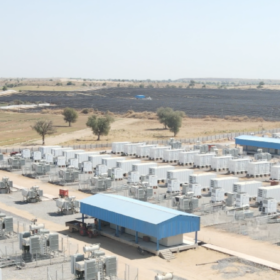
Battery management systems: The software brain powering EV performance and safety
As electric mobility enters its software-defined era, the Battery Management System is emerging as one of the most strategic enablers of vehicle differentiation. Its role extends far beyond protection; it now determines how efficiently energy is used over long drives, how accurately range is predicted, how safely fast charging is managed, and how well the battery ages over time.

Battery swapping vs fast charging: Why India will not choose just one
Battery swapping and fast charging are often positioned as competing solutions. In reality, they are responses to fundamentally different operational needs.
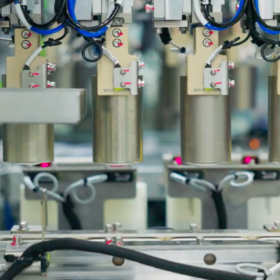
Land acquisition completed for 40 GWh capacity awarded under PLI ACC scheme
Land acquisition has been completed for 40 GWh of manufacturing capacity awarded under India’s production-linked incentive (PLI) scheme for advanced chemistry battery cells (ACC).
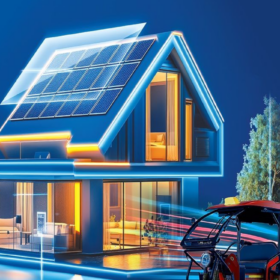
Vikram Solar’s PowerHive launches lithium battery range for electric mobility and residential power backup
PowerHive, the battery and energy storage arm of Vikram Solar, has launched its VION lithium battery product range, marking the company’s entry into distributed battery storage for electric mobility and residential energy backup.

Ashok Leyland breaks ground on EV battery pack manufacturing facility in Tamil Nadu
Ashok Leyland, a Hinduja Group-owned commercial vehicle manufacturer, has begun the construction of a greenfield EV battery pack manufacturing facility at Pillaipakkam near Chennai. The project would entail an investment of INR 400-500 crore.
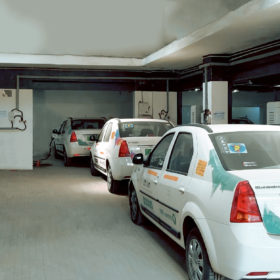
How homegrown players are leading the charge in green mobility
India’s journey toward electric mobility is not just about reconnecting with a global trend, it’s a movement rooted in the spirit of Aatmanirbhar Bharat and Make in India. What makes our transition extraordinary isn’t just the scale, but the fact that we’re building this transformation from the ground up.
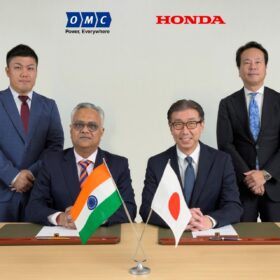
OMC Power, Honda Motor partner on energy storage solutions from repurposed EV batteries
OMC Power, a distributed renewable energy (DRE) company targeting 1 GWp clean energy portfolio in India, and Honda Motor have partnered on innovative business models in energy storage and battery repurposing from the electric mobility ecosystem.
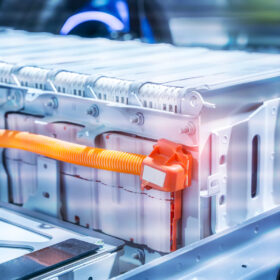
Will China’s export curbs on lithium battery materials and technologies reshape global supply chain?
Industry players speak to pv magazine about whether China’s decision to tighten export controls on key minerals and technologies for lithium batteries will cause a short-term disruption or lead to a long-term strategic realignment of the global supply chain.

EV battery safety risks and manufacturing challenges
As most imported battery cells are not designed for India’s conditions, localization of battery design and strict adherence to AIS-156 and BIS safety standards is absolutely critical.
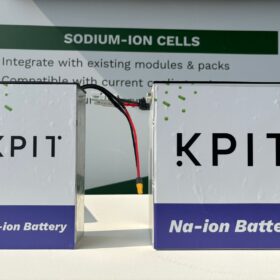
India Energy Storage Alliance (IESA) welcomes the new tax regime under GST 2.0
The India Energy Storage Alliance (IESA) has welcomed the streamlining of the GST rate for all advanced batteries under heading 8507 to a uniform 18%, replacing the earlier regime where lithium-ion batteries were taxed at 18%, while other chemistries attracted a 28% GST.