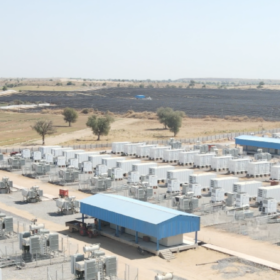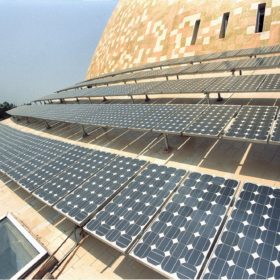
Minister says India has surpassed 1.7 GW of non-commercial rooftop solar capacity
RK Singh told the upper house of the Indian parliament yesterday the nation had added 780 MW of new generation capacity in the last two years. The share of renewables in India’s power mix is rising too, but not fast enough to ensure electricity supply for all.
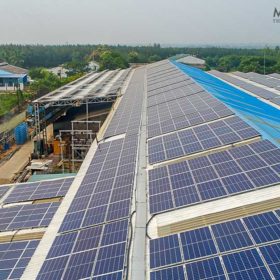
India added 1,836 MW of rooftop solar in last fiscal year
Maharashtra, Rajasthan, Gujarat, Karnataka and Tamil Nadu were the top five states by annual installation, accounting for 60% of the new capacity.

MNRE approves 12 GW solar scheme for public sector undertakings
Up to Rs7 lakh of funding assistance per megawatt will be available to developers who deploy PV capacity for consumption by public entities. The energy produced will be supplied with a Rs3.50/kWh ceiling tariff and projects will be subject to strict domestic content requirements.
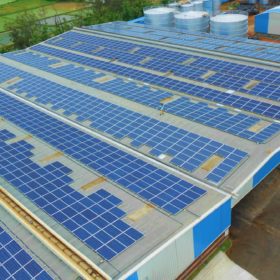
Delhi Police buildings will soon have rooftop solar systems
Under an MoU signed with Solar Energy Corporation of India, grid-connected rooftop solar systems totaling 3-4 MW capacity will be installed on more than 200 police establishments across the capital.

Greenpeace report lauds India’s ‘solarization of agriculture’
Analysis of the solar pumping programs being rolled out across five states backs claim switching irrigation systems to PV could give the nation a huge leg-up towards its renewable energy ambition.

India eyes 500 GW renewable capacity by 2030
The country has so far achieved around 80 GW of installed renewable energy capacity in chasing “175 GW by 2022” target. De-dieselisation of farms and railways ranks high on the Modi government’s priority list to push solar adoption.

Removal of priority-sector lending cap – solar industry reaction
The power minister’s proposal would be a step in the right direction towards meeting the 40 GW rooftop solar target, as it removes a financing hurdle for small and medium enterprises.

Solar trees find more homes
Solar trees—like the ones at The National Salt Satyagraha Memorial in Gujarat—are set to make their way into the residential complexes of central government employees as the Central Public Works Department (CPWD) looks to harness solar energy to the maximum extent possible.
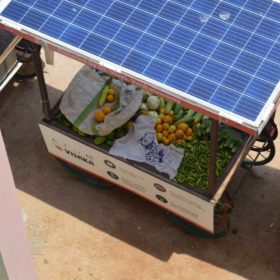
Visaka Industries installs solar rooftop on pushcarts
The ATUM integrated solar roofing system using 320W panels generates enough electricity to power a light bulb, a fan and a mobile phone.
India added 2.5 GW in Q1, 18.4 GW in pipeline: Bridge to India
Solar installations picked up significantly in the January-March period, with 1.89 GW of utility-scale PV projects providing 76% of the quarterly total. Rooftop PV accounted for the remaining 590 MW of new capacity additions. Looking ahead, Bridge to India expects the uptrend to continue, as the first quarter ended with a record amount of capacity in the national pipeline.