Rooftop solar may ‘unintentionally’ exacerbate urban heat
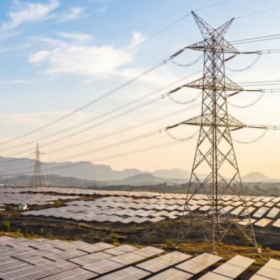
New research from Hong Kong confirms that rooftop PV systems could raise daytime temperatures in urban environments. The scientists explained that although their findings highlight important urban resilience considerations, they should not detract from the broader benefits of PV systems for energy sustainability and carbon reduction.
Targeted co-financing to support a just transition in emerging economies: IEEFA
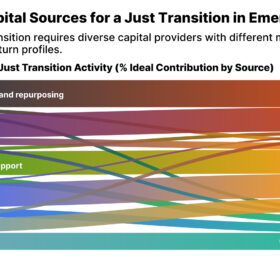
Supporting a Just Transition in emerging economies requires not only large-scale capital for infrastructure such as renewables but also targeted financing for communities and small businesses. Capital should be matched to specific activities based on risk and impact, says a new report by the Institute for Energy Economics and Financial Analysis (IEEFA).

ReNew Q4 profit soars 415% YoY on solar manufacturing boost
ReNew’s net profit for the quarter ended March 31, 2025 surged 415% year-on-year to INR 313.7 crore ($37 million) with external sales of solar modules and cells alone contributing INR 220 crore.
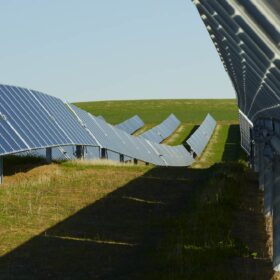
Global shipments of solar trackers rise 20%, U.S slips in market share
The United States continues to dominate the solar tracker mount market, with Nextracker securing the top spot globally in 2024.
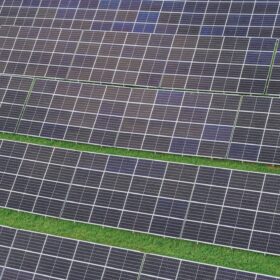
2025: A landmark year for solar energy
The IEA-PVPS 2025 Snapshot of Global PV Markets reveals a pivotal moment for solar power: global PV capacity surpassed 2.2 TW, with more than 600 GW installed in 2024 alone. As module prices fell due to oversupply, installation volumes continued to grow, highlighting both the strength and volatility of the global PV industry.
Financing India’s clean energy transition
To effectively meet its clean energy and net zero targets, India must address the current limitations in its green financing models. Additionally, the lenders must take into account sector specific risks.
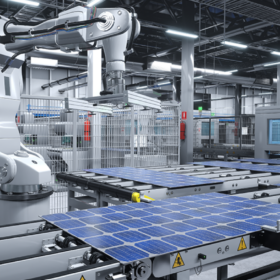
Solarium Green re-enters solar module manufacturing with new 1 GW facility in Ahmedabad
The 1 GW solar module facility is scheduled to start commercial operation in the fourth quarter of the current fiscal year 2025-26.
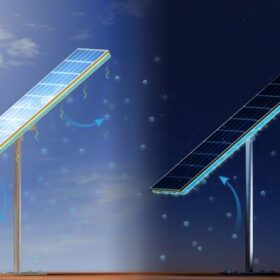
New cooling gel could raise PV module efficiency by 12%
Researchers in Saudi Arabia have developed a hydrogel composite that absorbs moisture in solar modules overnight and facilitates evaporative cooling throughout daylight hours. The system has undergone lab tests and outdoor experiments on two continents.

Jakson Green hits 5 GWp of solar O&M portfolio
Jakson Green Renewables, the asset management arm of Jakson Green, has secured an additional 1 GWp in solar operation and maintenance (O&M) contracts, pushing its total O&M portfolio to an impressive 5 GWp.
The critical role of IPPs in driving 250 GW of new energy
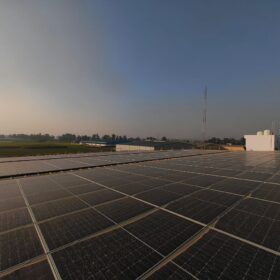
At a time when many countries struggle with energy nationalism and policy flip-flops, India’s independent power producer (IPP)-driven model offers a decentralised, market-based, and scalable solution to clean energy growth. Their role in catalysing 250 GW of new capacity by 2030 will be central to India’s climate pledges under the Paris Agreement and its goal of net-zero emissions by 2070.